








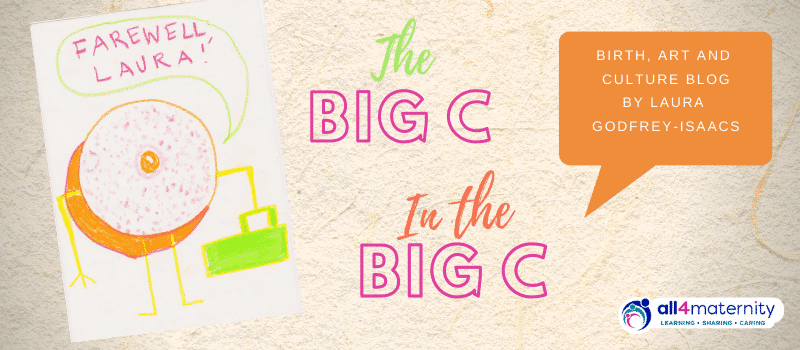
The Big C in the Big C
Laura Godfrey-Isaacs – artist, midwife, birth activist, feminist and mother @godfrey_isaacs
A friend sends me a supportive message and asks ‘how’s it having the Big C in the Big C?’
She’s referring to my situation in the midst of Corona, having had breast cancer and a major operation – a double mastectomy.
As a child, that was the way cancer was referred to – the Big C – a scary, unnameable condition, almost shameful. Equally, Corona, seems like the Big C right now, a modern plague, unknowable and unpredictable.
In my past a neighbour had breast cancer and was too embarrassed to see a doctor, till ‘it was too late’. Well, that was the narrative, somehow it was her ‘fault’ that she died…Maybe she wasn’t too embarrassed but didn’t recognise a problem. There could be any number of reasons. Or maybe she WAS embarrassed to see a male doctor (this was the 1970’s after all?).
So, what if I don’t ‘fight’ cancer hard enough – will it then be my fault that I didn’t ‘beat’ it?
The cancer in my breast never announced itself to me – it was picked up during routine screening, the mammogram – an unseen, unfelt growth. It was a shock the first time, five years ago, and I cried in the consultation room, when they told me. I didn’t want THAT diagnosis, THAT label. It wasn’t invasive, a DCIS (Ductal Carcinoma in Situ). I researched the questions around breast screening and DCIS (Gallagher, 2011) and read the excellent book ‘The Patient Paradox’ (McCartney, 2012) however, decided to go ahead with treatment. Recently, there it lurked again and this time a more radical solution was proposed – a mastectomy.
I also read a lot about the Big C when my father was ill 20 years ago – unfortunately an inoperative pancreatic cancer. Most significantly, Susan Sontag’s ‘Illness as a Metaphor’ (1978) about the cultural meanings, myths and rhetoric around the disease, which chimed with me. Also, accounts that talked of being ‘difficult’, and how important this is, rather than being a passive ‘patient’. The literature around women’s choice in reproductive medicine also informs me – the importance of having choice, control and autonomy. I am certainly ‘difficult’, if that means I am assertive and informed, but need to remind myself constantly to be so without shame or embarrassment – the medical paradigm so easily renders me passive and trusting.
Dis-ease, medicine, disability and how it plays out is political, as everything in life.
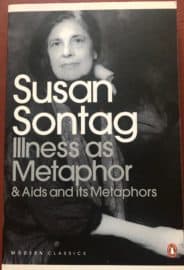 Cancer holds a particular place in our culture – as Sontag so powerfully articulates. It’s THE disease that preoccupies us, as TB did in the 19th century. It’s about growth, malignancy as appose to TB’s beautiful, almost fashionable fading away. It’s difficult to avoid other rhetorical, loud, insistent messages about the disease, and when you are having treatment, it seems all the more so – it’s everywhere. Bake-Off’s ‘Stand up to Cancer’ – the mood lowers, the music sentimental, as a heroic ‘story’ of survival or loss is played out…. Pink ribbons, Race for Life…The language is often military, much as the ‘fight’ against Corona – fight cancer, beat it, be a survivor etc. etc. etc. But I don’t feel like I’m fighting something or like being characterised as a victim or survivor.
In fact, I feel annoyed, inconvenienced, fearful and resigned to going through treatment that, even though its being done to make me ‘better’ (in the long-term), will actually make me ‘worse’, certainly for a while. I also feel burdened by the language and have to moderate its use, choose carefully to avoid clichés and culturally loaded terms that don’t feel appropriate. I also feel burdened by having to ‘tell’ people– my own children, partner and family being the worse, but other countless people – friends, colleagues, acquaintances. I have to deal with their reactions, deflect the language and be prepared to withstand their triggered responses and projections.
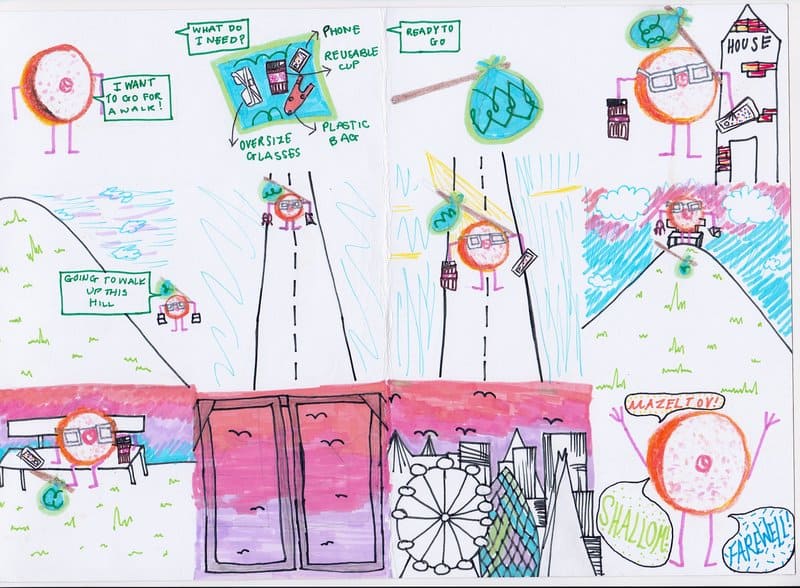
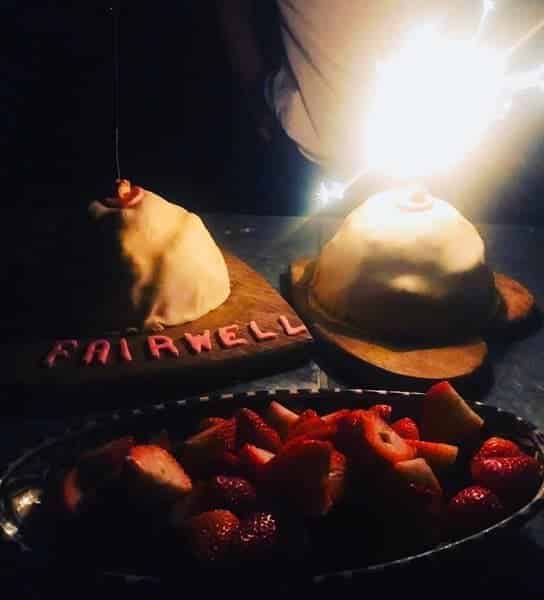
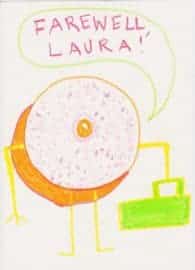
However, a few nights before the operation my daughters arranged a modern ritual to say goodbye to my breasts. They made breast cakes, and we lit sparklers on top of them – laughing and celebrating what those breasts had been to me, and to them. It was a wonderfully cathartic event, and the humour and candour between us has been amazing. Their cards, pictured alongside this blog of the wandering breast leaving me, is another great example. Being open, ‘normalising’ disease and remaining positive about inevitable body changes has been the way our family has managed the situation.
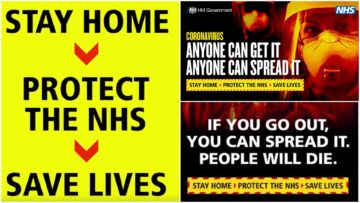
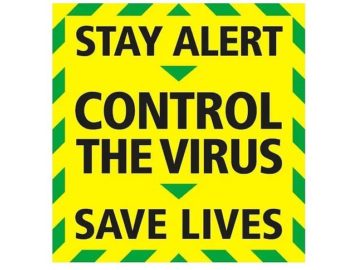
So, I’m not going to ‘fight’ Cancer, but see Corona framed in a similar way – ‘Stay alert, Fight the virus’ – this time a tiny, unseen enemy, from outside the body, which obviously you can’t ‘fight’. Maybe your immune system will fight Corona on a microscopic level, but how successful that is, is not in your control. However, if you are put at extra risk and acquire a big load of the virus you are certainly at a disadvantage. This might be due to your socioeconomic status – you haven’t been able to stay at home, you are a Key Worker and you don’t have adequate PPE. You are from a BAME background, so subject to racism and structural inequality, which affects your health. We already know about health inequalities, based on socioeconomic status, race and other social determinants informed by The Black Report (Gray, 1982) from the 1980’s and successive Marmot (2020) reports which have been systematically and politically suppressed. I know this from birth inequalities for BAME women and so many I look after, as a community midwife, due to social disadvantage, & multiple structural barriers. So how we ‘fight’ Corona, and any disease will be subject to our position in society as much as our own resources – we are not ‘all in it together’.
Personally, I’m the one who usually supports others – so feel uncomfortable when people express sympathy for me, and frame me as a victim. I in 2 people will get cancer, and most people will have periods of illness/disability in their lives. I have had excellent treatment. I have supportive family and friends, who understand the choices I have made. However, as I don’t have any obvious risk factors subtle indications are suggested by some around my lifestyle – I’m anxious, I work too hard, I don’t relax enough, I have ‘a cancer personality’…This ‘othering’– feels like blaming – my lifestyle, my behaviour, my genes even.
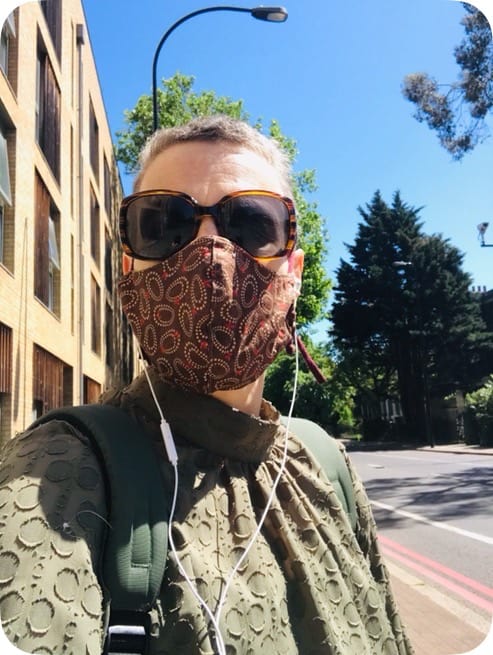 I’ve tried to have as much control as possible; choosing where to have treatment, requesting a female surgeon, using the language I want. Also, taking the decision to have a double mastectomy, as well as deciding not to have reconstruction or wear any breast inserts. That last one, has particular importance for me – not conforming to societal norms around my body shape, as a woman – the politics of the body ever present. And my daughter’s partner, Elijah, who is a Trans Man, has had chest surgery, so I was well prepped on recovery and able to discuss these wider political issues with someone with lived experience. But having control is resisted by the medics – choosing to have a double mastectomy triggers an appointment with a psychologist. An interesting resonance for me as a midwife, around women’s rights to request the type of birth they want. I regularly counsel women about the risks of caesarean birth, if they request one for reasons other than medical need. I stick to my decision and have a perfectly reasonable discussion with the psychologist – no, I don’t have body dysmorphia, yes, I am fully responsible to make this decision about my own body. I want to reduce the risk long-term of getting cancer in the other breast, I want to have a symmetrical chest and to deal with a new shape in one go. The psychologist apparently calls me ‘wise and pragmatic’, and when I meet with the surgeon later, she agrees to do the operation. Being a health care professional can help you navigate the medical process, and there are great insights from Liz O’Riordan, a cancer surgeon who had breast cancer and wrote ‘The Complete Guide to Breast Cancer – How to feel Empowered and Take Control’ with Dr Trish Greenhalgh (2018)
But with the Big Corona, what choices can I exercise?.. there seem to be more control over whether I get it, as I am privileged – I have a job in the NHS, but my employer will allow me to work from home, at least until I am recovered fully. I have a large house, a garden – my husband already works from home, we are financially secure. But I’m more fearful of corona virus than cancer. My husband is in the risk category, as is my younger daughter – my mother is in her 90’s. It’s a new unknown disease, with no effective treatment. Getting Corona is full of risk and uncertainty – unlike many cancers which are now very treatable, such as the non-invasive breast cancer I have had.
If we are going to be living with Corona long-term, what cultural associations will come to bear on this new disease. We already have the military associations, political slogans, new concepts such as ‘harvesting’, ‘herd immunity’ and more worryingly the rampant inequality seen in who is most susceptible. Corona will play out differently from other modern plagues such as HIV, which Sontag also comments on brilliantly – a virus which was and still is full of stigma and prejudice. The outrageous suggestion that it’s only those with ‘underlying conditions’ who are at risk of corona, implying their lives don’t have the same worth. The greater risk for older people – so perhaps that’s OK if they aren’t properly protected and treated? Who and how we value life and lives, seems very much at stake.
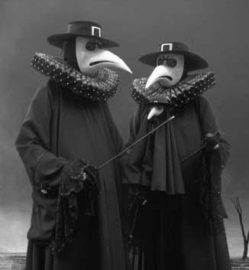 Cancer may now recede as the disease of the 21st century to be taken over by Corona. We look back in history for reference…The Spanish Flu, the plague doctors of Venice, haunting the city like a spectre. Children’s songs such as a ring a ring of roses. Past misconceptions and prejudices about plagues and disease seem ridiculous, but future generations will probably look back at us and think the same. The internet is already full of possible cures – Vitamin C, Vitamin D – drinking bleach! We have the choreographed dance around each other when socially distancing – the queuing, the improvised face masks, the alternative ‘handshakes’. Will we also remember the way governments acted, either for or against public health…and will there be stigmatising of people who have it.
Its early days for this modern plague but we all need to resist the cultural baggage that creeps into the discourse. It will affect who and how we get treatments, vaccines and reasonable behaviours from employers and politicians. We already see the implications around risk as essential workers are encouraged to go to work while mostly middle class, white privileged people can shield themselves more and continue to stay and work at home. And I am deeply troubled by the way we continue to frame disease and fail to see health as a societal not an exclusively personal responsibility.
 For now, I’m recovering well, back at work, and I haven’t had the big Corona virus…yet. I count the scars on my body – 6 – each one documenting an experience and a particular time in my life. The childhood operation to remove my appendix, the episiotomy from my first birth, and the CS for the second. And now the mastectomy scars mark this experience at this time, and has changed my body irrevocably – to an androgynous, almost child-like shape. I’m healing well and I’m getting used to my new shape – surprised by how well many ‘women’s’ clothes fit when you don’t have breasts! I’ve had kindness and great support from family, friends and colleagues and I am grateful for that, and I hope we all survive this episode and learn valuable lessons from it, as I have.
References
Gallagher J (2011) Breast Cancer Screening Under Review https://www.bbc.co.uk/news/health-15444879
Gray A M (1982) Inequalities in Health. The Black Report – summary and comment https://journals.sagepub.com/doi/10.2190/XXMM-JMQU-2A7Y-HX1E
Marmot M (2020) Health Equity in England – The Marmot Review Ten Years On https://www.health.org.uk/publications/reports/the-marmot-review-10-years-on
McCartney M (20120 The Patient Paradox – Why sexed-up medicine is bad for your health. Chapter 3 The Nature of Cancer – breast beating. Pinter & Martin.
O’Riordan L & Greenhalgh T, (2018) The Complete Guide to Breast Cancer: How to Feel Empowered and Take Control. Vermilion.

