


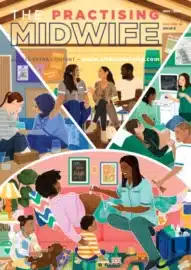






Informed consent in theatre study sheet
Studysheet aim and key information:
Listening to women’s voices, stories and experiences are vitally important as midwives. It offers a unique opportunity to glean what works well and what does not work well. This study sheet draws upon a reflective piece written by a doula as she considers the support she provides to families, but crucially she draws upon her own experience of caesarean birth. She found that consenting to a caesarean birth meant she was inadvertently consenting to procedures she was not fully aware of. Lots of key information was omitted during the discussions; which for maternity professionals, the details of a caesarean birth are ‘everyday knowledge’, implicit, and often take for granted. Here, we are challenged to reconsider how we communicate information so that informed consent is truly informed.
 Learning objectives:
- To articulate the concerns the woman has raised.
- To outline the omitted information regarding the caesarean section.
- To identify how midwives can minimise the harm of poor information giving.
Duration: 30 mins
Keywords: informed consent, woman-centred care, compassion, information


Informed Consent In Theatre
Annonymous birth and postnatal Doula
Published in The Practising Midwife Volume 11 Issue 10 November 2017
As part of my job, when I meet families in antenatal sessions, I always speak to women and their partners about consent. For most of them, this means being informed and being given the freedom to make important choices for the health of themselves and their babies, physically and emotionally. In my role I find myself nurturing families, so that they know they have the power within them and the right to choose the correct path for their individual needs. I hear partners seeking permission to speak out for their much-loved wife or partner and I reassure them that it is their role to protect their space as a family.
THE NEED TO ASK QUESTIONS
I sit with women who wish to ask questions – and I listen. I reaffirm that asking questions is OK, helping them to make well-informed decisions. I witness them finding the strength and courage they need, and by holding the space safely, they can say ‘No’. Having specific information to develop bespoke careplans to fulfil the individual and basic needs of the women we support is not a nuisance; it is a necessity. Everybody is different, and we do not fit into the tidy, generic boxes that often form part of the care provided in midwifery and obstetrics.
I reaffirm that asking questions is OK, helping them to make well-informed decisions
WOMEN AND MIDWIVES SPEAKING OUT
In recent years we have seen women become empowered to speak out about their experiences, however fantastic or traumatic they may be. Midwives now speak out in blogs about the injustices they witness and the triumphs of everyday midwifery. Mothers and fathers vlog jubilantly about the amazing births they have experienced with the help of spectacular care, and social media campaigns – like the revolutionary MatExp – have become a sharing forum for all experiences in maternity. These encourage us to see another world and give some insight into how we can change the things around us, so women and families have a positive experience of pregnancy, birth and the postnatal weeks.
UNINFORMED CONSENT
Consent is always a hot topic in obstetrics and maternity, and healthcare in general. We talk about informed consent for vaginal examinations, informed consent for interventions such as forceps, or syntometrine during induction of labour. In the case of caesarean and instrumental birth in theatre, doctors give families consent forms to sign, sometimes in a hurry as an emergency arises: the risks of uterine rupture; of haemorrhage; will we come out of theatre with our baby removed from our uterus, or will our uterus be removed too? “Sign here, sign there, these risks are low, it won’t happen to you, sign on the dotted line; your baby will be in your arms shortly.”
Informed consent means saying yes to a procedure or intervention when every piece of the puzzle has been considered and explored. Sure, the risks are important: we need to know that adverse events do occur and that surgery or instrumental birth is not without risk. The doctors also need to ensure those risks are given from a litigation perspective. My ponderings have turned to consider other facts recently: are we given any further information that may be just as important, just as crucial to us as the risks of instrumental birth in theatre? Does any other related procedure, any other important piece of the puzzle need to be discussed? Is there any information that we may need to process later on or that forms part of our decision-making now?
QUESTIONS, QUESTIONS
What happens to my body in theatre? How exactly is my baby birthed? What exactly happens to me? What goes on behind that screen?
Nobody asked me if they could use swabs inserted into my vagina after my membranes were ruptured, amniotic fluid and blood soaked up as my placenta detached from the wall of my uterus; nobody asked me if they could do the vaginal examinations to discover which position baby was in or to check for cervical changes before surgery commenced.
Forceps? Speculum? What are they? Why and how are they used? Where are they used? I was told I may feel as if my lower half was in a washing machine due to the lack of sensation the spinal anaesthesia causes, yet nobody asked me if it was ok to manhandle my paralysed body and manipulate me for the convenience of the theatre team. After all, a caesarean is performed on the abdomen, right? Would I have been asked, if I had not been numb from the waist down? The answer to this question is probably, mostly ‘Yes’. Had I been in full control of my body, I would most likely have been asked if all of this was ok with me.
Spinal anaesthesia seems to not only remove all feeling from our waists down, but also all sense from our caregivers
WHAT I DIDN’T KNOW
Nobody told me I would have to have vaginal examinations, which I had avoided throughout pregnancy. Nobody explained to me the logistics of a caesarean birth. Nobody shared that the intimacy of birth in theatre is usually lost and the hard, cold facts that go on behind that screen now haunt me because consent, the information that I needed to make decisions, was swallowed in protocol and policy. Now I feel I need to shout about it: consent, informed consent, in theatre and the birth room, for everyone.
Spinal anaesthesia seems to remove not only all feeling from our waists down, but also all sense from our caregivers. Spinal anaesthesia transfers power to the obstetric team. Once the spinal is in, we are not often asked if it is ok that the catheter is inserted; we are not asked before a quick clean up is performed of our vagina and vulva, but why? Do you suffer from the lack of time to ask? Are you concentrating too hard to request consent? Does it fail to matter because we signed the cover-all consent form to a caesarean birth? Or has it not been considered that these things might matter? Ignorance sometimes means mistakes are made and, until these things are spoken about, you might not know that they could cause psychological trauma.
WHAT YOU DON’T SEE CAN’T HURT YOU
Does being behind a screen ‘protect’ us from that? It doesn’t matter because we don’t know what is happening? We are not always given the opportunity to speak to the surgeon as they concentrate on the task at hand, but the stories shared by parents tell the same tale of feeling spoken about as if we are in another room.
Anaesthesia often means both gentleness and caution are thrown to the wind. We are on the cold, hard operating table, behind a sheet under bright lights, vulnerably birthing our babies without real consent.
Although I signed the papers for my elective caesarean births – not once, but twice – I didn’t know what exactly I had signed, nor how it would go on to affect me. I didn’t realise I had signed a paper to hand my body over for them to do with what they pleased. I didn’t think that the effects of my experiences in the theatre would trigger the peeling away of deeper layers. I was just going to have my baby, right?
I wasn’t aware that these actions, those uninformed decisions would affect me in such a profound way and not until much later. We often hear people say “I didn’t know…” or “If I had known that before…”
I wish I had known so many things about consent in theatre and I believe individualised care would have protected me, as it would thousands of other women. We are now seeing the topic of consent spoken about so often in the birth world and beyond but theatre still seems to be the preserve of the doctors, and questions are anathema.
MIDWIVES CAN HELP
So how do we move forward for better-informed decisions?
Language – such a complex, yet simple thing to rectify.
| By asking questions instead of making statements, we help ensure women are empowered in their birth choices. Women can say ‘No’. |
| Removing sentences from your vocabulary which begin with “We don’t let you...” or “We don’t allow...” |
| Changing the too-often heard, one-way conversations which begin with “I am just going to do...” and “Let’s just do this...” when you have already started, removing power from women and allowing no room for questions, refusal or informed consent. Instead, explain beforehand why a procedure is needed and the benefits and risks if they choose to consent. |
| Not making things awkward for anyone withdrawing consent – you cannot continue with further treatment if somebody declines your offer of a sweep or a vaginal examination. |
| Start questions with “Can I have permission to touch...?” or “Are you sure it is ok to do...?” or “Are you happy for me to continue or would you like further information/have a think about this?” This may help to ensure women know they can stop at any time they feel they need to, or choose a different path. By ensuring informed consent is gained, you can go home knowing you have supported those women wholly. |
Challenge your peers and your mentors when you see something that is not right
VIOLATION

As I sit and write this from my heart, I think of the women I have supported in all aspects of pregnancy, birth and the sacred postnatal period of their lives. I think of the lack of consent. I recall the statements I hear from caregivers and healthcare professionals instead of the gentle requests. I hear the women in tears and torment, describing how they feel they have been raped during a vaginal exam and forced into examinations while being observed by others – others there in the room who are supposed to protect them, in a hospital setting they felt they should have been safe in; feeling violated and mutilated by episiotomy and forceps.
“There-is-no-time-for-informed-consent-discussions-in-anemergency- sorry,” is a pretty poor excuse for instrumental birth or caesarean not being fully discussed either in antenatal classes or in the birth room.
THIS IS MY STORY
This story is not shared to make you come back in defence of your own or your colleagues’ practice. I shared this honestly, so you may reflect on what you do, what you see, and how you can support change. If you take anything at all away when you read this, I do not want it to be empathy, I do not want you to be sympathetic, I do not want anger or frustration of yet another story criticising the valuable work our obstetric and midwifery teams carry out every day. Consider taking from this what you need to do, as women, men and carers of women.
I hear the women in tears and torment, describing how they feel they have been raped during a vaginal examination
BE THE CHANGE
I would love to hear about how you learn to nurture families and provide informed consent. Every situation has time for discussion – throughout pregnancy or in the birth room. Support the families you meet in the way you imagined you would when you embarked on your journey, this calling to nurture, to care, to be with women. Challenge your peers and your mentors when you see something that is not right. Don’t follow the crowd; don’t speak of ‘those who say no and make my work impossible’ and ‘that one in room 5, declining VEs – tut’, but instead, shout out loud when you see bad practice, and be the change. Be the midwife, doctor, doula or partner who makes the difference for the women you support by ensuring that they have all relevant information to hand to make the right choices for them, at that moment in time. TPM
FURTHER READING, VIDEOS AND LINKS
Never Fear; the way we share information with women matters
Key Concepts of Care
Birthrights have created excellent resources to unpack informed consent

The download button below enables you to be able to print off and complete the study sheet, alternatively you might want to annotate the PDF and save to your computer, ready for adding to your student portfolio or for midwifery revalidation
-
Extend your learning by looking through the further reading, videos and links above
- Reflect on the article, what issues does the woman raise?
- Consider how these issues might be mitigated? What would you do differently?
- Imagine a clinical scenario whereby you need to discuss the option of a caesarean section to a woman. Write a pretend ‘script’ that provides all of the information regarding a caesarean section. How might you use open questions? What can you say to avoid directing the woman? Have you covered all the essential information? Reflect on whether you find this easy or challenging to do.
- Consider how you might challenge lack of information sharing in a clinical scenario, what could you do and how could you do it that remains professional?
- Bullet point key learning points you have taken from the article.
