








Racism Matters: ‘When People Show You Who They Are, Believe Them’: Why black women mistrust maternity services
Anna Horn – Maternity Service User
Published in The Practising Midwife Volume 23 Issue 8 September 2020 https://doi.org/10.55975/RKOT5398
Summary
In the UK, Black, Asian and minority ethnic (BAME) women are more likely to die during pregnancy and after childbirth compared with white women. A recent spotlight on ethnic disparities in maternal deaths has rendered a much-needed discussion on maternal health outcomes and experiences of maternity care for BAME women. The increased risk of death is unexplained by researchers, healthcare professionals and public health officials. This article, the first in the new series ‘Racism matters’ seeks to unpack these issues to challenge, educate, and to drive improvements in maternity care. Here, Anna Horn, a Black American woman, UK maternity service user and equity advocate offers insight into a deeper, systematic and historical precedent of racism and injustice as underlying contributor to health inequalities.
The dream
This moment in time didn’t arrive without careful thought, consideration, grit and a call to greet the unknown and what-ifs with open arms. You’ve dreamt about this moment for years and finally you’re pregnant. You and your partner are on your way to building the life you imagined for yourselves over many nights of pillow talk. Immediately your mind goes to tiny booties, baby names and how you plan to share the news with family and friends. Now imagine you’re a Black woman.
The nightmare
Only a quick Google search highlights British media coverage of high-profile Black women, such as singer Beyoncé and tennis star Serena Williams, famously opening up about the difficulties that Black women face around pregnancy and soon after childbirth.1 As a Black woman in the UK, you may be falsely assured that the increased risk of death that Black women face in pregnancy and around childbirth are unique to our sisters across the pond.2 However, latest national reports show that Black women in the UK are the most likely to die from pregnancy and childbirth-related complications compared with white women.3 The guards go up, the fear creeps in and you’re suddenly in survival mode, desperate to protect yourself, your unborn baby and the family you’ve worked hard to create.
The fear and mistrust
To understand why Black women mistrust maternity services, we must also consider the wider context of the institutional racism which infiltrates our education, justice, housing and employment systems. Why should we, as Black women, believe the healthcare system has been excluded from systematic strategies crafted to innately benefit the middle class and very wealthy white people?
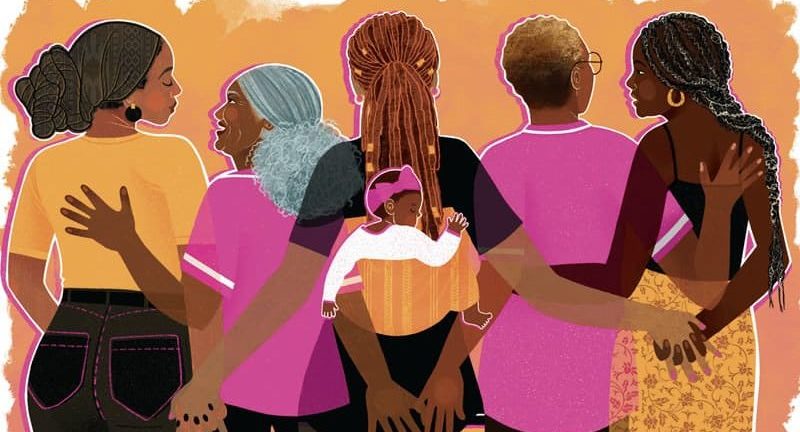
Fear and mistrust of maternity services doesn’t start at conception and amplify in our expanding wombs. We carry the fear and mistrust of our mothers, our grandmothers, the wider African diaspora and our shared ancestors. In western society, people have shown us who they are for generations and thus, we believe them. Our concerns about our lives, the lives of our children and our communities are steeped in the direct consequences of the lack of equity, diversity and inclusion.
From slave breeding farms,4 to forced wet nursing5 and the inhumane treatment of enslaved Black women to perfect the surgical techniques of J Marion Sims,6 known as the father of gynaecology, there’s a longstanding history of the dehumanisation of Black women’s bodies that still rings in the ears of Black women today. Not only are our bodies still under attack, but also like many mothers, we fear for the health and safety of our children. Of the neonatal deaths that occur in England and Wales, white babies continue to have the lowest occurrences.7 Those of us who are lucky enough to take our babies home from the hospital then have the added responsibility of teaching our young people about how to get safely back home to us.
Unfortunately, the fear of violence, injustice and discrimination against our children is as a part of Black motherhood as daily school runs.
Take, for example, mothers Doreen Lawrence and Sybrina Fulton, who both lost their sons to racist attacks. On 22 April 1993, Doreen’s 18-year-old son, Stephen Lawrence, was stabbed to death by a racist group while simply waiting at a London bus stop.8 Nineteen years later, on 26 February 2012, Sybrina’s 17-year-old child, Trayvon Martin, was shot to death in Florida by a self-appointed neighbourhood watchman.9 Both mothers continue to fight a system and a culture that did not see their children as victims, or even as human beings.10,11,12

The silencing
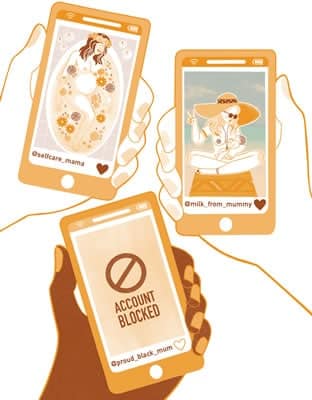
Therefore, many Black women are not surprised by the ethnic disparity in maternal deaths. There is a shared historical, political and social lived experience that Black people have endured for generations, which makes this horrific disparity a reality. We are also not shocked by the discomfort race brings when the topic is raised in the birth world. Very publicly, there have been attempts to silence Black women who bravely share their experiences as mothers. Social media influencer Candice Brathwaite (@candicebrathwaite on Instagram), was accused of ‘playing the race card’ when raising the lack of diversity in the white majority online world of ‘mum influencers’.13
On the ground, organisations that are built to provide support to mothers and ensure that their voices are included in the implementation of maternity services are often absent of women of colour. I’ve also experienced, first hand, healthcare workers questioning the validity of ethnic disparities and reports of bias treatment by Black women.
In turn, as a Black woman, I was expected to provide evidence, education and an explanation for the race disparities within maternity services.
I’ve also witnessed on two occasions Black women being scrutinised for requesting pain medication. Is it because healthcare professionals didn’t believe their pain? Given the stressors and racial discrimination that many people of colour often face, one experiencing this situation can’t help but wonder. Most midwives may protest in disbelief that such an event ever occurred. After all, the heart of midwifery philosophy is to put the woman at the centre of care. Many midwives would even say that it would never happen in their practice or the practice of their colleagues. If we can’t listen to each other, then how can we make a positive change?
The truth is there are complexities to improving maternity services, including inequalities. Like many other minority voices, Black women need to be believed. We need to be included, and not superficially, to give an illusion that an organisation is diverse. We need to be on the frontlines of maternity care, on boards and committees at the local and national levels.

The call to action
Very famously, American poet and civil rights activist Maya Angelou said:
‘When people show you who they are, believe them.’
Many Black women feel as though we are set up to fail and our experiences in maternity services are no exception. After all, a white patriarchal society has shown us who they are – and we believe them. There is an on-going effort to make maternity services better for women, babies and their families. Many people of all races, ethnic backgrounds, national origins, genders and social backgrounds are working hard to ensure that every voice is heard and policies, practices and work culture in maternity services enable people to have the best experiences and health outcomes. I challenge those who are working in the birth world to show us who you are by addressing inequalities, discussing race and being open to the experiences of people who are different to you – no matter how difficult or unpleasant. Show us who you are and we will believe you. TPM
References
- Why are Black mothers at more risk of dying? BBC News. https://www.bbc.co.uk/news/uk-england-47115305. Published April 12, 2019. Accessed February 24, 2020.
- Tsigas E, Callaghan W, Hollier L, Etiebet MA. Meeting the Challenges of Measuring and Preventing Maternal Mortality in the United States. Presented at: Centers for Disease Control and Prevention; November 14, 2017; US. https://www.cdc.gov/grand-rounds/pp/2017/20171114-maternal-mortality.html. Accessed February 24, 2020.
- Draper E, Gallimore I, Smith L, et al. MBRRACE-UK Perinatal Mortality Surveillance Report. NPEU. https://www.npeu.ox.ac.uk/downloads/files/mbrrace-uk/reports/MBRRACE-UK%20Perinatal%20Mortality%20Surveillance%20Report%20for%20Births%20in%202017%20-%20FINAL%20Revised.pdf. Published October 2019. Accessed February 24, 2020.
- Smithers G. Slave Breeding: Sex, Violence, and Memory in African American History. Gainesville: University Press of Florida, 2012.
- Roth C. Black Nurse, White Milk: Breastfeeding, Slavery, and Abolition in 19th-Century Brazil. J Hum Lact. 2018 Nov;34(4):804-809. https://www.ncbi.nlm.nih.gov/pubmed/30231217. Published September 19, 2018. Accessed February 24, 2020.
- Ojanuga D. The medical ethics of the ‘father of gynaecology’, Dr J Marion Sims. J Med Ethics. 1993 Mar; 19(1): 28–31. https://www.ncbi.nlm.nih.gov/pmc/articles/PMC1376165/. Published March 1993. Accessed February 24, 2020.
- Office for National Statistics. Child and infant mortality in England and Wales: 2018. UK: ONS; 2020.
- Stephen Lawrence murder: A timeline of how the story unfolded. BBC News. https://www.bbc.co.uk/news/uk-26465916. Published April 13, 2018. Accessed March 2, 2020.
- Trayvon Martin’s parents, five years on: ‘Racism is alive and well in America’. The Guardian. https://www.theguardian.com/us-news/2017/feb/13/trayvon-martin-parents-racism-alive-and-well-in-america. Published February 13, 2017. Accessed March 2, 2020.
- Stephen Lawrence’s mother says only police officer she trusted was ousted. The Guardian. https://www.theguardian.com/uk-news/2019/feb/05/stephen-lawrences-mother-says-only-police-officer-she-trusted-was-ousted-macpherson-inquiry. Published February 5, 2019. Accessed February 24, 2020.
- ‘Institutional racism’: 20 years since Stephen Lawrence inquiry. The Guardian. https://www.theguardian.com/uk-news/2019/feb/22/institutional-racism-britain-stephen-lawrence-inquiry-20-years. Published February 22, 2019. Accessed February 24, 2020.
- Trayvon Martin’s Mother, Sybrina Fulton, Is Running for Office in Florida. The New York Times. https://www.nytimes.com/2019/05/20/us/trayvon-martin-mom-sybrina-fulton.html. Published May 20, 2019. Accessed February 24, 2020.
- Instagram influencer used secret account to hit back at her critics. The Guardian. https://www.theguardian.com/media/2019/nov/11/instagram-influencer-clemmie-hooper-secret-account-critics. Published November 11, 2019. Accessed February 24, 2020.

