








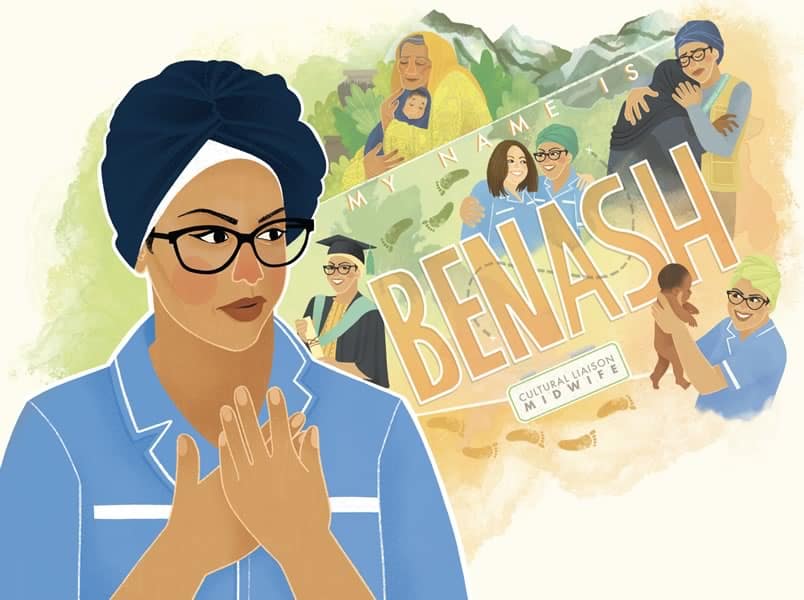
Please Don’t be Offended But… That’s Not My Name – an open letter
Benash Nazmeen – Specialist Cultural Liaison Midwife, Bolton NHS Foundation Trust
Published in The Practising Midwife - Volume 23 Issue 10 November 2020 https://doi.org/10.55975/GILT7789
Dear respected colleagues and friends,
I have spoken about a personal experience previously – now let’s look at another perspective, one that often goes unrecognised but can be critical.
As health professionals, we provide care. Failing to recognise that you are speaking to a pregnant person/woman whose first language may not be English affects the quality of care we provide. As gatekeepers, midwives are vital to breaking down barriers and enabling access to maternity services. However, sometimes we can perpetuate a cascade of interventions that can hinder rather than help.
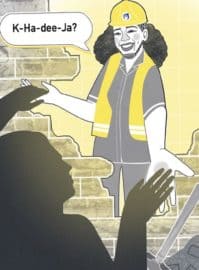
For example, when a woman – let’s call her Khadija (K-Ha-dee-Ja) – attends triage, she is waiting to be seen. You call for ‘KAJJA’ – so alien sounding from your mouth that, bewildered, she sits quietly. Anxiety arising, doubting if she heard her name, should she go to the office to check?
She is conscious of the full waiting room and, after gathering her courage, she asks when she will be seen, in broken English. Staff begin to feel a little confused – why she didn’t respond when called earlier? You had seen her in the waiting room but now you are busy; someone else has gone in her place and she has to wait. Now her partner has arrived, he is worried and is becoming annoyed. He asks why her care is delayed, making staff defensive and slightly irritated – after all, you had ‘clearly’ called for her.
An invisible barrier is building, Khadija is hesitant to speak now, worried that she has upset you. She is also embarrassed about her accent, her broken English vocabulary. She talks slowly to be understood. She has previously had to repeat phrases numerous times to be understood. She becomes familiar with the rising frustration of others when they cannot understand her. Due to her hesitance you begin to speak slowly but loudly, minimising your vocabulary and documenting a language barrier. Some ask, but others forget about her need for an interpreter because you can ‘get by’.
The situation begins to escalate; the accompanying adult starts to ‘translate’. Even non-verbal communication is directed to the other person or the inanimate telephone. Khadija copies your body language and turns her attention to the phone also or sits quietly as a member of her family speaks for her – and she becomes an outsider in her own care. Staff have lost focus of Khadija, speaking about her. Right now, even a simple touch from the staff member could break the building barriers (we all know the benefits of skin to skin) but the focus is on documentation; hands are occupied. The chance to build a relationship and trust is gone.
When bloods need to be taken for investigations, she consents by moving her arm out.
We are human, and spelling errors happen but are more common with unusual-sounding names.
This error can delay crucial blood tests from being performed. There is a simple solution to this: ask the lady to spell her name out and have her check. You see, most women will know this basic and vital skill as they will learn this as a minimum. However, due to the errors Khadija has to return to have her bloods repeated, unsure why this happened to her, leading to suspicion about her care. But still she smiles, nods and remains thankful.
The doubt results in her failing to attend her next appointment as she no longer feels like she is being heard, acknowledged or even human. Terms such as ‘non-compliant’ and ‘difficult’ begin to appear within her documentation, painting a picture that could affect perceptions of her and perpetuate a bias or a stereotype. The trust she has lost makes her defensive and question care, but rather than vocalise this to ‘authority’ figures she just voices her reluctance to take our recommendations. Khadija has been anxious and upset but she cannot vocalise this. Instead she turns to prayer, her faith in god making it easier to cope with worries and anxiety that are common in pregnancies.
Sometimes people speak reasonable English but with a limited vocabulary and find it difficult to express themselves in words.
This makes opening up to a stranger hard, more so when they cannot put into words their inner turmoil and concerns. Add the breakdown in trust and we have classic case of ‘blaming the patient’.
Why would Khadija want to even interact when those entrusted to provide care for her have made little effort to even learn her name? Often these women smile and nod their way through pregnancy, with problems and trauma arising when they present in labour, too late to be helped as their trust in the service is broken. Too far gone for communication as the mother tongue is default setting for someone in pain.
Pain is worse when anxiety and stress are high, so when they are deemed to have ‘tightenings’ or not in established labour, I have heard titles such as ‘sensitive’ and ‘asian woman syndrome’ be used. Unfortunately, it’s easier to label and define someone’s characteristics than to take the time to understand and calm them.
Often, labour can be a trigger for repressed trauma, from childhood sexual abuse, PTSD and many things that could have been addressed earlier if a trusting relationship between midwife or doctor had been nurtured. It’s too late now, and we don’t understand why the family has been so distant, and even ‘hostile’ towards staff. They may simply be protective, but we fail to see this and judge them for it.
Next Khadija is admitted to the postnatal ward. It’s so unfamiliar and, because she has no family as they have gone home to rest, she feels unsure and uncertain and keeps buzzing for assistance. At home she would have support and help so she asks for it here, as we reassured her that she would receive this when we sent her family home from labour ward. The concept of ‘postnatal care’ is different in different cultures and Khadija is labeled a ‘princess’ for asking for the help that she would routinely get at home.
When there is a delay in her visitors locating her, because they have pronounced her name differently – accurately – the confusion adds to their worry for her wellbeing, and raises their concerns about the care she has received. They begin to ask when she can go home so they can care for her, but she is not medically fit for discharge. This can make them agitated and now they are problem relatives. We police them, keeping an eye on them. Other people may have more relatives behind the curtain but because they have toed the line well, this is acceptable. Khadija and family have noticed these double standards and feel unwelcome.
Khadija becomes further detached and the buzzing for assistance has stopped, she will not be inclined to raise concerns, for example, if she struggles with feeding. Often, the group who visits is her support network. They are attending early to help her into this journey of motherhood as “it takes a village”, some cultures still live by this.
The sad reality is the communities have worse outcomes, something we know and have been slow to address. There are many excuses such as socio-economic disadvantages, raised obesity and raised risks of other co-morbidities.
They are labeled as hard-to-reach groups and judged for their lack of engagement. We expect them to assimilate to the western standards and learn our languages, to follow our societal norms – but we cannot simply take the time to learn their names? Despite this, they are least likely to complain about care, and the majority of Patient Advice and Liaison Service (PALS) complaints are from White British demographics.
It’s the small actions that can escalate into big problems, but also the small actions that can prevent them.
Bias rises from miscommunication and misconceptions. We can overcome these by taking the time to start a conversation, be it verbal or animated hand gestures that make all that witness laugh. Laughter is human, we all have a sense of humour, it can connect us, it can build a relationship and it can break down barriers. To build relationships, we need to address the issue that biases exist, we cannot overcome them overnight. What we can do is try to treat those we care for with respect – we can make sure it is their voice we hear and their face we see, despite the distractions and barriers.
In the future when you call out a name, acknowledge that you may have mispronounced it while calling it out, ask what they would like to be called. Write it down, take a minute to say it out loud, repeat it and invest in learning it. They may smile, even laugh at this attempt, but know that they will see your intention. Their insecurity and sensitivity about race will not be triggered, and instead will likely be open and authentic in their interaction.
Shukria (thanks) for reading.
Benash Nazmeen (Bee-n-sh N-aa-z-meen)
TPM


