








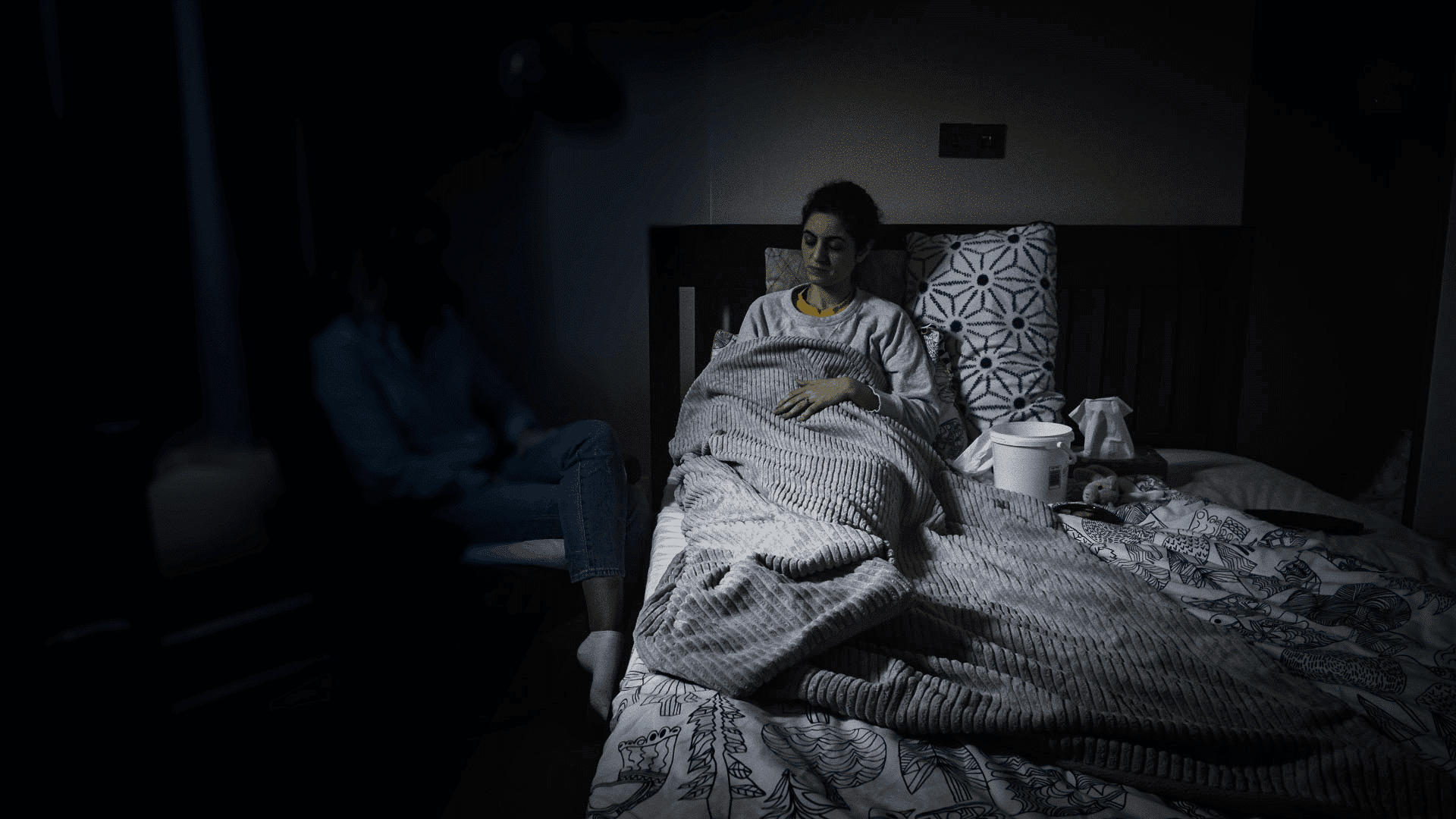
What is a normal pregnancy? Not a Hyperemesis Gravidarum one, that is for sure.
Charlotte Howden – HG Campaigner/Presenter & Producer of Sick – The Battle Against HG
Summary
An article that explores a sufferer’s experience of Hyperemesis Gravidarum. Charlotte Howden the author of the piece discusses her journey with this life changing pregnancy condition and explains why she felt the need to produce the world’s first documentary about it.
Introduction

Charlotte Howden – HG Campaigner/Presenter & Producer of Sick – The Battle Against HG
I don’t think all women have succumb to society’s and the media’s infiltration into their subconscious that a pregnant woman must glow and radiate, exercise, eat healthy and glide into labour like a swan, but if they have could you blame them?
There is a strange tendency to hush women up who want to complain about pregnancy, and an awkward silence ensues when their complaints are met with “but you are so lucky you can get pregnant” or worse “its normal to feel like this, just think about the baby at the end of it.”
What is normal? Not this
But my pregnancy was anything but normal. It was not joyful, and I very much hated every single second of being pregnant. At 6/7 weeks I began to suffer with such extreme unrelenting nausea and vomiting that I truly believed that I was dying.
Being pregnant with my first child meant that I only had the usual pregnancy perceptions to fall back on. I was convinced that what I was experiencing must just be normal pregnancy sickness, and no one was telling me anything different. At 10 weeks pregnant I was admitted to hospital for the first time where they administered fluids and antiemetics and I began to feel some relief. Three weeks of not being able to eat, leave my bedroom, dress myself and then finally not able to ingest water, had left me in such a deep depression, a shell of the woman I was before I was pregnant and desperate for someone, anyone to help me.
The need to be taken seriously
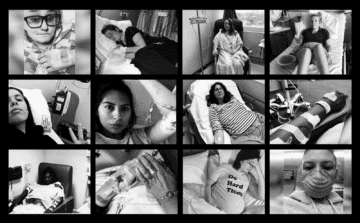 My journey to being admitted to hospital was fraught with dismissals, GP’s referring to my condition as just “really bad morning sickness”, rehydration sachets (which I couldn’t swallow because everything made me vomit) and then eventually first line antiemetics that at best allowed me to sleep but at worst made me so dizzy that I couldn’t function. Being in hospital for 12 hours overnight was akin to heaven; I wasn’t sick, after being severely dehydrated even the first bag of fluids made me euphoric, and the hospital food wasn’t that bad either after weeks of surviving on nothing. The consultant on the early pregnancy unit asked me to give her “24 hours”, I reluctantly said yes, just after I had begged her for a termination.
When I was discharged from hospital, I finally felt safe and believed that I was going to be okay and that I was going to be able to continue this pregnancy. I was wrong. Whilst I had been rehydrated enough to feel normal again in loose terms, the anti- sickness medication they had given me was nowhere to be seen, no prescription, no follow up and no treatment plan. My euphoria lasted for less than a day and then the cycle of vomiting, excessive saliva, hypersensitivity to light, smell and movement triggers pulled me back in to a very dark place and I had suicidal thoughts.

Another two weeks went by and I was admitted to hospital again for rehydration and it was here alone at night that I decided to read my medical notes for something to do and saw for the first time the words “severe hyperemesis gravidarum”. Up until that point no one had spoken of my diagnosis, any power I could have gained from understanding what was wrong with me had been taken away. I could not understand why every health care professional who had cared for me had continued to tell me that I just had bad morning sickness. Not knowing what was wrong with me left me feeling like this was my fault, like I could not cope with pregnancy, I was too weak to get through this and I wasn’t fit to be a mother.
At 16 weeks pregnant, I was finally prescribed the medication that I was being administered in hospital to take at home. Ondansetron saved my life and my pregnancy. Why I wasn’t offered this as my condition worsened, why I wasn’t put on to a care plan when I was first admitted to hospital and why my GP decided to dismiss my symptoms as usual pregnancy sickness I couldn’t comprehend.
Continuing the pregnancy
Returning to a usual albeit medicated pregnancy was tough. My mental health had taken a serious blow. Did you know that women with Hyperemesis are eight times more like to suffer with antenatal depression? I didn’t, but it doesn’t surprise me. The torment and the isolation left me severely traumatised and yet no one reached out and asked me how I was. I attended my usual midwife appointments like nothing had ever happened. I mentioned what I had been through as it was not in my notes. There was a complete disconnect between the EPU, my GP and my midwife. At no point did anyone say, “how is your mental health?”. Language matters, it is not good enough to ask, “how are you?”, when you are suffering, and you do not know why, we can’t beat around the bush.
Traumatic pregnancy, long-term impact
 In 2016 I gave birth to my beautiful son Henry. Two years later I was still struggling from my trauma. I was searching for something that was going to give me closure, anything to explain to me what this condition was, would I suffer from it again in a subsequent pregnancy, are there any other long term effects on my physical health because I was still feeling the mental impact. Sick – The Battle Against HG documentary was born out of that need and gave me a platform to tell my story. Researching the condition, I uncovered that my experience is not in the minority. Hundreds and hundreds of women tell the same story; dismissed, not believed, marginalised, left to cope with no help, told that there is nothing that can be done.
The issue of medication in pregnancy is still taboo. Whilst one GP I interviewed in the film admitted to her colleagues being petrified to prescribe because of the Thalidomide scandal, another Doctor confirmed that there is an abundance of safety data to support doing so. One of the brave women who agreed to be in the film, Claire*, spoke to me about her decision to terminate he pregnancy because of Hyperemesis. She is not alone; a 1000 women a year terminate their pregnancies due to or in part due to hyperemesis. Her reasons made sense. Having a child already to look after with no support, no home health care team, and no assurances that she would be able to care for the child she had she felt that there was no other option.
 Rachael was 5 weeks pregnant with her second child when I met her, she was already bed bound, experiencing excessive saliva and unable to be too close to her daughter for fear of her smell making her sick. I didn’t speak to Rachael again until her second daughter was born, she wasn’t able to communicate me and is yet to tell me about her second HG pregnancy, as she needs to address this with a therapist first, talking about it is too painful.
Call to women and health professionals
But there is hope. The Royal College of Obstetricians and Gynaecologists released their Nausea and Vomiting in pregnancy Green top guidelines in 2016 to help health care professionals treat and women with HG. The guidelines give a very clear plan, support, and information on how to treat this life changing condition. If you need more education on this condition please watch the film, please read the guidelines, and try to understand that supporting women with this condition is different to a usual pregnancy.
Conclusion
Ginger biscuits, eating little and often, ginger tea and other remedies for usual pregnancy sickness will not work for a hyperemesis sufferer and that is simply because they do not have usual pregnancy sickness. This is a genetic condition.
It is very likely that whilst we are going through this we will be isolated to our bedrooms, having to rely on friends and family to look after our children, we will need time of work and will likely be on sick pay, financial constraints, guilt and intrusive thoughts will consume us, whilst we are being sick sometimes up to 30+times a day and experiencing unrelenting nausea.
Empathy and sympathy comfort us, but access to medication and treatment is what will save us.
Further information
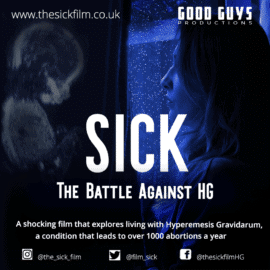 Sick – The Battle Against HG is now available on Prime Video in the UK & US and Vimeo. For more information please visit www.thesickfilm.co.uk or @the_sick_film on Instagram.
If you are currently suffering with Hyperemesis Gravidarum or think you might be, please contact the Pregnancy Sickness Support Charity for more help.

