








Midwifing after loss
Melissa Newman – Midwife and Doctoral Student, University of Bath
Let me introduce myself. My name is Melissa and I am a midwife and mother. Actually, the latter role is debatable, as you’ll never have the pleasure of meeting my daughter. That privilege was reserved for myself. You see, I carry my child in my heart, not my arms.
Enveloped by pain
Ironically, my brother’s birthday kicks off baby loss awareness week each year. As sister to a stillborn sibling, I unfortunately grew up understanding the importance of this week. Except to bereaved families, the tortuous grief does not last a week, it lasts a lifetime. We don’t get to light a candle in remembrance and then forget about it until the next year. Our pain is ongoing, relentless and suffocating. Completely engulfing. It was my brother’s milestone 21st this year and although I was only 4 when he died, I remember every event surrounding his passing with great clarity and emotion. His death inspired my career choice of midwifery and Masters choice of Genomic Medicine. I strive to ensure no woman is treated the way my mum was, which influenced my PhD research as well.
I cared for 3 bereaved families in my first week of placement. My mentor was incredibly kind and drove us to empty car parks after each one, where I would sit and cry and wonder what the hell I’d got myself into.
I’d only just left school – why had I opted for this great responsibility and heartache when my friends were living care-free lives partying their nights away? What my mentor didn’t know was that I was also mourning for these families’ older children, because that had been me 14 years prior. They tend to get forgotten about so at each house we visited I would watch them intently. Some played happily on the floor, unaware of the mass devastation and heavy atmosphere around them. Some were clingy and crying. But others mirrored their parents in sitting still as a statue on the sofa, pale and unmoving. These were the children who concerned me the most. Dismissed by healthcare professionals as ‘too young to remember’, however personal experience dispelled this myth.
The first stillborn baby I had the privilege of assisting into the world was born in the same hospital as my brother, on his 15th birthday. I took this as a sign and poured myself into doing everything I could to provide the highest standard of care possible for this family, and their kind words will stay with me forever. Over the years I have had the honour of supporting many families through losses of all gestations and I still visit some of their graves now. I also find myself incredibly helpful in answering practical queries such as the longevity of clay and ink hand and footprints.
Sharing our grief
The family whose baby was my first ‘catch’ tragically returned 2 years later suffering a term stillbirth, so although I knew it would be emotionally challenging, I requested to care for them. As I was a third year, I did so largely alone but before I’d had the chance to introduce myself, the father jumped up from the bed and exclaimed “Melissa?”. Their teary eyes lit up and they smiled genuine smiles for the first time in days. They remembered me! In order to uphold confidentiality I cannot divulge too much but what I will say is that I had several of the most rewarding days of my life caring for this family. They so appreciated the familiar face and continuity of care and we spent hours going through photos they had of me cradling their last baby, grinning from ear to ear despite being awake for 24 hours. When they expressed concerns about how they would tell their children their sibling would not be coming home, I felt it appropriate to share my family’s story. So we sat together, all 3 of us holding hands and hugging intermittently, as I reassured them that their children will be ok, they won’t be traumatised for life.
I am a statistic. I am 1 in 4
Then 2 years later, almost to the day, I lost my own daughter. I was 23 years old and had been a community midwife for about 18 months when my pregnancy both began and ended at work. I had a spare few minutes before my clinic started so took a pregnancy test (as you do!) but with PCOS and endo, didn’t expect it to be positive. Except it was. I remember each and every woman I saw that day because I likened myself to them one way or another, for example when I did a booking I thought “this’ll be me next month”, when I discussed birth preferences I internally considered my own wishes and when I auscultated a heartrate my heart soared at the thought of hearing my baby for the first time.
 I had a bit of a rocky start with my GP tossing my pregnancy test in the bin and declaring that I was miscarrying so urgently needed to attend EPU. She wouldn’t listen when I pointed out you have to wait a few minutes, so once that time passed I retrieved it from the bin myself to show her I was in fact very pregnant. Undeterred, she insisted I attend hospital so I did and the second I saw my baby on the screen I fell in love. My HCG 48 hours apart more than doubled and the pregnancy continued to progress. My partner and I began sorting finances and looked at moving house.
As this is a tale of midwifing after loss, you can don’t need me to tell you how this ended. (Hint: not with a waterbirth and newborn photoshoot).
But I can tell you that it is beyond me how a mother continues to breathe after losing a part of her. The grief is raw, primal and creeps into every corner of your body and mind, completely affecting your functioning.
I believe the emotional pain will last a lifetime and unfortunately my physical suffering was dragged out over many weeks until eventually, septic and anaemic from the haemorrhaging, I underwent emergency surgery to remove retained products. It was bizarre to be an inpatient on the wards I worked on, be cared for by the multidisciplinary team I worked within and be poked and prodded and my uterus used as a medical marvel. At 2am one morning I was laid flat on my back, hips raised in the air and transvaginal ultrasound probe being passed around 2 consultants and 3 medical students as they all had a go while I writhed in agony. I remember thinking “How did I get here? This wasn’t supposed to happen” as silent tears fell.
There were so many onlookers that my partner wasn’t allowed in the tiny room to support me. Nor was he allowed to help me go to the toilet – a nurse had to stand over me while I tried to pass urine for her. Yes, I learnt a lot about patient care during these horrific few weeks that I was in and out of hospital. Largely, my care was brilliant and I am so grateful for the NHS but being the patient taught me how seemingly small things to a clinician can actually be a big deal for the patient. And whilst the vast majority of my colleagues were supportive, I will never forget the callous and cruel comments of those who were not.

What is it like midwifing after loss?
I returned to work still bleeding, anaemic and on antibiotics. And I carried on. I auscultated fetal heart rates reminiscing that the last person I’d used my sonicaid on was myself. I discussed analgesia in labour, knowing that I no longer needed to concern myself with this. Some families were angry towards me that I had been off work. I watched them cradling their tummies as I listened to their tirades poker faced and apologetic, when really I just wanted to scream “my baby’s just died!” The guilt was overwhelming that I could keep other people’s babies safe but not my own.
And what is the answer to the question I am asked multiple times a day: do you have children? I cannot wipe the smile off their faces with the truth, it seems neither professional nor kind. So instead I smile back “no not yet”. This response is either met with judgement of how I can be a childless midwife, or a lighthearted warning “don’t do it, morning sickness is horrible!”. Thanks for the advice but I know that already and would endure it again to go back in time and have my daughter wriggling around inside my tummy happy and healthy. Alive.
Before I lost my daughter, I found bereavement care to be one of the most rewarding aspects of my job and I am happy to say that this hasn’t changed.
It is the greatest privilege to be one of the few people in the world who gets to meet a family’s precious child (and sometimes I have been the only person in the world to hold, dress and talk to babies when parents don’t wish to see them). I have shared many a quiet moment on my own showing them the love and affection they deserve and they each hold a special place in my heart. I like to think, and the heartwarming feedback I’ve received tells me, that I have always provided sensitive, compassionate care to families experiencing the unthinkable, however my support is underpinned with pure empathy now. My traumatic experiences have enabled me to bond on a deeper level with women who, ravaged by pain, cry “you don’t understand!”. I reply “I do”, our eyes lock, and our grief is shared. They feel safe pouring out the emotions they’ve locked up and releasing the thoughts they feared vocalising.
A unique kind of grief
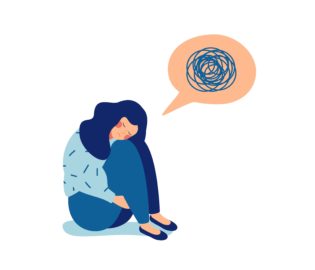 Baby loss is a unique kind of grief because you not only grieve their existence but also mourn the loss of who, in your head, they were, their future and your future as a parent. This can be hard for others to comprehend and relate to. You learn to live with a heavy heart, occasionally triggered by anniversaries of key dates in your pregnancy or your periods reminding you you’re no longer pregnant. But when you’re a midwife, triggers are everywhere. I don’t believe in feeding the taboo and stigma of baby loss, however sharing the story of my brother and daughter with families I care for seems unprofessional unless I judge the situation appropriate, i.e. they would benefit. Otherwise it feels unfair to tarnish their joy. But if you look carefully, you’ll see me urging just a little bit stronger to be vigilant with fetal movement monitoring and spending just that little bit extra time ensuring parents understand safe sleeping advice. Because when you lose a baby, of any gestation, you also lose a part of yourself as all your plans, dreams and aspirations vanish in an instant.
 @_midwifelife_ , @Midwife_Melissa