








Through the Eyes of a Visually Impaired Mum
Catherine Riley (She/her)
Instagram: through_my_mummy_eyes
Summary
Catherine is a 41-year-old mum of 2 who is partially sighted, a hidden disability which, other than wearing glasses you wouldn’t even know of. This article takes you into Cath’s world, so for a few minutes you can understand her daily challenges and future prognosis whilst reading her pregnancy journey. The aim is that after reading this article you can understand more about what a hidden disability is and what an impact it can have.
Introduction

Cath Riley
Hello, my name is Catherine Riley and I’m a 41-year-old mum of two who has a hidden disability, I’m registered as severely sight impaired. I was born with this genetic condition and don’t know any different, however my diagnostic journey has been far from straight forward. Now before I explain the biology, I thought it may be helpful to explain what I actually can see….
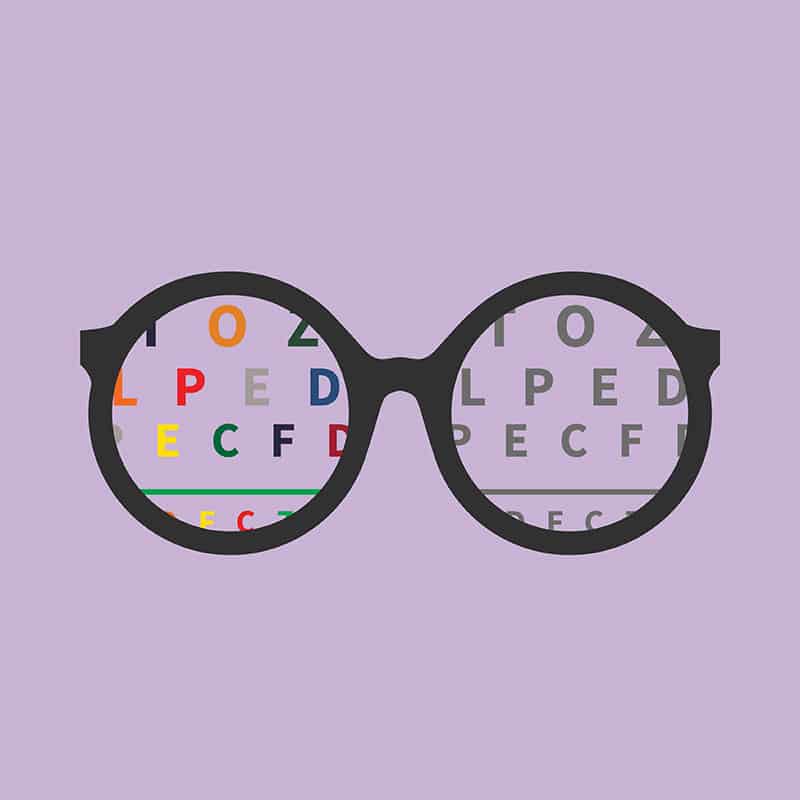
I have no central vision, the middle area isn’t black, it’s just blurred so I squint a lot, allowing my eyes to focus on what I need to see. I have no vision over 1m; I know beyond 1m is there but have no clarity of it. I am colour-blind across the spectrum, so I don’t see colours like you, over time I’ve just learnt what shade is associated to what colour. I have no night vision and going out in the dark is extremely challenging as I literally may as well just close my eyes. Lastly, I have no depth perception; I know the other side of the road is there, but I don’t know how far away it is. I was never the girl you wanted in your rounders team – just put it like that!
Now for the science….
My condition is a very rare recessive genetic disorder called KCNV2. Both my mum and dad are carriers of a faulty gene and aren’t affected,  yet both my sister and I have the disorder. To put into context how rare this is, imagine a library of books and one word in one book has a spelling mistake, well both mum and dad have a different spelling of that same word. It still blows my mind when I break it down this way. When I was 7, I was diagnosed with another condition which remained until I was 39. However, when I became pregnant with my first child, I started upon a genetics journey to ascertain and understand more about my condition as I wanted to know the possibility of my child also being affected.
My entire family all entered the 100,000 Genome Project study which analyses my genetic profile and makes sense of it in relation to my mum, dad and sister. The results of this test took over 4 years to report, by which point I had a second child and my sister her first. Thankfully all 3 children are completely unaffected by our condition and have ‘normal’ sight – although they may be carriers. I can honestly say it’s the biggest relief imaginable because as a mum you just want the best for your children and our condition has brought so many challenges and continues to do so.
The day I received my ‘new’ diagnosis was undoubtedly one of the most terrifying and traumatic days of my entire life, as I was told that there is a potential that I may go blind. Well, I’m a very practical, glass half-full, ultra-positive person but that conversation was like a lighting bolt of realisation of something I couldn’t control or understand. In that moment I didn’t know if or when it would happen, perhaps even preventing me from seeing my children graduate or walk down the aisle. On that day at that time, for the first time in our lives, both my sister and I felt so incredibly lonely and vulnerable, but we had each other to contribute to it with and help understand what this meant for us and our families. We are strong and determined and since that awful day we haven’t looked back once and we continue our lives not knowing what, when or even if things will change.
As a mum you encounter so many challenges just getting through your daily routine but now factor in a hidden disability that no one can see or understand
My pregnancy journey
As a mum you encounter so many challenges just getting through your daily routine but now factor in a hidden disability that no one can see or understand, and the challenges can be dramatic! So, what have these challenges been so far?
I couldn’t see my pregnancy test, so my husband knew before me that I was pregnant. During my first midwife appointment at my local GP surgery, I was given lots of information to read, none of which I could even read. At my 12-week scan, I couldn’t see the screen so my husband saw our baby before I did, all I could do was listen to the heartbeat. Then I was given copies of the wrong scan so the picture I was looking at, whilst getting all excited that I could finally see my baby, wasn’t even my baby and was in fact a picture of someone else’s 20-week scan!

Both of my children were breech and were born with planned C-sections. Going into hospital with a hidden disability is extremely tough; everything about your surroundings is unfamiliar, scary and causes huge anxiety. Initially I was put onto a ward with 5 other pregnant mums, as that was hospital policy following surgery. What about the dangers and risks I could have encountered or caused by not being able to see around me – especially at night? I could have fallen or tripped on a chair, bed or table and even worse tripped on a crib which housed a defenceless new-born. Thankfully the ward sister finally took pity on me and moved me to a side room. So, what was my hospital experience like? In one word ….traumatic.
I went into theatre and could only hear voices; I didn’t know who anyone was or what anyone was doing. When my daughter was born and they lifted her up to me, I couldn’t even see her as they didn’t bring her close enough; so yet again, my husband experienced it before I did. I couldn’t breastfeed, as having no depth perception meant that I couldn’t see where her head was for me to line her up to latch her on. I learnt to change a nappy by feeling for the plastic tabs on the nappy, so I knew which was the back and front. I had people coming and going from my room all the time, often not introducing themselves or telling me what they were doing. Even picking my baby up out of the crib was difficult, as initially she was swaddled and her blanket blended in with the colour of the sheet so to me she was essentially like a floating head as that was all I could see. That’s when I knew I would – and still do to this day – dress my children in bright colours so they are walking, talking highlighters ….they stand out loud and proud because I can see them.
Once I came home from hospital I was back in my own surroundings and felt much better. However, I’d been discharged from hospital knowing that a midwife would be coming but not understanding or knowing what they would want or need to know. That information was in a leaflet but never explained to me. What have your babies’ nappies been like?? Well, I don’t know – yes she’s poo’d a lot but I can’t tell you what colour it is as I’m colour-blind. What’s your blood loss been like? I don’t know, yes there has been some but I can’t tell you what colour it was?? Really important questions that I needed to answer so the midwife could track the health of my baby and I, but my disability prevented me from doing it.
I formula fed both my children, but have you ever tried filling up a clear bottle with boiling water when you have your finger in the bottle so you know when it’s full? It’s not idea! I asked my midwife if we could pre-make the bottles each day as then my husband could do them each morning before he left for work; that’s what my mum did with me years ago. ‘Oh no no’ I was told, that’s not safe and you must prepare them as you need them. So I bought a special prep machine (we can’t advertise products Cath), but that still didn’t work as I had to pour water in and scoop the formula – both of which frequently ended up all over the worktop and not in the bottle! So, I resorted to the ready-made formula which helped.
So, what has this experience taught me?
For a start I’m not afraid to ask for help now. I’ve spent my entire life being fiercely independent, sometimes to my own detriment. Now I’ve accepted that it’s ok and nobody will think badly of me for it. I wish I’d sourced information and surrounded myself with other visually impaired mums even if this was online. I strongly believe that you don’t know what you don’t know so some challenges I faced were instant, for example pushing your baby for the first time in the pram when you don’t know where the front of your pram is. If I’d been able to chat to others who faced similar issues, then I really believe I wouldn’t have felt such loneliness.
So as a maternity health professional what advice can I offer you, should you be presented with anyone with a hidden disability? Ask the questions, try to understand their difficulties and how you can support and help them to bridge that gap, so they don’t feel the isolation I felt. Introduce yourself and explain what you are going to do before you do it, so you’re not just a voice in the room. Please just take those few extra seconds and speak to them as it will honestly make such a difference.
Follow me on social media…
I’ve now set up an online group on Facebook called ‘Through My Eyes’ and on Instagram called ‘Through my Mummy Eyes’ where I share my daily experiences and challenges and how I try to overcome them. It would be great if you could follow me and be part of my journey! TPM

