









Dancing in the Grey Zone Between Normality and Risk
Hannah Dahlen – Professor of Midwifery at Western Sydney University
Published in The Practising Midwife Volume 19 Issue 6 June 2016
Childbirth is mainly grey. The most straightforward of births can lead to unexpected, heart-stopping moments – and the highest risk woman can, despite our fears, birth without any of the imagined horrors being realised.As midwives we can choose to be paralysed with fear over this, or responsive to – and respectful of – such an amazing process. This paper discusses how midwives can learn to ‘dance in the grey zone’, while meeting their professional obligations and protecting women’s human rights. Come dance the waltz, the tango and the hip-hop with me on the dance floor created by the ‘triangle of wisdom’
‘When you dance, your purpose is not to get to a certain place on the floor. It’s to enjoy each step along the way’. Wayne Dyer
Childbirth is mainly grey
How we respond to the grey zone of childbirth can make us co-creators in outcomes for women, babies and families. We can become ‘undone by our fear’ on the one hand or ‘deluded by trust’ on the other. Both are dangerous places for us to position ourselves as maternity health providers (Dahlen 2010).
Learning not to manufacture fear is as important as learning not to ignore the evidence that we need to act.
Getting the balance right in birth is not about setting a steady course and never deviating from it until we reach our destination; neither is it being so focused on the destination that we don’t enjoy the journey. It is like sailing a yacht from the harbour into the open sea ‘ we constantly need to tack to stay on course; we feel the wind, respond to the billow of the sails and the lean of the boat, the messages coming from the depth sounder, the shape of the coast, the signaling of the lighthouse and the direction of the compass. To watch an expert sail a yacht is to see order being made from disorder and disorder being made from order until that boat is anchored and still again. Birth is much the same, and we need to learn to dance through the uncertainty, enjoy each step along the way and not become so focused on the destination that we forget to live life. I do worry that we are losing the joy that comes from being a midwife. It has all become too serious, stressful and complicated. It is time for midwives to dance!
Risk categories vs human rights

An increased tendency to classify women as either low or high risk has resulted in a near eradication of the concept of ‘normal,’ with increasing numbers of women defined as having ‘risk factors’, leading to high intervention rates in birth (Dahlen et al 2014a). In reality very few women are absolutely always either low- or high risk and neither definition may hold true at all times during the childbirth experience. Much of our job as midwives involves navigating the grey zone in between normality and risk. How do we do this safely, keeping women at the heart of our care, but also remaining accountable to our professional obligations of providing evidence-based information? How can midwives protect themselves without undermining women’s rights? A perfect example of this occurs in Australia, where several of the publicly-funded home birth programmes insist that women who want a home birth have a Group B Strep (GBS) swab or a glucose tolerance test (GTT), even if they have made an informed choice not to do this. They are virtually held to ransom over it: if they don’t comply, they are not allowed to have a home birth, and if they do comply and are screened positive, they are removed from the programme. This is a violation of a woman’s right to make an informed choice. This is not protecting human rights, but it is an attempt, in the most patriarchal of ways, to regulate women in order to protect babies. I find it bizarre, because when you think of the actual potential risk here, it is much less than that of a cord prolapse, for example, which we don’t even mention to women most of the time. Urich Beck describes acceptable risks as those that are acceptable (Beck 1999); but who gets to define this?
Fooling ourselves with certainty
The political polarisation in childbirth has led to entrenched discourses that reinforce the status quo and leave women and policy makers confused. In 10 years’ time will we look back at this period with the same incredulity that we now view the ‘twilight era’? Will our era be known as the era when we re-shaped the human race, and for how many generations will we be trying to undo the damage caused by our myopic approach? A more pragmatic way is to support women, midwives and doctors to see birth as mostly grey and sometimes black and white, rather than all black and white, as it is currently viewed. We all need to learn skills so we can ‘dance’ in the grey zone between normality and risk.
We have fooled ourselves for too long that there is certainty in this uncertain space we inhabit. We have also created a generation of women who want such certainty, and yet grasp at this in a fog of fear that we have been a part of manufacturing.
The ever-widening net of risk
Childbearing women are being pulled into an ever-widening net of risk (Dahlen 2014). There are now many more screening tests available to detect sometimes tiny and not well understood risks that lead women to be channeled down a pathway of intervention and medical surveillance that may bring small improvements in perinatal mortality rates under trial conditions, but leave unanswered the long-term physical and psychological implications for mothers and babies. Researchers have been complicit in this short-term focus and they are only now starting to wake up to the ramifications of this approach and look at the ripples that hit the distant shore (Dahlen et al 2014b) long after the birth has happened and we have all congratulated ourselves on a job well done.
Fifty shades of grey and more
Goethe (1749-1839) said that grey is the colour of theory, whilst Andre Gide (1869-1951) said it is the colour of truth. So much of what we come across as health professionals working in maternity care is grey, such as length of labour, progress at different stages, when to intervene and when not, what is acceptable and what unacceptable risk. How do you define safety and who gets to determine all the above? If the health provider determines what is acceptable or unacceptable risk for childbearing women, then the health provider becomes entirely responsible for the outcome, including the psychological trauma that comes from coercion. A shared dialogue about what comprises safety from both perspectives means health providers share the responsibility with women, and become partners in the making of strong mothers. We can choose to ‘wave shrouds’ in front of women or be ‘the wind beneath their wings’. I choose to be the wind. What choice have you made?
Dancing in the grey zone with Vanessa
On June 28th 2011, I wrote a letter to the manager of a birth unit in Sydney following a transfer during a planned home birth of one of my lovely clients, Vanessa (she has asked that her real name be used and has written and spoken about her experience). It was the longest labour I have ever been involved in and when I wrote this letter I had not slept for three days. The birth was a true marathon in every sense, and ended with a lovely upright birth on a birth stool, in the dimly-lit bathroom of the hospital, while strapped to monitors and hooked up to IVs. Here is part of that letter:
 ‘It is with great pleasure that I write this letter to you after the transfer of Vanessa on the 27th June. Vanessa was planning to have a home birth and had a long posterior labour with rising blood pressure. She was booked into [hospital] in case of transfer and we encouraged her to choose this hospital as we have great respect for [it] and know it is the amazing midwifery leaders you have that set this culture. For nearly 24 years (my midwifery career) I have sat in your seat with home birth transfer – being the receiving midwife and learning that there are women who have their own ideas of how they want birth to be. I have learned to ‘dance in the grey zone’, as I call it, somewhere between normality and risk. Yesterday when I transferred Vanessa (my first transfer in years – wish I could take you to all the amazing normal births we have!) it was with total knowledge that home was no longer the safest place to be; and to be greeted with smiles, respect and trust was wonderful. I want to pay tribute to all the staff that made the process seamless and easy. I know how hard it is to be responsible and yet know that the woman you care for has a strong connection and trust in another. I also know how hard it is to ‘dance in the grey zone’ of wanting to support women’s choice, needing to uphold the policies and guidelines of a hospital and, most importantly, stay safe. You all ‘danced in the grey zone’ with us yesterday, with amazing finesse! I know for Vanessa that she feels very proud and strong because of her birth, even if it had some unexpected twists. If you can transfer to hospital and have intervention that is needed, negotiate intervention that is perhaps debatable and feel in control of the decision-making and birth, as a woman, then we have achieved the best we can as midwives and doctors. Thank you once again for proving to me that when we all work together and keep women and their families at the heart of care, we can do this with safety and satisfaction for all.’
Vanessa described the birth of Lachie as climbing her Everest and I was her Sherpa. Vanessa went on in 2014 to give birth to Lucy: quickly, in water at home, witnessed by a wide-eyed Lachie, and her amazing partner, Joel. When asked what his sister’s name was, Lachie delightfully informed us it was ‘Lucy outta the gina’ (out of the vagina). Clearly he was taking note!
Dance steps in the grey zone?
If we go back to the story of Vanessa and how we danced for so many hours at home in the grey zone (I knitted an entire scarf in the process), what went on was this: Vanessa was okay, the baby was okay, she was happy at home and we had no clear reason to interfere until her blood pressure went up and there was a slowing down of contractions and no further progress. We moved from the grey into a darker zone where action was now advisable. Vanessa trusted us, so when we said I think now is the time to go to hospital, she was happy to do so. At home I described our dance as a waltz, and in hospital it moved to a hip-hop, with an occasional tango in the middle.
Here is how I describe the styles of dancing we engage in when dancing in the grey zone:
The waltz
Most of the time as midwives, ideally we should dance the waltz with women. They lead and we move with them, responding to the directions of their bodies, the look in their eyes and the feel of their movements as we glide around in tune. It is a slow and beautiful dance and most definitely memorable.
The tango
Sometimes we dance a tango and the rhythm is more intense and the footwork complicated and gymnastic, and at the end of it we are all rather breathless. We can at times wrestle with control over who leads this dance. It is dramatic, intense and full of passion and breath-holding.
The hip-hop
Sometimes we dance the hip-hop, where we dodge and negotiate policies, delay interventions, side-step expectations and there is a frantic individualism to the beat; in the end we feel rather exhausted as we ‘break’ and ‘lock’ and ‘pop’, improvising all over the place. This is how I often feel when we transfer from home, where the waltz has been the norm, into the hospital where the hip-hop may become a necessity.
Practise within your scope – advocate for women out of your scope
Midwives need to practise within their scope and to consult and refer when not. If we don’t do this, no matter how well meaning we may be (such as seeking to protect women from unnecessary intervention), then we are failing in our professional responsibilities and will be held accountable. If midwives abrogate all responsibility to continue to advocate for the woman when consultation or referral is required, then see wrong being done to women and say nothing, they are complicit in the abuse. If you say nothing you have made as big, if not bigger, a mistake than practising outside your scope. Of course the best way to reduce the need for conflict with colleagues is to have a shared philosophy around birth, to work in teams where relationships are built and to respect each other. However, above all, we need to recognise that the woman’s word is final and our job is not to coerce but to inform. I do not believe we need to sell out women’s rights to meet our professional responsibilities ‘ or sell out our professional responsibilities to support women’s rights. I do believe we do both more than we should, and neither is acceptable, nor is it necessary.
Scaling up the advice
Where I find midwives get into hot water with advice is by not appropriately scaling up the advice they give to women, the more serious the implications of the decisions become. Below are some examples of what I mean by this scaling up:
- You could do either, as the evidence is equivocal; a perfect example of this position is GBS screening.
- There is evidence that this increases the risk for you and/or your baby and so we would recommend; an example of this slightly more directive position would be advising a woman with raised blood pressure to have a consultation with a medical professional.
- The risk for the baby is significantly increased and so I would strongly recommend; an example of this scaled up advice would be when a woman wants a home birth with a breech baby or twins.
All this can be done without bullying and harassing the woman, or coercing her into a choice she does not want. We also have a responsibility to try and get the elements of care that she wants and work hard to get as close as possible to her ideal birth. She may choose not to be continuously monitored, for example, but agree to birth in hospital and we need to be able to compromise and meet halfway when this is required.
Blatant refusal to consider options can make women feel they have no other choice than to avoid our systems of care altogether and this is the worst possible scenario (Dahlen et al 2011).
The triangle of wisdom
Practising within a ‘triangle of wisdom’ is to dance safely in the grey zone. At all times the woman must remain central (See Figure 1).
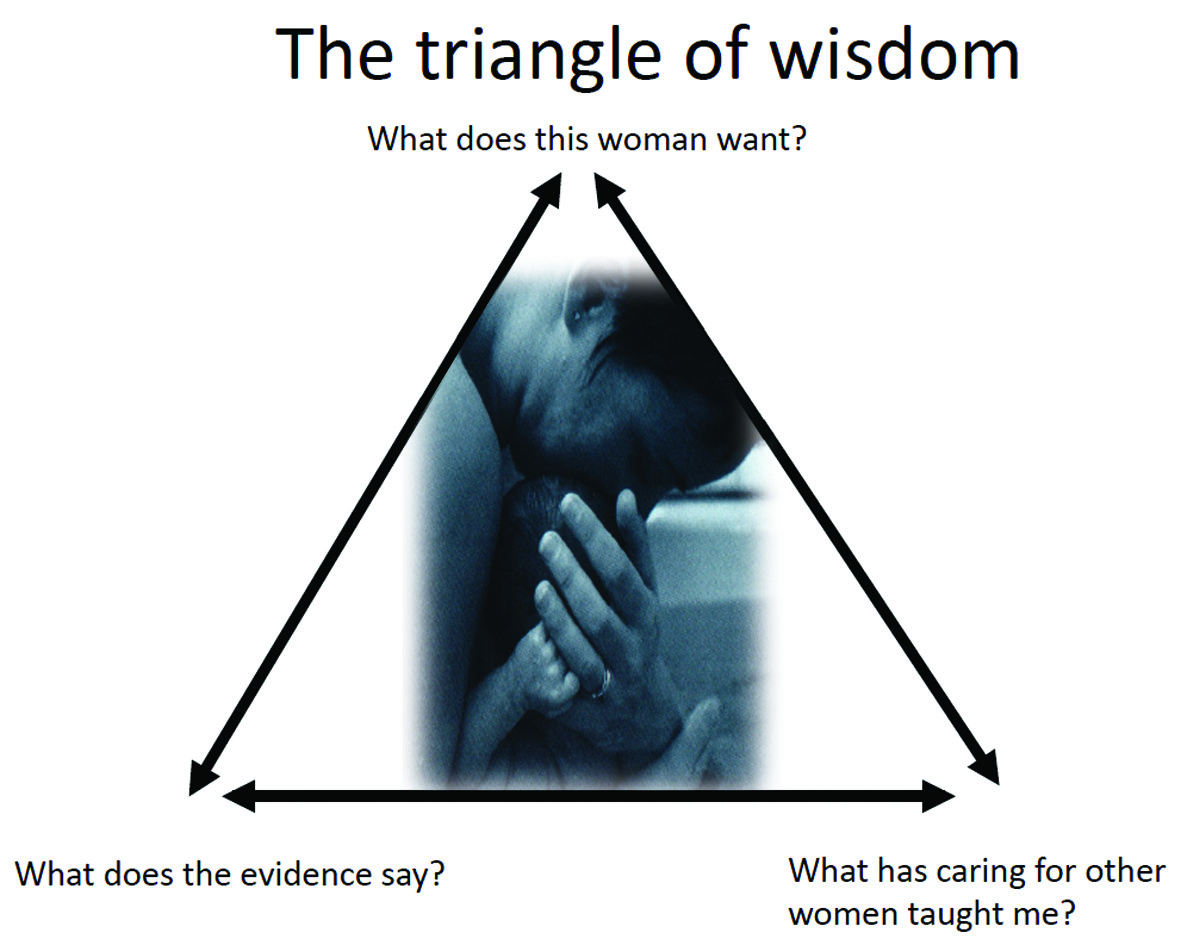
Figure 1. 1. What does this woman want? 2. What does the evidence say? 3. What has caring for other women taught me?
Why dance at all?
Childbirth is mostly grey, preparing us for parenthood, which is most certainly a grey zone. Rather than be frightened of this unknown we face, we need to embrace it for the lessons to be learned, the joys to be experienced and the heartbreak that may come, no matter what we do and when we least expect it. Don’t be frightened to dance in the grey zone. As Nietzshe said, “We should consider every day lost in which we do not dance at least once.’ TPM
References
- Beck U (1999). World risk society, Maiden, Massachussetts: Polity Press.
- Dahlen H (2010). ‘Undone by fear? Deluded by trust?’ Midwifery, 26(2): 156-162.
- Dahlen H (2014). ‘Managing risk or facilitating safety?’ International Journal of Childbirth, 4(2): 66-68.
- Dahlen H, Jackson M and Stevens J (2011). ‘Homebirth, freebirth and doulas: casualty and consequences of a broken maternity system’. Women and Birth, 24(1): 47-50.
- Dahlen H, Tracy S, Tracy MB et al (2014a). ‘Rates of obstetric intervention and associated perinatal mortality and morbidity among low-risk women giving birth in private and public hospitals in NSW (2000’2008): a linked data population-based cohort study’. BMJ Open, 4(5): e004551. doi:10.1136.
- Dahlen HG, Downe S, Powell Kennedy H et al (2014b). ‘Is society being reshaped on a microbiological and epigenetic level by the way women give birth?’ Midwifery, 30(12): 1149-1151.

