







Maternal Mortality Amid Myanmar’s Developmental Challenges
Rachel Campbell (she/her) – Midwife and PhD researcher, NHS and Ulster University
Social @RachelC99731904
Published in The Practising Midwife Volume 28 Issue 4 July 2025, Pages 40-43
https://doi.org/10.55975/DANY1867
Global Conflicts and Crises Series
 Global conflicts and crises challenge maternity care worldwide. This series shares experiences from midwives and birth workers, addressing the profound impact on women, families and healthcare providers. We invite midwives, birth workers, researchers, educators and families to share research, personal stories and strategies for improving care during crises. By contributing, you can help elevate global conversations, support marginalised communities and advance midwifery practice in times of turmoil. Together, let’s support continued learning, sharing and caring across our community.
Summary
The decision to pursue a PhD is often personal, shaped by life experiences, professional aspirations and a commitment to advancing knowledge in a particular field. This article explores how my experience volunteering in Tanzania and working as a midwife in the NHS led me to embark on a PhD as part of the wider Birth Across the Borders (BAB) project. It will discuss the current challenges impacting maternal mortality in Myanmar, and how my PhD aims to enhance the management of obstetric emergencies through the development of sustainable, culturally appropriate, educational interventions.
The global maternal health crisis: a driving force
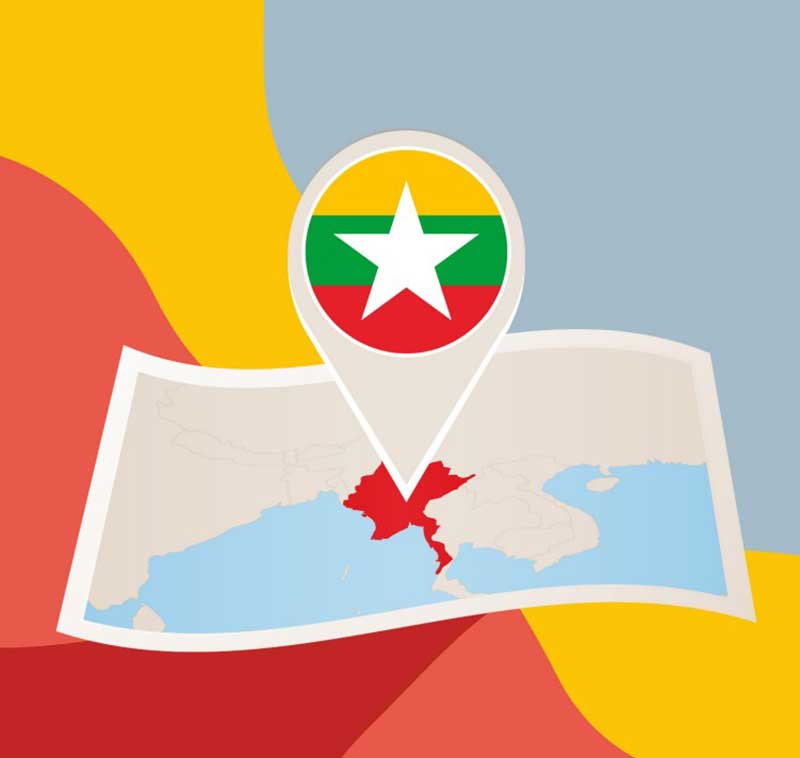
Each day approximately 800 women die globally from preventable causes related to pregnancy and childbirth.1 Almost 95% of these deaths occur in low and lower-middle income countries. Myanmar is a Development Assistance Committee (DAC) listed country,2 experiencing extreme poverty, limited infrastructure and is vulnerable to natural disasters and climate change. Significant ethnic conflicts have persisted since Myanmar gained independence in 1948, with an intensification of violence preceding the declaration of a coup on February 1, 2021. Three years on and an estimated 2.6million people have been displaced, whilst civilians continue to face human rights violations, violence and systematic discrimination. This has contributed to Myanmar being classified as one of the most fragile settings globally.3
The most recent maternal mortality rate (MMR) in Myanmar is 179:100,000 live births.4 However, in view of the heightened instability, this number is likely to be significantly higher. In comparison, the MMR in the United Kingdom is significantly lower, with the latest MBRRACE-UK report indicating a MMR of 13.56 per 100,000 maternities.5 This stark difference highlights the disparities in healthcare access, education and socioeconomic factors between the two countries, emphasising the urgent need for improved maternal healthcare in Myanmar.
Obstetric emergencies pose a major threat in Myanmar and often derive from poverty, lack of education, lack of access to essential health care facilities, social and cultural prejudices and gender-based violence. Eclampsia and pre-eclampsia (21.6%) are the leading causes of maternal mortality in Myanmar, followed by postpartum haemorrhage (18.2%) and abortion related complications (13.2%).6
Utilisation of maternity care in Myanmar is often associated with level of education, household income, geographical location and access to transport.6 Over one third (36%) of women give birth in the absence of a skilled birth attendant (SBA), with women in remote regions continuing to be disproportionately affected.7 Subsequently, many women rely on traditional birth attendants, who are often untrained. In Myanmar, auxiliary midwives (AMWs) are community health volunteers, whose role is to support the work of midwives in remote areas. They play an important role in identifying and referring high-risk pregnancies to larger health facilities.8 However, healthcare providers in low and lower middle-income countries may lack the required competencies to effectively manage obstetric emergencies.9
Personal connection to fragile healthcare systems
In 2011, I spent a year volunteering in a Tanzanian orphanage and each morning was greeted by children sporting the biggest smiles. I quickly realised that these smiles masked an immense amount of loss and suffering. Many of these children had lost their mothers during childbirth, rendering them vulnerable to poverty, malnutrition and neglect.
This experience motivated me to undertake a one-month shadowing placement in both a rural and urban maternity hospital in Tanzania. I witnessed first-hand the devastating impact fragile healthcare systems have on maternal and neonatal outcomes. Both hospitals were a stark comparison to the UK in terms of access, infrastructure and resources, however, the disparities between the rural and urban hospitals were also striking. The rural hospital lacked basic necessities such as running water, electricity, medications and SBAs.
Despite facing incredible adversity, people showed remarkable determination and resilience. Their ability to smile and find happiness in challenging circumstances was inspirational. This marked the start of numerous journeys back to Tanzania and set me on the path to becoming a midwife and subsequently undertaking a PhD as part of the wider BAB project.
“I witnessed first-hand the devastating impact fragile healthcare systems have on maternal and neonatal outcomes.”
The birth across the borders project: a broader perspective
The BAB project works closely with local partners, with the intent to gain a deeper understanding of the specific challenges facing families living in remote, fragile regions of Myanmar.10 The project is framed on the Three Delays Model11 and consists of three substantive work packages:
- Helping families and communities recognise obstetric complications and know where to access help.
- Further train health workers to recognise the signs of obstetric emergencies and subsequently know how to manage these emergencies.
- Considers entrepreneurship, helping to support community leaders and local people to set up their own business, enabling them to move out of poverty and access life- saving healthcare.
My PhD aims to address the third delay, which is a delay in receiving adequate healthcare.12 Recognising the important role mid-level health providers (MLHPs) play in scaling-up the workforce in remote regions, my study was conducted in partnership with a non-profit organisation delivering a medical assistant training program in a remote mountainous region of Myanmar. The aim was to evaluate the level of emergency obstetric care (EmOC) education being delivered and identify areas of potential enhancement to improve the management of obstetric emergencies.
Bridging my experiences
My PhD journey has been profoundly influenced by my diverse experiences working as an NHS midwife, volunteering in an orphanage and undertaking a shadowing placement in both a rural and urban hospital in Tanzania. Each role has given me unique insights into the different realities of maternal healthcare across varying contexts, enriching my understanding of the global landscape of care.
Working as a midwife in the NHS has provided me with a solid foundation of evidence-based practice, safety and structured emergency obstetric care. Furthermore, it has taught me valuable insights into the critical components of obstetric emergency education, which have proven invaluable as I progress through my PhD.
My experiences in Tanzania have deepened my understanding of maternal healthcare in remote, fragile settings. Tanzania and Myanmar face similar challenges in terms of an inconsistent healthcare infrastructure, scarce resources, environmental obstacles and a shortage of SBAs. These parallels have enabled me to draw on the lessons I learned in Tanzania and apply them to my research in Myanmar.
I feel privileged to have undertaken my midwifery training at a university equipped with a state-of-the-art simulation suite. This enabled me to practice my obstetric emergency skills in a simulated environment before commencing clinical placements. The concept of continuous professional development was embedded from an early stage of my education and since qualifying I have been fortunate to benefit from comprehensive, hands-on obstetric emergency training that fosters teamwork and collaboration across the multidisciplinary team. This is sadly often not the case in remote, fragile settings, where global inequalities in training persist.
Throughout this research journey, I have come to appreciate that knowledge exchange is a two-way process. Both Myanmar and the UK are currently facing unprecedented challenges in the delivery of maternal healthcare, albeit in different ways. The resourcefulness, adaptability, determination and resilience displayed by the medical assistants in my research was remarkable. I hope to carry these qualities forward into my own practice as a midwife.
“Both Myanmar and the UK are currently facing unprecedented challenges in the delivery of maternal healthcare, albeit in different ways.”
Embracing growth: a final reflection
My experiences volunteering in Africa reinforced the importance of ethical engagement in low-income settings. I learned that responsible volunteering goes beyond good intentions – it requires cultural sensitivity, community collaboration and a commitment to avoiding harm. As such, I went into this PhD journey with humility and respect, recognising the importance of collaboration and local perspectives.
The process of undertaking a PhD in a fragile, conflict-affected region has presented a rollercoaster of emotions. However, by adopting a flexible, pragmatic approach to data collection, I was able to overcome the numerous barriers related to restricted access, logistical difficulties, security risks, health hazards and ethical concerns.
As I start to unravel my research findings, I am excited to see how this knowledge may guide the future design of EmOC education, through facilitating the development of sustainable, culturally-sensitive educational interventions to enhance training for MLHPs at local, national and international levels. The opportunity to disseminate my research at both national and international conferences has broadened my perspective of global maternal health issues.

Conclusion
For me this journey was not just an academic endeavour, rather a deeply personal mission to address healthcare disparities in remote, fragile regions, where thousands of women and newborns die due to preventable reasons each year. With plans to submit my thesis within the next few months, my next steps involve finalising chapters, presenting findings to key stakeholders to facilitate enhancements in EmOC education and training, and publishing the study findings. It has been a privilege to get the opportunity to work as part of the wider BAB project and I hope that this work contributes to the broader global effort to reduce maternal and neonatal mortality and morbidity. TPM
Acknowledgements
I would like to sincerely thank the gatekeeper and participants whose invaluable support and participation made this study possible, especially within such a fragile and challenging context. Your contributions have been vital to this research and for that I will be forever grateful.
References
- Maternal mortality. WHO. https://www.who.int/news-room/fact-sheets/detail/maternal-mortality. Updated April 07, 2025. Accessed October 11, 2024.
- ODA recipients: countries, territories, and international organisations. Organisation for Economic Co-operation and Development. https://www.oecd.org/en/topics/sub-issues/oda-eligibility-and-conditions/dac-list-of-oda-recipients.html#oda-recipients-list. Accessed October 09, 2024.
- Haken N, Woodburn D, Sample E, et al. Fragile States Index Annual Report. https://fragilestatesindex.org/2023/06/14/fragile-statesindex-2023-annual-report/. Published June 14, 2023. Accessed October 02, 2024.
- World Bank Group. Maternal mortality ratio (modeled estimate, per 100,000 live births) – Myanmar. https://data.worldbank.org/ indicator/SH.STA.MMRT?locations=MM. Accessed October 07, 2024.
- Felker A, Patel R, Kotnis R, Kenyon S, Knight M, eds; MBRRACE-UK. Saving Lives, Improving Mothers’ Care Compiled Report: Lessons learned to inform maternity care from the UK and Ireland Confidential Enquiries into Maternal Deaths and Morbidity 2020-22. https://www.google.com/url?sa=t&source=web&rct=j&opi=89978449&url=https://www.npeu.ox.ac.uk/
assets/downloads/mbrraceuk/reports/maternal-report-2024/MBRRACE-UK%2520Maternal%2520MAIN%2520Report%25202024%2520V2.0%2520ONLINE.pdf. Published 2024. Accessed February 02, 2025. - Tun KK, Inthaphatha S, Soe MM, Nishino K, Hamajima N, Yamamoto E. Causes of death, three delays, and factors associated with Delay 1 among maternal deaths in Myanmar: The maternal death surveillance 2019. Midwifery. 2023;121:103657. doi.org/10.1016/j. midw.2023.103657.
- Show KL, Maung TM, Disney G, Bohren MM, Lumbiganon P, Ngamjarus C. Socioeconomic inequalities in skilled attendance at birth and caesarean section rates in Myanmar 2015-2016: a cross-sectional study. BMJ Open. 2024;14(3):e076646. doi.org/10.1136/ bmjopen-2023-076646.
- Than KK, Tin KN, La T, et al. The potential of task shifting selected maternal interventions to auxiliary midwives in Myanmar: a mixed-method study. BMC Public Health. 2018;18(1):99. doi.org/10.1186/s12889-017-5020-2.
- Danna VA, Bedwell C, Wakasiaka S, Lavender T. Utility of the three-delays model and its potential for supporting a solution-based approach to accessing intrapartum care in low-and middle-income countries: A qualitative evidence synthesis. Global Health Action. 2020;13(1):1819052. doi.org/10.1080/16549716.2020.1819052.
- Birth across the Borders: exploring contextual education as a catalyst for improved maternal health. UK Research and Innovation. https://gtr.ukri.org/projects?ref=ES%2FT004983%2F1. Accessed October 08, 2024.
- Thaddeus S, Maine D. Too far to walk: maternal mortality in context. Soc Sci Med. 1994;38(8):1091-1110. doi.org/10.1016/0277- 9536(94)90226-7.
- Campbell R, Kernohan G, Dornan L, Sinclair M. An ethnographic study evaluating emergency obstetric care education and training in a remote, fragile region of Southeast Asia: study protocol. Nurs Open. 2023;10(12):7860-7870. doi.org/10.1002/nop2.2034.