









Book Review: A Grand Quarrel by Naomi Stadlen
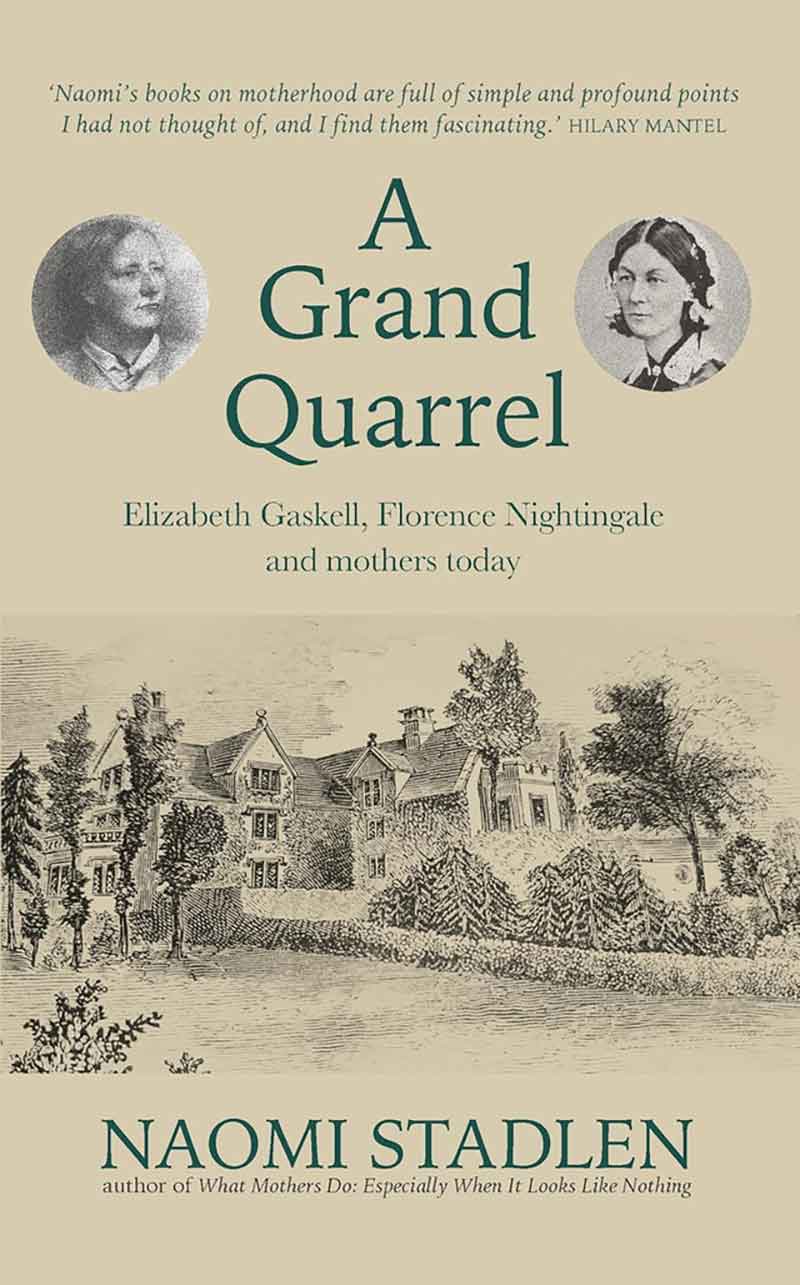
Review by: Joanne Rack – Clinical Doctorate Midwife
Publication date: 2025
Published by: Montag & Martin
Format: Pbk, 208pp
RRP: £14.99
ISBN 978-1780668208
Naomi Stadlen’s A Grand Quarrel is a historical exploration of women’s roles and what constitutes a ‘good use’ of women’s lives, framed through conflicting feminist perspectives of motherhood, societal expectations of women’s work, care and duty. Set in the mid-1800s, it uses a ‘grand quarrel’ between novelist Elizabeth Gaskell and nursing pioneer Florence Nightingale as a lens for examining how women negotiate the moral value of motherhood and is an study of early feminist debates about female agency.
A central theme is the undervaluing of motherhood outside the home, despite its vital role in social cohesion.
Taken from private letters and diaries, Stadlen reconstructs the arguments and backgrounds of both women, with the narrative largely filtered through Gaskell’s account of the brief but critical meeting as their life paths diverge. Gaskell, a writer and mother of four, has assumed a mothering role, while Nightingale is in pursuit of a public career. Gaskell embarks on self-examination of her own motivations, limitations and aspirations relating to motherhood and its plurality. Stadler resists painting feminism as a single unified issue; instead, she examines how women can hold divergent views on what constitutes a ‘worthwhile life’ in domestic, public, professional roles or hybrid domains.
A central theme is the undervaluing of motherhood outside the home, despite its vital role in social cohesion. Gaskell positions motherhood not simply as the act of domesticity but as a central lifelong commitment, while Nightingale’s views (retold by Gaskell and third-party accounts) argue for women’s freedom to work outside the home and the delegation of childcare to institutions or creches. Though Nightingale’s argument is indirect and perhaps overstated through Gaskell’s interpretation of the disagreement, it is Nightingale’s career achievements and public influence that are the counterpoint to Gaskell’s unpicking of the conflict.

Stadler highlights the socio-political context and tension in which motherhood is both idealised and constrained, illuminating the contradictory demands placed on mothers to be economically productive and simultaneously self-sacrificing, thus moralising reproductive decision-making. The final chapter is reflective, asking the reader to consider how far women have come and how much is still to be resolved. Reminding readers that today’s arguments over autonomy, care and gender roles are rooted in longstanding feminist arguments about the meaning and value of motherhood, ultimately asking, what does it mean to be a mother and who decides? TPM

