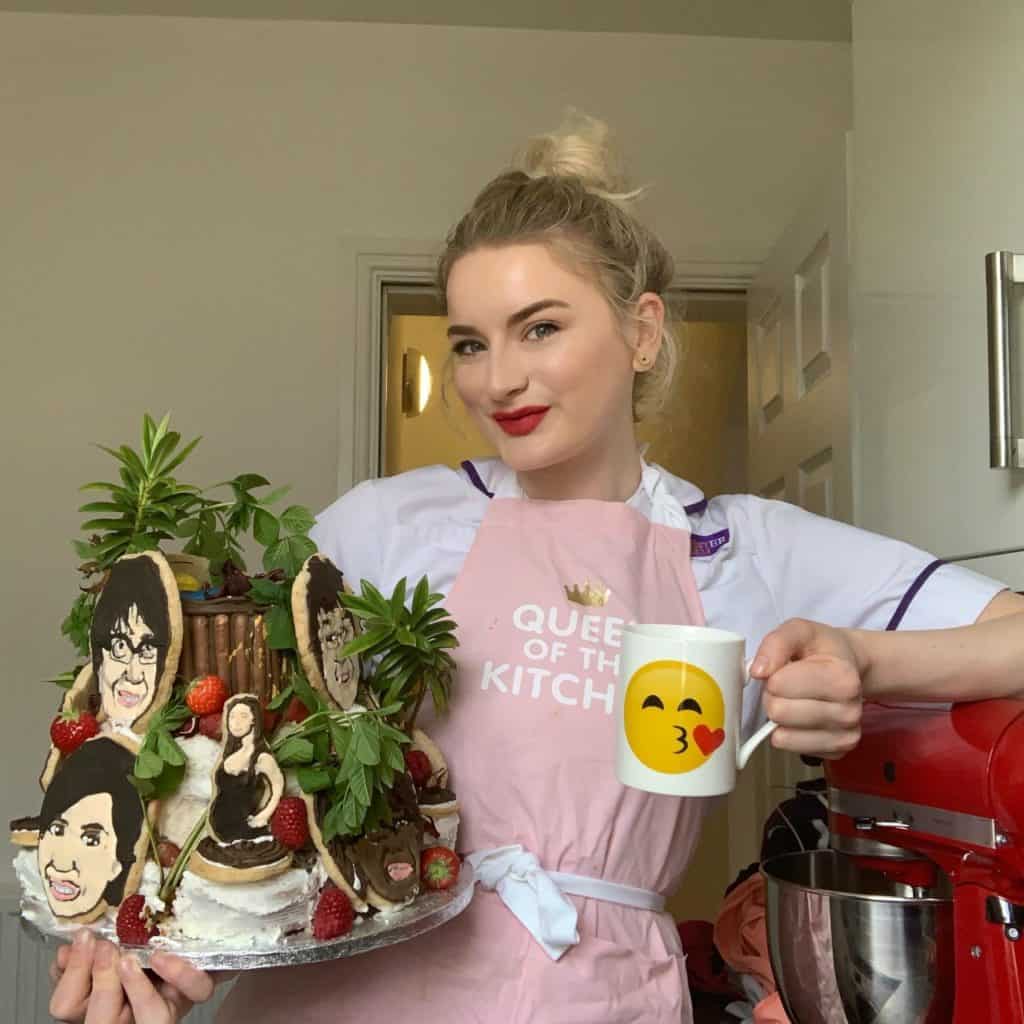


A Celebration Cake; 11 midwifery leaders
Cressida Scott Broomfield – Student Midwife at University of Manchester
My name is Cressida Scott Broomfield and I’m currently a student midwife situated in the North of England. Following my entry to the annual RCM cake competition, Sheena and I connected over my choice in design and we met recently through Marie Louise’s ‘Midwifery Meet Up’. I was keen to share the thought processes behind my entry – sitting in a cosy pub in Preston, surrounded by likeminded midwives and maternity workers debating current issues and experiences, it felt aptly timed, reminding me why I chose to pursue a career in midwifery.
A little about me & my cake design
I decided shortly after starting secondary school that I wanted to work within healthcare and more specifically midwifery. The process of pregnancy and childbirth fascinated me – I had a huge appreciation of what women’s bodies can do.
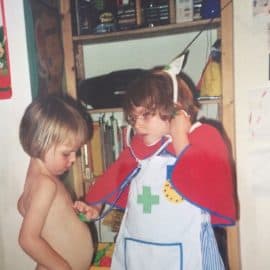
My younger sister Freya and I, aged three and 5.
Midwifery translates to be “with woman”. A lot of the time when I tell people I’m a student midwife, the first question that usually follows is “how many babies have you delivered?” and followed by “I love One Born Every Minute / Call the Midwife (highly edited childbirth drama!)”.
When I entered the RCM cake competition, I was keen to stay away from the usual garish creations of swollen labia, engorged breasts and bodily fluids. Watching a woman in her most vulnerable state progress during labour and the look on her face in those first initial moments meeting her baby are beautiful. In light of this, I wanted to make a cake that represented the role of midwives and the history behind its profession, intertwined by the magic and primal aspects of birth that I’ve seen through artwork such as Natalie Lennard’s in Birth Undisturbed. Midwifery is definitely evolving and the role of the midwife will no doubt follow suit.
11 Midwife Biscuits
I swiftly decided to focus it around inspirational figures who have challenged pre-conceptions within the maternity sector and faced hardship despite increased pressure or conflict.
The inspirational midwives I picked, although some lesser known, was to offer an insight into women who have provided some great contribution to maternity research and continued even in times of austerity, poverty or war.
A statement that particularly resonates with me is “Childbirth is not a risk-free business but that doesn’t mean it has be risky” Midwives often struggle with being vilified in the press due to the misconception we chase the idea of ‘normal’ birth at all costs despite mothers and their babies health being paramount in what we do. Despite the continuous focus on risk factors, these midwives have confronted the deep-rooted fear built around childbirth in hope of saying to a woman – ‘you can do it’ rather than ‘that is not allowed’.
Learning to challenge behaviours and assumptions within maternity care has been a learning curve for me as a student so it was a subject slightly close to heart and I wanted to recognise influences and figures who have shaped the views and manner in which I hope to practice. Recognising birth as a life event affected by a number of socio-economic, financial and cultural factors is key in demonstrating competence as a midwife, and possessing the confidence to highlight these.
Eleven inspirational midwives – Sheena Byrom, Caroline Flint, Mary Renfrew, Saraswathi Vedam, Ina May Gaskin, Mary Cronk, Sheila Kitzinger, Marinah Valenzuela, Stanislawa Leszcynska, Robin Lim and Frances Day Stirk.
I chose these inspirational midwives because I feel they encapsulate the skills, attitudes and vivaciousness needed within the midwifery profession. As a student midwife, I felt it was important to surround myself by a variety of viewpoints, approaches and research to build upon knowledge required for true holistic women centred care.
Spurred by America’s recent overturning of Roe v Wade and the media controversy of Meghan Markle, I began to question the nature of human rights in childbirth. “The freedom in a country can be measured by the freedom of birth” (Ágnes Geréb, 2012) and the current disparities in maternity care can be found at a global, systemic and individual level.
I therefore wanted to find figures that promoted women’s rights to choose, empowered women to trust their bodies and who’s work informed midwifery skills globally.
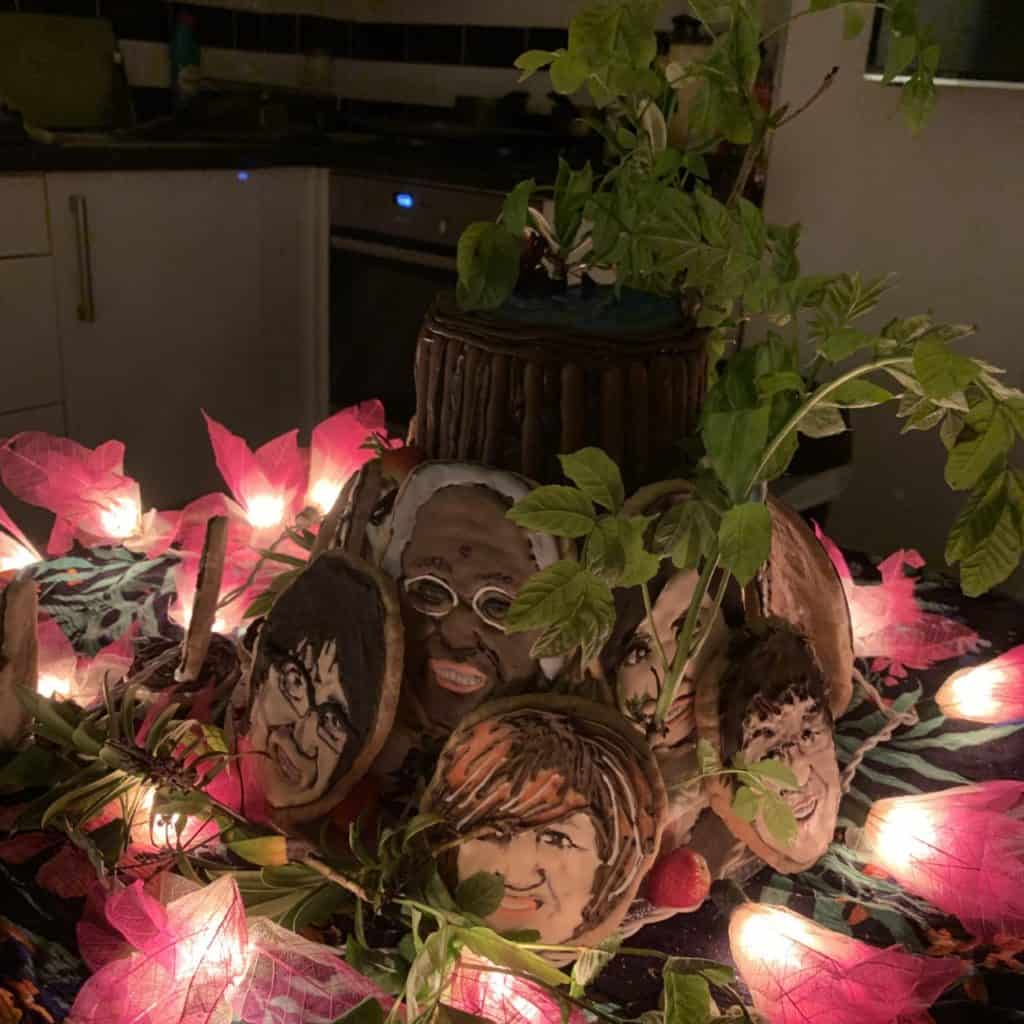
Eleven inspirational midwives – Sheena Byrom, Caroline Flint, Mary Renfrew, Saraswathi Vedam, Ina May Gaskin, Mary Cronk, Sheila Kitzinger, Marinah Valenzuela, Stanislawa Leszcynska, Robin Lim and Frances Day Stirk.
Ina May Gaskin
I first explored Ina’s work through reading the classic midwifery book Spiritual Midwifery – it gave a refreshing insight in comparison to the clinical and anatomical textbooks such as Myles and Mayes textbooks. Ina is known in particular for her contribution to the facilitation of breech births and shoulder dystocia through vaginal delivery, and efforts to decrease rates of medical intervention. Her famous low-intervention Gaskin Manoeuvre is the first obstetric technique to be named after a woman and midwife – it was introduced following her experience with indigenous midwives in Guatemala. Her Farm Midwifery Centre eco-commune located in South Nashville is a far cry from the illegalisation of (assisted) home births within states of America – In Ina’s words, “Most births in the US now happen between 9am and 5pm, Monday to Friday – it has moved to assembly line production”.
Sheena Byrom
I first came across Sheena’s work through the popular book ‘The Roar behind the Silence’ – it was a great insight into the culture of fear surrounding childbirth and maternity services. At present, more midwives are leaving the NHS than joining – this book particularly helped to articulate outstanding issues within maternity care and I was inspired by Sheena and Soo Downe’s passion for advocating women centred care despite medicalisation of childbirth and risk factors contributing to maternity care becoming largely obstetric led. As well as Sheena’s platform all4maternity, the Practising Midwife journal is a great way of exploring current issues and research. ‘Squaring the Circle: Researching Normal Birth in a Technological World’ has also been recently published – offering a “cutting-edge guide to the state of the art of normal childbirth, with contributions from world-renowned experts in their fields”.
Caroline Flint
Whilst studying the access course within Kingston, I began writing newsletters for the NCT Riverside branch alongside former RCM president and midwife of 40 years Caroline Flint. She was one of the first midwives to introduce me to a new side of midwifery – one in which we practice safe care, but one in which holistic and compassionate qualities are a driving force in mothers making autonomous decisions for their care plans and labour. Her infectious enthusiasm for childbirth is evident; no doubt powered by her long spanning experience in the maternity sector and personal anecdotes.
Mary Cronk
Mary Cronk was an expert in breech and twin births and was a strong believer in women’s autonomy. Following the introduction of the NHS, Mary’s roles as a community midwife slowly merged with hospital policies – she recalled the sense of working “under the hospital” and her internal conflicts regarding the standard hospital policies at the time – such as performing an episiotomy on every mother despite her experience of supporting women birth with an intact perineum. Mary addressed how professional’s authoritative stance can occasionally demoralise parents and “that our assumption of power over the women for whose benefit we practise at the beginning of their parenting can begin their disempowerment as parents and take from them the feeling of responsibility for their children on which good parenting depends. Mary Cronk sadly died on 21 December 2018 – you can donate to the Iolanthe Memorial Fund online which aims to raise proceeds for supporting students and midwives in improving maternity care.
Sheila Kitzinger
Sheila was a strong campaigner for informed choice surrounding childbirth and home birth. Sheila believed that childbirth should not be reduced to a pathological event and she battled tirelessly in steering it away from medicalisation. The increasing involvement of obstetrics caused Sheila to feel that midwifery skills, holistic care and hands-on experience were being demeaned and overlooked in the pursuit of ‘a healthy baby’. Alongside Caroline Flint and Mary Cronk, Sheila partook in the Association of Radical Midwives (ARM) as a natural childbirth activist and social anthropologist, educating women and their families through workshops and written work. Sheila insisted birth “is – must be – also a political issue, in terms of the power of the medical system, how it exercises control over women and whether it enables them to make decisions about their own bodies and their babies.” Unfortunately, Sheila died of cancer in 2015 in Oxfordshire – her autobiography, A Passion for Birth: My Life: Anthropology, Family and Feminism, was published shortly after her death.
Saraswathi Vedam
Saraswathi Vedam, is an Associate Professor at the Division of Midwifery in the Faculty of Medicine, University of British Columbia, and founder of the UBC Midwifery Faculty Practice, Birth & Beyond. Professor Vedam has been active in setting national and international policy on home birth, and midwifery education and regulation, providing expert consultations in Mexico, Hungary, Chile, Canada, and India. She has been a clinician and a health professional educator for over 30 years. Her scholarly work includes the national, CIHR-funded Canadian Birth Place Study examining attitudes to place of birth among maternity care providers; and Changing Childbirth in BC, a provincial, community-based participatory study of women’s preferences for maternity care. She has developed clinical screening and quality measures including, MAPi, the Movement and Pulse index for assessment of fetal well-being, the Mother’s Autonomy in Decision Making (MADM) scale and the MOR (Mothers on Respect) index.
Marinah Valenzuela
Marinah is the president of Midwives Alliance of North America (MANA) focusing on the accessibility issues to midwives and the profession of midwifery in communities where health disparities are overwhelming. Prioritising “trainings in organizational and cultural humility and how to be more supportive of gender freedoms” she also continues to work with traditional midwives outside of the U.S and bridges traditional Mexican and Indigenous medicine/healing with western science and professional midwifery.
Stanislawa Leszczynska
Stanisława was a Polish midwife who was incarcerated at the Auschwitz concentration camp during World War II, where she delivered over 3,000 children – she is an official candidate for canonization by the Catholic Church in Poland. Stanisława met the infamous Dr Mengele whilst at the camp and was advised to write reports about birth problems and diseases in the childbed. Stanislawa risked her life disobeying the orders to commit infanticide – she ensured these mothers were treated with love and care, and that each new life was given some dignity, if only just for an hour or two. Of the 3000 babies delivered, only 30 survived. Leszczyńska’s story is a particularly heartbreaking and hard hitting one, considering the emotional turmoil she must have suffered alongside the families she aided.
Robin Lim
Robin received the 2011 CNN Hero of the Year award for her work over the last decade, serving the poor and medically disenfranchised citizens of Indonesia. She has also been given the 2006 Alexander Langer International Peace Award, notably for her efforts directed at granting caring, competent support to birthing mothers and a non-violent birth to their children. Lim and the Bumi Sehat midwives are trained to provide maternal and infant care in devastated areas with limited materials –for example, cord burning to limit infection risk. Bumi Sehat birthing sanctuaries also offer free prenatal care, birthing services and medical aid to families who would inevitably struggle to meet healthcare bills.
Mary Renfrew
A graduate of the University of Edinburgh, Prof Renfrew is a health researcher with a clinical background in midwifery – her academic work spans a wide spectrum of subject areas. Mary has written reviews of breastfeeding for the Cochrane Library, the World Health Organization‘s Reproductive Health Library, the Human Tissue Authority, the UK government’s Department of Health, and the National Institute for Health and Care Excellence. She obtained a PhD on breastfeeding in 1982, while at the Medical Research Council‘s reproductive biology unit in Edinburgh and then went on to set up the National Midwifery Research Initiative at the national perinatal epidemiology unit of the University of Oxford.
Frances Day Stirk
Frances Day-Stirk is a former President of the International Confederation of Midwives (ICM), a non-governmental organisation and the voice of global midwifery. She is a former member of the Executive Management Team of the Royal College of Midwives in the United Kingdom, with a remit for professional standards, policy education, research and international relations 30 years experience. Her previous European and global roles and experiences include: Vice-chair, European Forum of Nursing and Midwifery Associations and WHO Steering committee, Executive Committee Member Global Network of Collaborating Centres (WHO), European Midwives Association. She is a current Board Member of the Partnership for Maternal and Child Health (WHO), the Global Health Workforce Alliance (WHO) and the London based THET (Tropical Health and Education Trust). Frances takes particular interest in organisation of maternity services, women’s choice in place of birth, homebirth, promoting normality, and global maternal and newborn health care.