








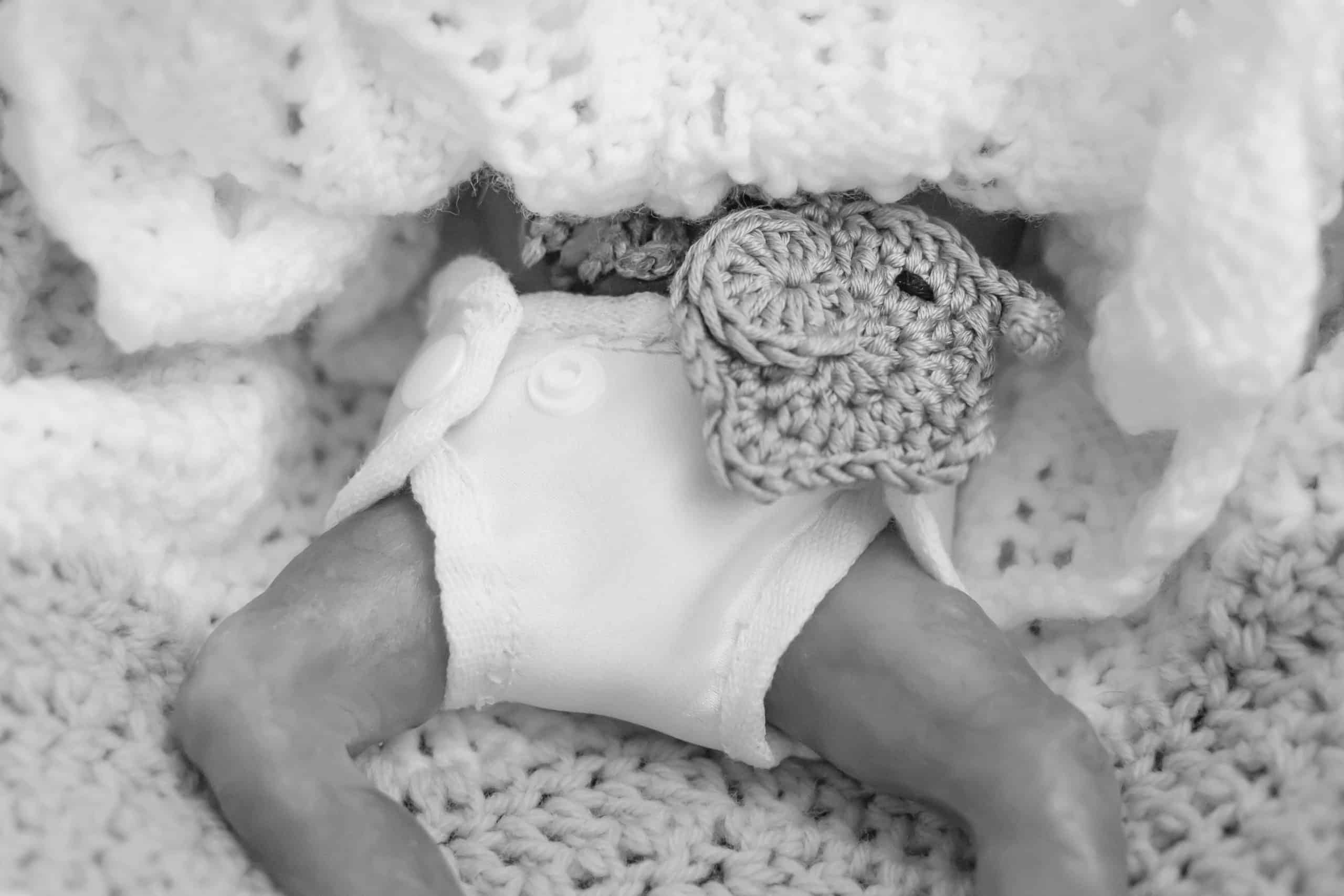
Can a kinaesthetic approach to bereavement care training better prepare a health care professional to support a family when their baby dies?
Steph Wild, CEO Beyond Bea charity and Practising Midwife
Are midwives and other health care professionals getting the comprehensive training they need to be able to care for a family when their baby dies?
Steph Wild, CEO Beyond Bea charity and practising midwife explores how interactive training can facilitate midwives to be better able to support a family through a bereavement.
 Bereavement care training should never become a box ticking exercise. Yes, appropriate bereavement care requires health care professionals to be clinically informed but it also requires us to be emotionally intelligent. Health care professionals need to be confident in the practical skills required to help a family create lasting memories of their baby.
Too often, training has become one dimensional – it is important to remember that people learn in a multitude of ways. Text books and instructions alone will not fully maximise a health care professionals’ ability to care for a family when their baby has died.
A kinaesthetic learning style which incorporates tactile techniques, in combination with visual and/or auditory study techniques produces a broader multi-sensory learning. Have you ever noticed that some students have to take notes in class, while others prefer to listen intently? Some may benefit from a graphic or a video, while others may need it reexplained to them. Some can hold their attention for a long time, whilst others get distracted. This is totally normal. Everyone’s brain is wired differently, and the way we process information and learn isn’t the same. Training needs to embrace all types of learning in order for health care professionals to maximise their potential and to feel confident in their skillset.
The Beyond Bea Charity workshops and face to face study days are designed to be as interactive and kinaesthetic in its approach as possible.
Compassionate care cannot be learnt through theory alone. We need to teach people how to listen, how to speak, to be aware of their body language and how to create an environment of trust. These emotional skills can only be learnt through meaningful and kinaesthetic interactions.
 The Beyond Bea Charity workshops and face to face study days are designed to be as interactive and kinaesthetic in its approach as possible. When I run a session, I’m able to bring together both my clinical expertise along with my compassion and experience as a bereaved mother. This allows the training to retain credibility when discussing clinical matters (as a midwife) as well as human factors (as a parent).
Our workshops include a wide range of resources to facilitate practical workshops on memory-making. This is a vital component of providing good quality care for families, giving the students and health professionals more confidence in their ability to support parents to have tangible memories such as handprints, footprints, clay imprints, castings and photographs. This is often a source of real fear for the professionals as they are inevitably conscious that, for every family, there’s just one chance to get these memories right. For example, our specialist dolls are weighted to feel like a baby who has died, this help students and health professionals to understand how best to hold a baby, which in turn, helps parents to hold their baby. This can’t be learnt through a text book.
In addition, our workshops always include accounts from a bereaved parent speaker. They bring a strong narrative to the training; they not only provide the students and health professionals an opportunity to learn from their loss but also provide the parent a sense that something positive can result as a direct action of the sharing of their experience. Attendees do not forget the voice and the story of a bereaved parent. This blend of clinical, human and practical skills means that our bereavement care training is cohesive and comprehensive. The skills learnt will be remembered.
Kinaesthetic methods are more than just stand-alone training, it becomes something that can be taken forward in all aspects of a health care professionals’ career.
Obviously, online training has its place, especially during the pandemic. However, I would suggest that it is even more important that virtual educational sessions are interactive and multi-sensory – I’m sure we are all guilty of drifting off on a zoom meeting or being distracted by our phones. Online training needs to keep its users engaged. A pre-recorded training session or something that isn’t delivered live stops meaningful interaction. Our online training sessions are and always will be delivered live. We create a safe environment, where questions and open discussion are always available. We also feature video and audio components to help support kinaesthetic learning as best we can in a virtual capacity.
What we do at the Beyond Bea Charity strives to go beyond typical training
Kinaesthetic methods are more than just stand-alone training, it becomes something that can be taken forward in all aspects of a health care professionals’ career. What we do at the Beyond Bea Charity strives to go beyond typical training by ensuring that we remain in touch with the practical content, the clinical aspects that impact our work, whilst remaining continually in touch with kindness and compassion. We know that health professionals don’t come into their role to upset or offend and we hope that by keeping training interactive and accessible we can support every family to receive the care they deserve and ensure every student and health professionals feels empowered to support them.
Our training is available free of charge and can be accessed via our website www.beyondbea.co.uk
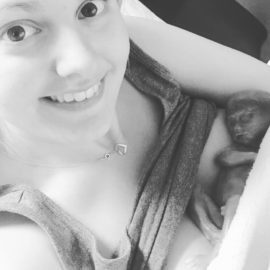 Steph Wild
Instagram: @beyondbeacharity
Twitter: @BeyondBea1

