









Book Review: Humanising Birth: Considerations for the Global Maternity Crisis
by Elizabeth Newnham, Lois McKellar, Kaveri Mayra, Yvonne Kuipers
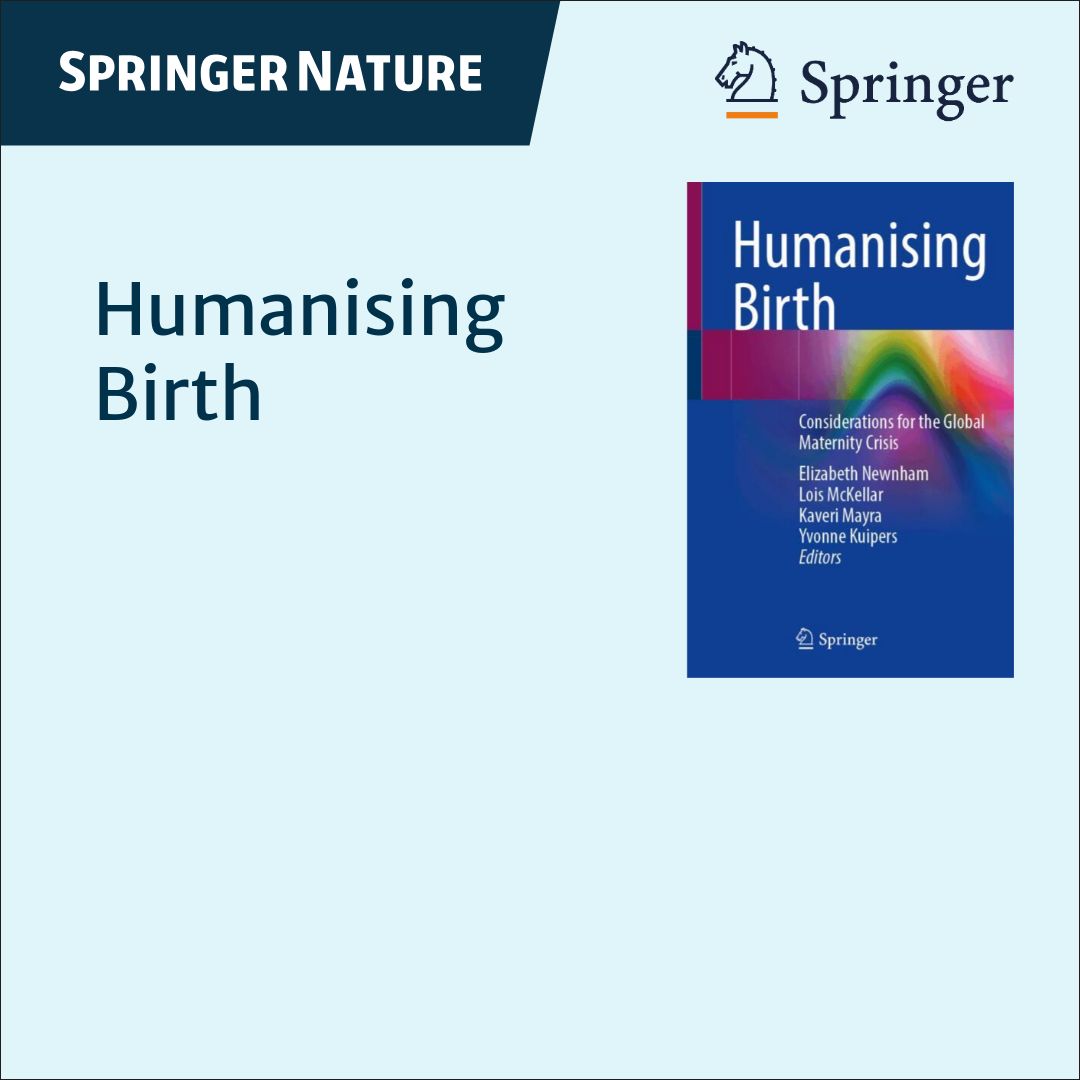
Review by: Melanie Howells – Serene Births
2025
Springe
Pbk, 229pp
EUR 69.99
ISBN: 978-3031958267
Humanising Birth offers a thought-provoking examination of contemporary maternity care systems and increasingly dehumanised experiences of birth worldwide. The authors explore a ‘poverty of understanding’ within the obstetric model: biomedicine dismisses birth’s social, neurohormonal and psychological dimensions alongside the influence of relationships and environment. This reductionist view, which prioritises measurable clinical outcomes over the holistic birth experience, lies at the heart of the current crisis.
The authors offer a ‘shared transdisciplinary approach’ – bodies of knowledge standing together rather than in hierarchy. This position is nuanced: traditional midwifery is not romanticised, nor is medicine demonised. While nostalgia for a pre-technology era may be appealing, it is not feasible. Instead, the authors argue for collaborative progress – clearing the slate and moving forward together. They propose an abolitionist stance, suggesting that patriarchal institutions which reduce birth to risk management and women to statistics cannot be reformed, but require new frameworks grounded in reciprocal relationships and trust.
Particularly powerful is the recognition that humanising birth requires humanising leadership itself..mater
Three interconnected domains are examined – humanising systems, care and experience – emphasising relationship-based models. Research consistently demonstrates that continuity, trust and time are key to positive outcomes for women, families and midwives, as reflected in continuity of care models. However, restricted eligibility often excludes those most likely to benefit.
Particularly powerful is the recognition that humanising birth requires humanising leadership itself, with compassionate leadership framed as essential to embedding humanisation throughout systems of care.

Some proposals, however, feel disconnected from reality. Suggestions such as mindfulness activities for overstretched midwives may underestimate systemic constraints, and language such as ‘end users’ jars against the book’s humanising intent.
The closing chapter on reimagining birth spaces offers a refreshing approach. By synthesising traditional and contemporary insights, the authors present a pragmatic path forward, suggesting that collaborative redesign of birth environments may address challenges that persist for both women and midwives. TPM

