








Celebrating Us: Breaking Down Barriers and Eurocentrism in Midwifery Education
Paula-Maria Cummins – Senior Midwifery Lecturer, Kingston and St George’s University
Published in The Student Midwife Volume 3 Issue 4 October 2020
Summary
In this article, Paula-Maria Cummins discusses the racial tensions she experienced as a student and practising midwife, and the journey that led her to create ‘Celebration of Us – Breaking down Barriers’, an innovative event designed to enhance student midwives’ self-awareness and encourage discussion about important issues related to cultural competence.
The beginning
There are always groups that automatically affiliate themselves with one another due to familiarity. Being a mature student midwife with children, I found myself drawn to other students of a similar age who were parents, too – they were not particularly my ‘type’ of people, but our commonalities united us. Our bond was not based on race or ethnicity, but rather an initial need to ‘buddy up’ with like-minded folk to get through what we knew was going to be a challenging course. Some of these women have become more than just peers; they have become my friends and confidantes.
During the first few months of my midwifery training, the usual group development stages of ‘forming, storming and norming’ occurred within the wider cohort. However, I noticed a divide in the classroom that bothered me; a divide that appeared to be underpinned by racial tensions. I could not pinpoint why this division existed and it continued to bother me deeply. I had not witnessed this before: perhaps, owing to the fact that I was a mature student, I just saw things differently. What irked me the most was that I felt powerless to change things. I felt unable to discuss my feelings with anyone at university, because I did not know whom I could approach or what I expected them to do, so I left it. The tension hung in the air as I kept my head down and focused on completing my degree.
Fast forward
Upon qualifying, I worked quite happily and progressed to senior leadership. I was well liked and got on well with everybody. However, I became aware that the racial divides I had noticed as a student persisted among the qualified midwives in my locality. Once again, they were not overwhelming – they were subtle and nuanced, yet also became progressively worse, because they were fuelled by midwives’ dissatisfaction with their working conditions. Black midwives were experiencing the unsaid, yet unyielding, racial tension that Black, indigenous, people of colour (BIPOC) sense without needing it to be glaringly obvious. It was in the spoken and unspoken: the seemingly innocent commentary that made you consider whether you were the target of a microaggression (verbal or non-verbal interactions that covertly demonstrate discourtesy and disregard for individuals’ cultural and racial identity),1 the support you expected to receive but did not, the downplaying of a situation or circumstance that ‘othered’ you, and the disproportionate number of BIPOC colleagues singled out for poor practice.2
My singular voice became a collective narrative, which, over time, caused a shift to happen
Surely there was some protection against these microaggressions in The Nursing and Midwifery (NMC) Code?3 Or a human resources policy that dictated the virtues by which our professional behaviour must be guided? It was extremely uncomfortable, and I could no longer stay silent. I began to voice concerns, in defence of myself and fellow colleagues, to those who were responsible for upholding professional values and staff wellbeing. My singular voice became a collective narrative, which, over time, caused a shift to happen: the racial inequalities were recognised and identified, and a plan of action was created to address them. Although there is still a lot of work to be done, it is my understanding that similar developments are occurring across many services, both in the UK and globally.

Systemic barriers to progress
Racial inequalities are not a new phenomenon,4 but 2020 has brought global racial inequalities into laser-sharp focus. Although only 13% of the UK population identifies as Black, Asian or another marginalised ethnicity,5 BIPOC fall to the back of the queue across every system, including education, criminal justice, employment and housing. Predicted A-Level grades are less likely to be accurate for Black students,6 Black people are overrepresented within the UK criminal justice system,7 under-represented in senior NHS management positions,8 and more likely to be affected by poverty and poor housing conditions.7 Further disparities persist within the UK’s maternity system: Black women are five times more likely to die or experience complications within the first year postpartum than their white counterparts.9 A lack of understanding concerning different ethnicities and cultures leads to poorer health outcomes for women from marginalised groups, because midwives lack the skills and knowledge required to meet their needs,10 therefore cultural competence and anti-racism education such as the ‘Celebration of Us – Breaking down Barriers’ event are vital to improving pregnancy care and outcomes.
Changing the narrative
Returning to my place of study as an academic, I realised the potential for education to change the narrative of racial inequalities in both maternity care and the maternity workforce. I now understood that tackling systemic racism necessitates replacing a Eurocentric curriculum with education that prepares midwives to respond to the disproportionate morbidity and mortality trends of non-white women, with culturally safe care.
I wanted to find an informal way of bringing students together to develop their understanding of the richness of diversity and inclusivity
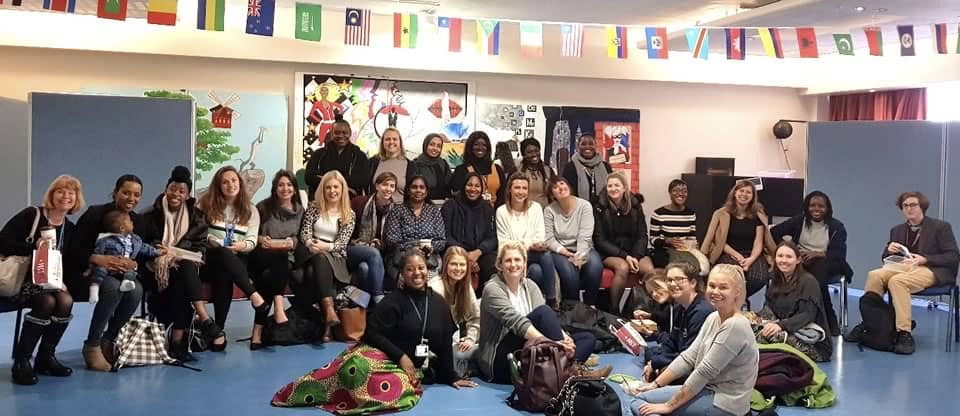
Approximately 50% of our student body are from Black, Asian and other ethnic groups. Our team are extremely proud of our students’ diversity and choose to celebrate it by openly acknowledging the value diversity brings to the student body, providing space and opportunities for inclusion and supporting students to feel that their individuality is valued. I wanted to find an informal way of bringing students together to develop their understanding of the richness of diversity and inclusivity, and promote an ethos of cultural competency, so for the past two years, I have hosted the ‘Celebration of Us – Breaking down Barriers’ event for our first-year student midwives.

The events featured a range of speakers that challenged students’ ideologies and mindsets, enhanced self-awareness and engaged attendees in uncomfortable but necessary conversations about racial inequalities. Students remained together for the duration of the event, and we arranged the space in a way that provided opportunities for them to engage with each other and the speakers. The usual classroom set-up was altered by arranging tables in clusters so that the students and speakers sat around them in groups. This enabled students to add their voices to the discourse and encouraged the development of problem solving, active listening and respect for the perspectives of others, all of which are transferable skills that are valued in the workplace.
The topics of intercultural competence, racial inequality, stereotyping and microaggressions were introduced and explored alongside discourse about the value of working with vulnerable and marginalised women within maternity services. One of our students gave an informative presentation that raised awareness about the LGBTQ+ community, while another student presented insights into mindfulness and wellbeing. Each event ended with the release of colourful balloons – a symbol of the unifying and celebratory impact of the day. Following this, all of the students and staff engaged in a feast of multi-cultural foods and traditional, cultural dancing. Student feedback from each event emphasised the sense of belonging, integration and unity inspired by each event. It is my wish that other midwifery educators will view the success of ‘Celebration of Us – Breaking down Barriers’ as encouragement to host similar events, because the cultivation of self-aware, culturally competent and safe midwives clearly benefits midwives, women, babies and the families they care for.
Conclusion
‘Celebration of Us – Breaking down Barriers’ constitutes the initial phase of my four-part strategy to transform and embed an anti-Eurocentric approach throughout the midwifery curriculum, and support and prepare students to become culturally intelligent midwives. Such educational developments are vital and overdue, and will positively impact the care provided by students, the next generation of midwives, by improving the worrying trend of racial inequalities in UK maternity care. TSM
References
- DeAngelis T. Unmasking ‘racial micro aggressions’. Monitor on Psychology. 2009;40(2):42.
- West E, Shoba N, Taina T, Al-Haboubi M. The Progress and Outcomes of Black and Minority Ethnic (BME) Nurses and Midwives through the Nursing and Midwifery Council’s Fitness to Practise Process: Final Report. https://www.nmc.org.uk/globalassets/sitedocuments/other-publications/bme-nurses–midwives-ftp-research-report.pdf. Published 2017. Accessed August 19, 2020.
- Nursing and Midwifery Council. The NMC equality diversity and inclusion framework. https://www.nmc.org.uk/about-us/equality-diversity-and-inclusion/. Published 2015. Accessed August 11, 2020.
- Banerjee A. Amitava Banerjee: Institutional racism is still a major problem in the NHS. The BMJ Opinion. https://blogs.bmj.com/bmj/2018/01/31/amitava-banerjee-institutional-racism-is-still-a-major-problem-in-the-nhs/. Published January 31, 2018. Accessed August 19, 2020.
- 2011 Census analysis: Ethnicity and religion of the non-UK born population in England and Wales: 2011. Office for National Statistics. https://www.ons.gov.uk/peoplepopulationandcommunity/culturalidentity/ethnicity/articles/ 2011censusanalysisethnicityandreligionofthenonukbornpopulationinenglandandwales/2015-06-18. Updated June 18, 2015. Accessed August 19, 2020.
- Department For Innovations & Business Skills. Investigating the Accuracy of Predicted A Level Grades as part of 2009 UCAS Admission Process. https://assets.publishing.service.gov.uk/government/uploads/system/uploads/attachment_data/file/32412/11-1043-investigating-accuracy-predicted-a-level-grades.pdf. Published June 2011. Accessed August 23, 2020.
- Equality and Human Rights Commission. Healing a divided Britain: the need for a comprehensive race equality strategy. https://www.equalityhumanrights.com/sites/default/files/healing_a_divided_britain_-_the_need_for_a_comprehensive_race_equality_strategy_final.pdf. Published August 2016. Accessed August 23, 2020.
- NHS Equality and Diversity Council. NHS Workforce Race Equality Standard: 2017 Data Analysis Report for NHS Trusts. https://www.england.nhs.uk/wp-content/uploads/2017/12/workforce-race-equality-standard-wres-data-report-2017-v2.pdf. Published December 2017. Accessed August 23, 2020.
- MBRRACE-UK. Saving Lives, Improving Mothers’ Care – Lessons learned to inform maternity care from the UK and Ireland Confidential Enquiries into Maternal Deaths and Morbidity 2015-17. https://www.npeu.ox.ac.uk/assets/downloads/mbrrace-uk/reports/MBRRACE-UK%20Maternal%20Report%202019%20-%20WEB%20VERSION.pdf. Published November 2019. Accessed August 28, 2020.
- Garcia R, Ali N, Papadopoulos C, Randhawa G. Specific antenatal interventions for Black, Asian and Minority Ethnic (BAME) pregnant women at high risk of poor birth outcomes in the United Kingdom: a scoping review. BMC Pregnancy & Childbirth. 2015;15(226):1-13.


