






Courage, Kindness and Understanding
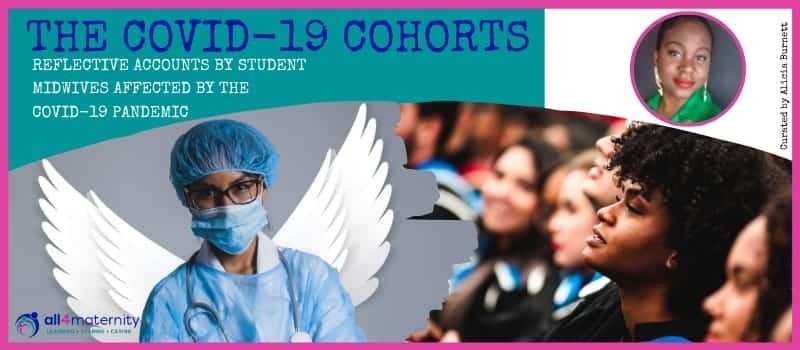
Series curator: Alicia Burnett – Third year student midwife. Social media: @aiti4aitiys on Instagram and Twitter.
Laura – Third year student midwife, Republic of Ireland
 This was intended to be an insight into how Irish midwifery is developing and strengthening, but the COVID-19 pandemic has changed plans for Irish midwifery services, so instead, this blog will outline how this strange global experience has impacted Irish midwifery.
Feeling lucky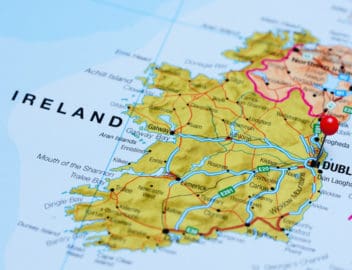
I have been incredibly lucky to have had a range of exposure and experiences in this early stage of my midwifery career. I am being trained in three different hospitals across two regions of Ireland, I have been to England on a college placement, I sent myself to Cambodia to observe the maternity system and birth culture there, and I have been given opportunities to learn from inspirational change-makers in Irish maternity services. I know that I am lucky. To become a midwife in Ireland today, you must complete a four-year undergraduate degree or an eighteen-month postgraduate midwifery course following qualification as a general nurse. After a few years of trying, I started my direct-entry midwifery course in September 2017, and I will (hopefully) start my final year in September, beginning with a six-week placement followed by a ten-week academic block. In January 2021, I will start my nine-month internship and spend three months in each core area of midwifery care in one of our three training hospitals. Interns are paid minimum wage, work full time and have their own allocation of people to care for.
 The birth of a profession
Midwifery in Ireland appears to have begun much like midwifery everywhere else in the world, and the profession has been on a bit of a winding path in the last century.1, 2 Originally, local “wise women” attended births in their locality and as time went on regulations were put in place. Midwives, as persistent as the babies they guide into the world, fought for their right to be recognised as autonomous professionals, and midwifery in Ireland became recognised as a distinct profession via the Midwives Act (Ireland) 1918, which established the Central Midwives Board. In 1950, midwifery became a sub-profession of nursing, which was viewed by the Minister for Health at that time, as an improvement in status, and it wasn’t until 1998 that the Commission on Nursing formally recognised midwifery as a separate profession again. Direct entry undergraduate midwifery degrees were introduced in 2006, and the Nurses and Midwives Act 2011 reinforced midwifery’s legal standing as a distinct profession. Modern midwives in Ireland are awaiting the implementation of the National Maternity Strategy 2016-2026,3 and where midwifery-led care, community midwifery and home births are available, they are provided with excellence and compassion. But access to these services is still dependent on where women and birthing people live, and I believe that this impacts upon pregnant people’s choices. The national consistency promised by the Maternity Strategy has yet to be seen, and as we near the halfway mark in the strategy, I thought we might see new movement towards change. Instead, we are in the midst of a pandemic.
[…] I thought we might see new movement towards change. Instead, we are in the midst of a pandemic.
A change of course
The course of everyone involved in Irish midwifery services, from hopeful midwifery applicants to those about to retire from the profession, has been disrupted. Colleges have closed, supernumerary placements have been paused and learning has moved online. Although interns continue to go into clinical areas every day to support units’ provision of midwifery care to families that are understandably uncertain and worried, students, interns, and staff share women and families’ worries. Visiting maternity units has been restricted and the most upsetting change is that birth partners are essentially banned.4 Enquiries about homebirth appear to have momentarily spiked in response to these new restrictions, and I believe this our chance to bring home birth into mainstream conversations and demystify it a little. Ireland does not (yet) provide equitable access to homebirth due to geographical and economic barriers. Surely at a time when pregnant people are being told that home is the safest place to be, we can find ways to discuss the benefits and safety of homebirth. NICU restrictions have been another source of worry and heartache – one unit has gone so far as to restrict access to mothers only, for a maximum of 15 minutes per day.4 NICU teams have pushed for technological solutions in attempts to maintain communication and connections between babies in NICU and the family members that are not allowed to visit them.5
Enquiries about homebirth appear to have momentarily spiked in response to these new restrictions, and I believe this our chance to bring home birth into mainstream conversations and demystify it a little.
This is our chance
While such tight restrictions go against midwives’ natural, instinctive, focus on family-centred care and optimisation of families’ experiences of the pregnancy continuum, I am bolstering myself with the opportunities that this pandemic is presenting us with: this is our chance to bring care back into the communities and back into the homes of the people we care for. This is our chance to restore the autonomy of midwives that has been somewhat degraded over the years. This quote from Sheila Kitzinger has always resonated with me and is particularly poignant at the moment.
In any society, the way a woman gives birth and the kind of care given to her and the baby points as sharply as an arrowhead to the key values of the culture – Sheila Kitzinger
Courage, kindness and understanding

Martina Harkin-Kelly, president of the Irish Nurses and Midwives Organisation, stated in the April issue of the organisation’s monthly publication that “at certain times in history courage becomes paramount”.6 Patricia Hughes, the chairperson of the Midwives Association of Ireland, reminded members that “kindness and understanding will be two of our greatest tools as we navigate this journey, one step, one hour and one day at a time”.7 I have been turning these statements over in my mind since I read them. Courage, kindness and compassion are core components of who we are as future midwives. Courage, kindness and understanding can become scarce in situations such as the one we find ourselves in now. I feel deeply that if we can keep courage, kindness and understanding at the centre of our actions we can maintain the normality that midwives are experts in. We can steer some of what this virus has required us to do, towards improving what we do for each other and those we care for after the pandemic has passed. In the early days of the outbreak, the idea of it being a historical moment was mentioned in different contexts, and I feel that there is potential for a historical shift in how Ireland provides healthcare, particularly within the pregnancy continuum, and that Irish birth keepers and birth givers should feel empowered to call for those changes now. Connection and communication are so clearly vital now that they have been stunted by physical distancing, but we can still connect and effect change while staying apart.