








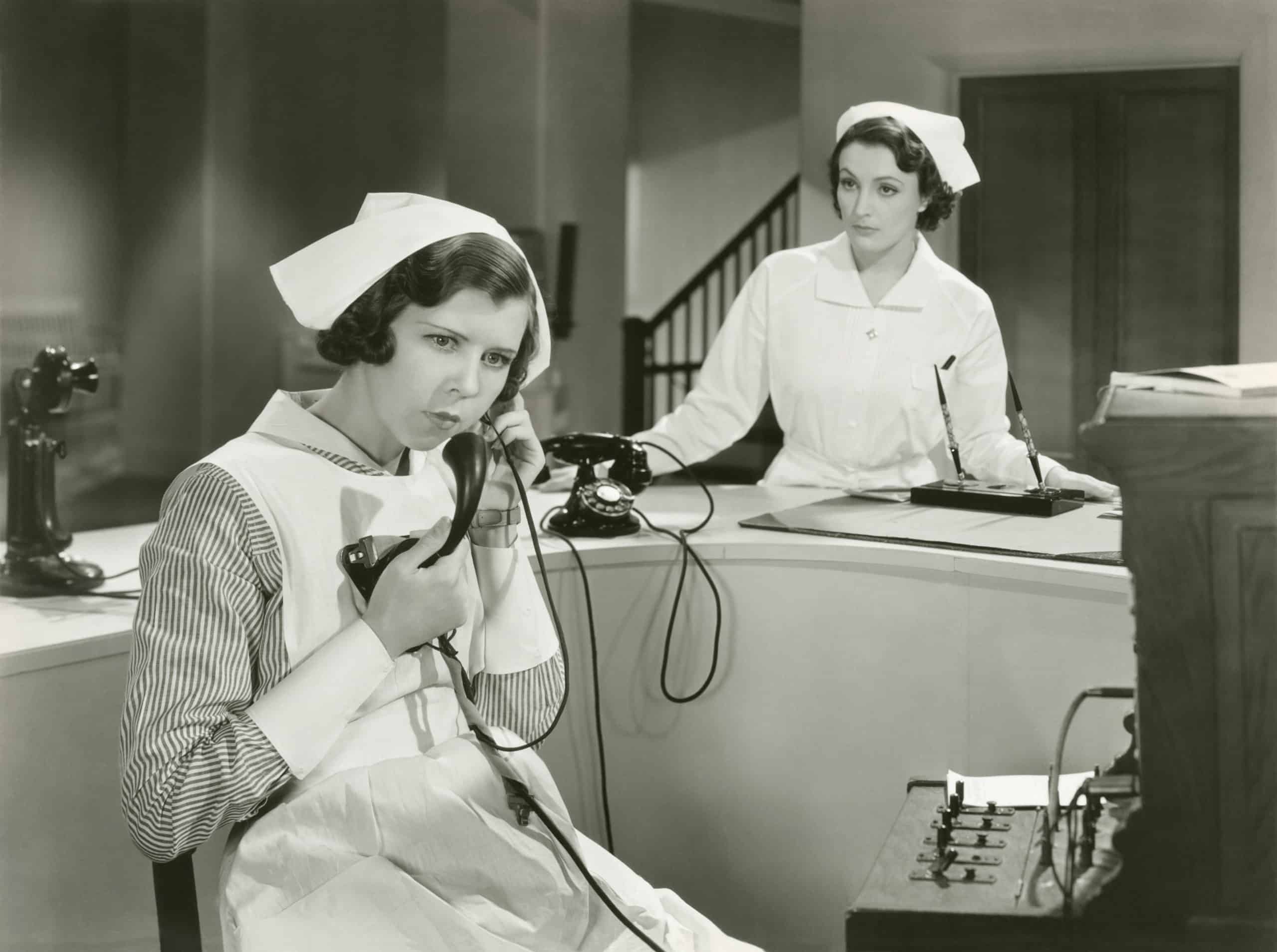
‘Hello, can you hear me’ – virtual midwifery in a pandemic
Laura Godfrey-Isaacs – artist, midwife and birth activist
@godfrey_isaacs
 ‘Hello, can you hear me’ I ask. ‘I’ve got you on speaker phone and I’m working from home …. Are you somewhere comfortable as this appointment will take about an hour or more?’
I’m conducting a pregnancy booking appointment – the first contact. As well as asking a lot of questions about medical history and social circumstances, I would normally be doing some clinical tasks too; taking blood pressure, a urine sample, bloods and checking height & weight for BMI – however, this will now take place at the Nuchal scan at around 12 weeks.
So, here I am, sitting in my home office, having a disembodied conversation with a pregnant person, asking the most intimate questions, without the ability to read body language, expression or even accurately, tone of voice.
‘Have you been pregnant before?’ – ‘Have you had any vaginal or STI’s?’
 What does this new virtual situation mean for midwifery? At first I thought it was catastrophic, but as I adapted I found my language and sensibility changed and a strange kind of intimacy surfaced between me and the other person on the line. We were both holed up at home in unusual circumstances – I asked how they were coping with lockdown – we shared how weird it all was. I felt acutely responsible for not only collecting the information I needed, but to supply reassurance, information and guidance on how to navigate through these strange times. I made certain that they knew about their maternity rights and the current guidelines concerning employment and vulnerability being pregnant during the pandemic and could access all our and other sources of information online. Another important issue was explaining the increased risk of COVID-19 for Black women and WOC.
‘Are you on your own?’ I ask, in readiness for the routine enquiry about domestic abuse (DA).
 Knowing the increase in DA during Lockdown – there have been more than double the amount of women killed – I take time to explain all the definitions, including the new one of controlling behaviour and coercive control, and also how DA often starts or escalates during pregnancy. The UK’s largest domestic abuse charity Refuge has reported a 700% increase in calls, while a separate helpline for perpetrators of domestic abuse seeking help to change their behaviour received 25% more calls after the start of the lockdown. Several women I speak to have harrowing stories of domestic abuse in previous relationships, and a few are in abusive relationships now and navigating the system to support them has proved more complex.
‘Have you been feeling down or anxious over the last month’ I ask – using the Whooley Questions about mental health.
I preface this with how strange life is right now and how it is ‘normal’ to be feeling a mix of emotions. How to separate that from other feelings connected with a new pregnancy is complicated. Some express relief at not having to travel to work, deal with social situations and difficult colleagues, whilst others feel isolated, miss the interaction and have huge issues juggling work, childcare and other caring responsibilities. This pandemic affects everyone but not equally.

Some existing mental health issues are relieved by lockdown and others are exacerbated.
‘Do you know which foods are recommended to be avoided in pregnancy?’ I go on to ask..
‘Are you exercising?’ – ‘what was your alcohol intake before you found out you were pregnant?’
Wellbeing is severely challenged by COVID-19 restrictions and we discuss trying online exercise classes such as pregnancy yoga, taking walks outside, using meditation apps etc. as well as eating a balanced, nutritious diet and keeping well hydrated.
‘I am going to send you our contact details… don’t hesitate to get in touch if you have any concerns’
Keeping in touch is a major concern – will the lack of face to face contact with midwives hold people back from telling us their concerns, such as reduced fetal movements? I reiterate how important it is to get advice if they aren’t sure about something.
‘Unfortunately you will have to come to all your face- to-face appointments and scans by yourself’ I explain.
 This is really tough as at the maternity service I work at partners were, until very recently, not allowed to attend scans or early labour and are still not able to come to antenatal appointments. Scans are particularly traumatic for those with a rainbow pregnancy – a pregnancy following loss. I suggested they use Facetime and have their partner close, so they can attend if there are any issues (which was facilitated). These restrictions create huge anxieties for people – I understand the balance between keeping birth ‘safe’ from COVID-19 transmission for everyone (those using the service and working in it) as well as recognising the inherent difference between ‘visitors’ and ‘partners’.
‘Have you thought about online Birth Preparation classes?’
Another area, where I fear a loss of information and contact will have a negative impact – however many providers have created online resources, as well as my own organisation on Zoom. This provides some opportunities as geography, availability and mobility are no longer such barriers and access is increased in many ways.
RCOG & RCM Guidelines recommend that face to face antenatal contacts during the pandemic are a minimum of 6 – so with the three scans at my Trust, plus midwifery appointments at 20, 28, 36 & 40 weeks that makes a total of 7, with 4 virtual midwifery appointments.
 The biggest impact maybe postnatally, where contact is greatly reduced – Day 5, when we weigh the baby and do the Newborn Blood Spot Test, often being the only face to face visit. In this situation, it’s not just the lack of practical, hands-on support that is reduced, it’s the social context of the family you miss, where you can often pick up things which are not going well with either the mother and birth parent, or the partner. It’s sometimes behavioural clues or environmental ones that help you pick up issues, which might not be voiced or the family might not even recognise themselves as a problem. Worryingly, a recent report details a serious Safeguarding issue as the number of babies in England that have suffered serious injury through abuse or neglect during the COVID pandemic is up by a fifth on the same period last year. According to Amanda Spielman, Ofsted’s chief inspector, more than half of those babies – 64 in total – suffered non-accidental injuries and 8 had died, she explained in a major speech delivered on 6th November, 2020 just one day into Lockdown 2.
 There have been some difficult breastfeeding issues, which had to be addressed by a midwife visiting urgently in person or a member of our community feeding team going to a woman’s home. All ‘virtual midwives’, including myself, have sent people and babies into A&E or Labour ward with serious issues. So the failsafe measures are there to draw on, but assessing when this is needed is a skill that needs to be honed.
For some midwives virtual work has become the norm – those shielding or in high risk groups. This has consequences too, as members of the team are isolated, lack social interaction and don’t get to exercise their clinical skills. Some have to work in cramped conditions, without an appropriate chair, using up electricity and other utilities, sharing a space with others or working in their bedrooms.
The RCM has brought out guidance on virtual midwifery, which is helpful, but the long-term effect on birth and midwives’ practice needs to be assessed as this requires a new way of working, using different communication skills and different forms of monitoring. The possible ‘advantages’ to a maternity service, such as saving time through quicker interactions has not necessarily led to a decrease in workload for midwives as during these times many people are off sick, isolating or not able to work face to face due to underlying health conditions or other risk factors. Also, sometimes we have to switch between virtual and face-to-face appointments during the course of a clinic, which is incredibly demanding.
Some recent research points to a few positives such as increased breastfeeding rates and even a drop in premature births.
A survey of 1219 mothers reported 41.8% felt that breastfeeding was protected due to lockdown, however 27.0% said they struggled to get support and ‘had numerous barriers stemming from lockdown’.
Some stopped breastfeeding before they were ready, particularly Black women and those from lower socioeconomic parts of the community. An unexpected marked drop in premature birth has been seen in studies conducted in Ireland and Denmark, with a 90% reduction from previous years in some cases however more research is needed to ascertain why this phenomena occurred.

I’m currently working 50/50, virtual and in direct contact, so as I climb the stairs to my home office for another day on the telephone I look forward to the conversations but would still prefer to be seeing everyone in person.
‘Do you have any questions or concerns I can help you with, before we sign off’ I ask, hoping they have a long list, indicating they are sourcing information and support about their pregnancy and birth ahead of the appointment.
My colleagues and I swap stories of some extraordinary virtual appointments, where we have picked up serious issues, despite the barriers. But also funny ones such as when women have been driving, on the toilet or shopping when on the phone to us.
As we head back into National lockdown I reflect on how 2020 has thrown up so many challenges personally and professionally and I fear for the negative consequences this next period could have. I hope any positive consequences of the change in care will be retained, whilst we don’t hang onto the negatives, and that we can all get back to the sort of face to face, hands on midwifery we love.
 Laura Godfrey-Isaacs is an artist, midwife and birth activist.
@godfrey_isaacs

