









Leaving No Woman Behind: Thinking about the continuity of carer model, black and minority ethnic women and Better Births
Elsie Gayle – Midwife at ‘Midwifery Conversations’, a community of practice for midwives
Published in The Practising Midwife Volume 22 Issue 3 March 2019
Introduction to the ‘continuity of carer’ concept

As far back as 1987, I was conscious of the concept of continuity of carer for childbearing women. Undertaking a small piece of research increased my understanding of how much of this was happening in everyday maternity care, and noted some possible effects.
My research considered the journeys of 30 mothers through the usual maternity system in a major obstetric unit on the UK south coast. I also looked at the situation of 69 midwives within that organisation, in respect of their role, their satisfaction and their ability to meet the needs of the women for whom they cared.
The results showed continuity of carer mattered to both mothers and midwives, despite not being well facilitated within the organisation’s service provision. The concerns of the mothers were largely to do with their physical and emotional care, whilst for the midwives, it was dissatisfaction in their ability to fulfil their role fully that was highlighted.
Being back-up midwife for a local independent midwife at that time also afforded me personal insight into the development of a professional, meaningful and therapeutic relationship with women, particularly those who had differing needs from the mainstream.
A few of us had also set up a local home-birth group to support local mothers.
It was for me a time of great clinical learning, and reflection on the type of care provision that met the needs and values of women and their families.
Sadly the few ‘Know-your-midwife’ schemes in London and Wales at that time did not survive, and little sustainable progress has since been made in ensuring a comprehensive roll-out of a robust continuity-of-carer model.
Mothers and midwives journeying together

As frontline clinicians, midwives ‘journey’ with women irrespective of the mothers’ ‘risk’, supporting them to achieve their best possible outcomes, even when the circumstances are difficult. They do this even when women decide to birth outside of the usual NHS structures.
The Better births review (NHS England 2016) has made several recommendations as to how midwives might best care for women throughout the continuum of childbirth. The review also notes the importance of women’s entitlement to make personal birth choices, including having full continuity of care from small (sustainable) teams of midwives.
UK mothers have always benefited from midwives working in the private sector who are available for paying clients. Independent midwives have long been providing comprehensive continuity of care outside of the NHS, although this has now largely fallen away due to legislative changes. Nowadays the majority of private maternity care comes via a few commercial businesses, with ‘continuity of carer’ as a main feature.
Sadly, not all women who would like to have personalised care privately, are able to afford these fees. This then limits their options. Whilst some choose what is on offer in the local maternity services, some end up resorting to birth unassisted, in order to achieve the birth that meets their needs and values.
Black and minority ethnic mothers and free birth
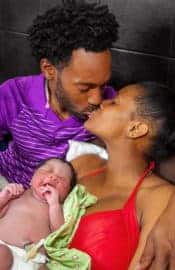
As a midwife engaging with childbearing women, requests for information and support have come my way from a variety of quarters. There appears to be a marked increase in women (and their partners) from the black community seeking information about freebirth.
Freebirth, although lawful, gives me a sense of deepest unease when it occurs as a rebound action to unhelpful consultations with maternity services. I decided, therefore, to look a little more closely at the black and minority ethnic (BME) women and the choice to freebirth. A review of the literature showed no study specific to unassisted birth and BME women. Anecdotal evidence that I found showed that, where some women chose to freebirth, it was as a reaction to how they felt treated, a lack of preferred birthing choice, the inability to have a known and trusted midwife for the birth, the lack of a ‘spiritual’ approach to pregnancy and birth, as well as difficulty in engaging positively with local services. These mothers were largely unable to afford the available private midwifery care and chose the support of their partners, friends and doulas.
The personal risks faced by supporters of freebirth were not always a significant consideration, as help was sought. This is important as current UK law states that it is a criminal offence, except in an emergency, for someone who is not a midwife or a doctor to ‘attend’ a woman in childbirth.

On finding that information on freebirth in the UK was limited, Feeley and Thompson (2016) undertook primary research to explore the reasons why women chose this option.
They found that the study participants’ individual needs and values were not respected or met, and the care received left them feeling ‘disillusioned’, ‘violated’ and ‘unsafe’. The women chose to step away from the mainstream and birth by themselves without clinical support in order to create an environment in which they deemed it safe to birth.
These findings were similar to the women in my small study. Although a minority group, they did not deem themselves ‘reckless’ (Nolan 2011). Similar to the Feeley and Thompson study, they sought supportive measures from online services, other freebirthing mothers, books, doulas or indeed engaged with other midwives to explore their options and plan as safe a birth as possible, including emergency measures.
I was particularly focused on women from the BME communities, whereas the Feeley and Thompson cohort included only one who was ‘mixed race’. Both groups of women were multiparous, with previous comparative experiences of NHS services.
Nationally there are no robust birth statistics on freebirth. However, the triennial maternity statistics (Knight et al 2017) and Office of National Statistics (ONS) (2018) mention the continued disparity in outcomes for BME mothers and babies, when compared to their white counterparts. As they stand, the known statistics are already a cause for concern. In my opinion the need for action is now heightened, as there is no clear understanding of the impact or outcomes of childbearing without clinical support on this population, already disadvantaged by marked and growing health disparities.
Leaving no woman behind
Better births recommended a variety of NHS pioneering projects to be set up to give mothers choice, and involve midwives in alternative ways of working to achieve quality care and improved all-round maternity outcomes.
There are many challenges to be overcome in ‘tailoring’ systemic models to meet individual needs and values; many of these are the continued work of all involved in healthcare. A critical indicator was also highlighted at a meeting of the Health Select Committee (House of Commons 2017: 12), specifically concerning the most vulnerable mothers and babies:
“… [what we] always noticed from the excellent MBRRACE reports … is the way in which certain groups of women – sometimes black and Asian women, and women living in poverty – are at greater risk of losing their babies through stillbirth, and of, to some extent, maternal death. I think that is perhaps something we have not been able to target enough in the recommendations…”
We do know from research, maternity reviews and policies since the time of my first look in the 1980s, that ‘continuity of carer’ continues to demonstrate better all-round outcomes. Its achievement and sustainability remains elusive, but that is not to say we must not continue to try to get it right. Although it is not the whole answer, it is one way in which we will begin to halt the rise in health disparities that we are seeing.
First we have to listen to the women, especially the communities where voices are hidden or not heard, and then to act with these women to co-create their safe birthing.
As one woman had said to me, “they take our information and we hear nothing…” Surely it would be now time to examine these gaps, and redouble our working to engage ‘continuity of carer’ as part of our sustainable development (maternity) goals (UN 2015), so that none of our mothers and babies are ‘left behind’. TPM
References
Feeley C and Thompson G (2016). ‘Why do some women choose to freebirth in the UK? An interpretative phenomenological study’. BMC Pregnancy and Childbirth, 16: 59. https://doi.org/10.1186/s12884-016-0847-6
House of Commons (2017). Health Committee oral evidence: Maternity services, HC 276, London: UK Parliament. www.parliament.uk/business/committees/committees-a-z/commons-select/health-committee/inquiries/parliament-2015/maternity-services-inquiry-16-17/publications/
Knight M, Nair M, Tuffnell D et al (2017). ‘Saving Lives, Improving Mothers’ Care Lessons learned to inform maternity care from the UK and Ireland Confidential Enquiries into Maternal Deaths and Morbidity 2013-15, Oxford: National Perinatal Epidemiology Unit, University of Oxford. https://www.npeu.ox.ac.uk/downloads/files/mbrrace-uk/reports/MBRRACE-UK%20Maternal%20Report%202017%20Web.pdf
NHS England (2016). National maternity review. Better births. Improving the outcomes of maternity services in England. A five year forward view for maternity care, London: NHS England. www.england.nhs.uk/wp-content/uploads/2016/02/national-maternity-review-report.pdf
Nolan M (2011). Home birth: the politics of difficult choices, Abingdon: Routledge.
ONS (2018). Child mortality in England and Wales: 2016. Stillbirths, infant and childhood deaths occurring annually in England and Wales, and associated risk factors, Newport: ONS. https://www.ons.gov.uk/peoplepopulationandcommunity/birthsdeathsandmarriages/deaths/bulletins/childhoodinfantandperinatalmortalityinenglandandwales/2016
UN (2015). Sustainable development goals – 17 Goals to transform our world, New York: UN. https://www.un.org/sustainabledevelopment/sustainable-development-goals/

