







Carla Jayne Avery
She/her
Associate Professor in Midwifery, Head of Midwifery and Lead Midwife for Education, Buckinghamshire New University
Social Carla Jayne Avery
Midwifery Education Built Through Reflective Practice
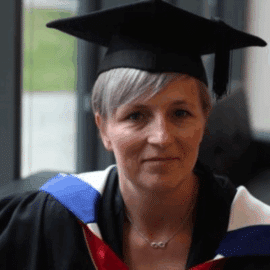
Carla Avery
Summary
This article reflects on the journey of building a midwifery programme from the ground up at Buckinghamshire New University (BNU). The author, originally trained over 30 years ago with a passion for physiological and home births, never expected to become an educator. However, with the first BNU midwifery graduates now working in practice, the author explores the milestones, challenges, and successes from concept to delivery, sharing insights from four years of leadership, collaboration, and continual reflection.
Where I started
After more than seven years in education, in January 2021, I took a leap of faith and joined BNU as Associate Professor and Lead Midwife for Education (LME), tasked with developing an entirely new midwifery programme from scratch. Encouraged by a senior leader who believed in my ability and supported by a former colleague who had taught midwifery, we began shaping what we hoped would become an authentic, inclusive, and responsive curriculum. From the beginning, we knew that self-care must be embedded throughout the programme, rather than treating it as a separate, bolt-on concept, we wanted self-care to be visible and central, a golden thread that would run through every part of the student experience. We strongly believed that midwives who practise self-care as students are more likely to embed it into their future clinical practice.
The COVID-19 pandemic was still dominating life and learning when we began this work, and whilst many adapted to working remotely and learning online, it became clear that something important was being lost in the absence of human interaction. For a profession built on connection, empathy and presence, face-to-face engagement remained essential. At the same time, flexibility was also important. According to NMC diversity data, between 2018 and 2019, 26.7 per cent of midwives were aged 31 to 40, compared with only 19.2 per cent aged 21 to 30,1 indicating many prospective students would be mature learners, possibly balancing other responsibilities.
Designing a curriculum for any subject requires collaboration
As a result, we designed a blended delivery model, combining live online teaching, pre-recorded content, and essential in-person sessions, aiming to make the programme accessible, flexible, and relevant to real student lives.
Designing a curriculum for any subject requires collaboration, but for a Professional Statutory and Regulatory Body (PSRB) programme such as midwifery, collaboration with key partners is essential. For us, that meant close work with our practice partners and Experts by Experience (EbyE), women and birthing people who would ultimately be cared for by our students. These voices brought diverse perspectives, shaped content, and influenced our thinking in ways that made the programme stronger. Their involvement extended across curriculum design, recruitment, delivery and assessment. When our programme was reviewed for NMC approval, their meaningful engagement was not only evident but commended.

The national LME network also proved invaluable, with its generous community of educators and leaders who share advice, ideas, and encouragement. There are no silly questions in that space, whether seeking reassurance or clarity on standards, the support from this network was both practical and affirming. As a group, LMEs are passionate about student experience and committed to developing the midwifery profession. That collective spirit gave me strength.
By May 2021, the structure and content of the programme had taken shape. We worked intensively to prepare for the joint NMC and university approval panel, with the aim of admitting our first students just a few months later in September.
Where I struggled
The word struggled feels a little too heavy. Perhaps challenges better reflects the mix of hurdles and learning opportunities that came our way. One of the most consistent challenges was interpreting the NMC standards2 while ensuring the programme also met institutional and regulatory requirements, particularly from the Office for Students.3 Trying to develop a dynamic, professional programme within traditional university structures felt like fitting a round peg into a square hole. Midwifery education, like other health professions, needs the autonomy to design responsive, practical curricula that support students and the needs of the workforce. The tension between regulatory compliance and real-world relevance was a constant.
On a personal level, I experienced moments of self-doubt. What if I missed something important? What if something went wrong? People were placing their trust in me, not only within the university but also prospective students. Applications were being received before final approval. I felt a responsibility to ensure the programme was ready. I interviewed every one of the 27 students who began in September 2021. Each of them chose BNU based on the vision I had shared. That trust was humbling.
How we developed
Recruiting staff for a programme not yet approved with no students is never easy. But I knew I could not deliver the programme alone. We needed a team, and not just any team. We needed midwives with energy, empathy, and a passion for education. The profession is challenging, and students need to be supported by people who understand that landscape.
Claire Stringer and Helena Nash joined BNU just before the programme started, both experienced midwives and had taught in clinical practice, but they were new to Higher Education. Looking back, this turned out to be a strength, bringing fresh energy and a readiness to embrace the unknown, no time for a slow start. They had to get straight to work, developing and delivering content while learning how the university systems worked.
There were moments that challenged all of us. For me, teaching the anatomy of the brain was particularly daunting. But we supported each other. Their enthusiasm was infectious. They embraced the vision and brought it to life with care, creativity and humour.
These students stood out not just for their knowledge and professionalism, but for their compassion and communication.
The first year was intense. We were often creating content just days before delivery, working late to ensure everything was ready. But it was also deeply rewarding. Our students were engaged, thoughtful and trusting. They gave honest feedback and helped us refine our approach, and were not just participants in the programme, they were co-creators.
Practice partners soon began to notice our students in teal uniforms, and feedback was overwhelmingly positive. These students stood out not just for their knowledge and professionalism, but for their compassion and communication. It was a proud moment to see our efforts reflected in their placement performance.
Over the next two years, we expanded the team further. Four additional staff joined us, growing our small but dedicated group to seven. Together, we continued to question, refine and evolve the curriculum. We adapted to updated NMC standards,4 responded to national maternity developments and ensured the core values of the programme remained intact. The golden thread of self-care was still present, but we were also integrating new ideas and approaches based on student and stakeholder feedback.
One of our proudest achievements is the level of pastoral care we offer. Midwifery students are often exposed to emotionally challenging situations. Sometimes, they need a two-hour debrief after a difficult case. As midwives ourselves, we understand this. We listen, we support, and we guide them to university wellbeing services when needed. Our aim is not just to produce safe and skilled practitioners, but midwives who are reflective, resilient and compassionate.
Where we are now
We now have just over 100 students across three cohorts. In September 2024, our first group of 18 students completed the programme and will graduate in July 2025. While the journey has not always gone exactly as planned, with structural changes and practical adjustments, the core philosophy has remained. Some sessions originally delivered online were later adapted to face-to-face formats based on student feedback and staff observation. These were easy changes to make because we built the programme with flexibility in mind.
We launched our first midwifery apprenticeship route in September 2024 with five learners, with support from BNU’s excellent Apprenticeship Hub, this addition has been smooth and well-integrated.
Looking forward, we are exploring additional programme developments to meet workforce needs, including postgraduate modules, and the potential introduction of a master’s level pathway for midwives. Now that the day-to-day delivery of the programme is confidently led by Claire and Helena, there is space to consider how we can expand and enrich our offering further.
Top tips for programme development
- Involve your practice partners, women, and birthing people from the beginning. Their collaboration is essential in creating an inclusive and responsive programme.
- Engage your university registry team early. Their knowledge of regulations is invaluable, and their involvement from the start can prevent issues later.
- Be prepared for NMC monitoring over the first three years. Ensure that feedback mechanisms are embedded, and that service user involvement is well documented.
- Be honest with students. Let them know you do not have all the answers and involve them in shaping their learning experience. They will appreciate the transparency.
- Accept that things will change. What seems like a good idea at the design stage may not work in practice. The curriculum must be reflective and adaptable.
- Believe in yourself. The process is hard work but incredibly rewarding. I look forward to announcing the names of our first 18 graduates on stage in July.
Conclusion
Curriculum design is never static. You cannot fully understand the intricacies until the programme is running, and even then, it is a continual process of learning and adapting. Over the past four years, I have grown as a leader and educator, and built a team of passionate, thoughtful colleagues who care deeply about their students and the profession. Most importantly, we have supported the journey of 18 outstanding student midwives who trusted us from day one. They believed in our vision, and in return, we built a programme worthy of their trust. From a blank page to a living, evolving curriculum, it has been the most rewarding professional journey of my life.
References
- Diversity data 2018-2019. NMC https://www.nmc.org.uk/globalassets/sitedocuments/annual_reports_and_accounts/edi/edi-2018-19-data-tables.pdf. Accessed February 18, 2025.
- Pre 2023 Part 3: Standards for pre-registration midwifery programmes. NMC. https://www.nmc.org.uk/globalassets/sitedocuments/standards/2023-pre-reg-standards/pre2023-standards/pre-2023_nmc_standards_for_pre_registration_midwifery_programmes.pdf. Published November 18, 2019. Accessed February 18, 2025.
- Securing student success: Regulatory framework for higher education in England. Office for Students. https://www.officeforstudents.org.uk/publications/regulatory-framework-for-higher-education-in-england/. Updated November 24, 2022. Accessed February 18, 2025.
- Part 3: Standards for pre-registration midwifery programmes. NMC. https://www.nmc.org.uk/globalassets/sitedocuments/standards/standards-for-pre-registration-midwifery-programmes.pdf. Updated April 25, 2023. Accessed February 18, 2025.