








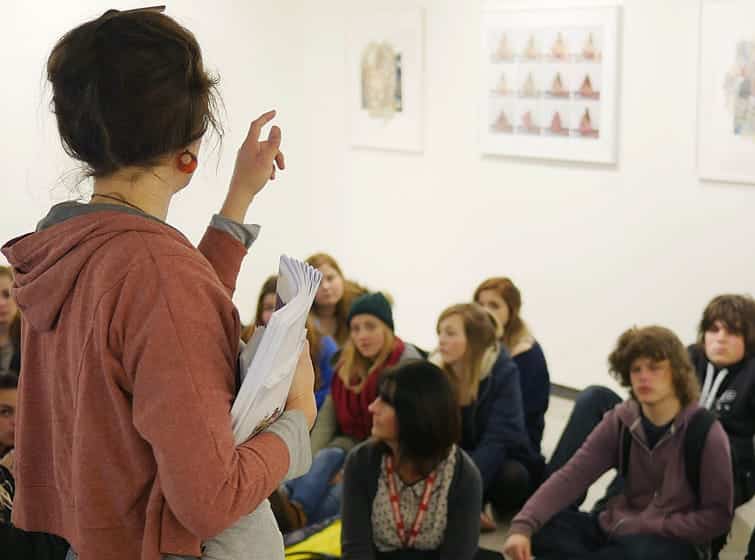
Passage from Birth Trauma by Mila Oshin
Two months ago I was diagnosed with PTSD as a result of circumstances surrounding the birth of my first child, eight years ago.
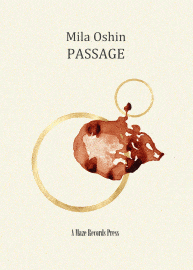
Passage Book
Surprisingly, perhaps, the past eight years have been some of my most creative and productive.
I wrote and published Passage; a collection of poems about my traumatic first birth experience, my journey as a new parent and my dramatically different and hugely empowering second birth at home.
Together with my creative and life partner I then turned Passage into a music album. Given its subject matter we knew it was never going to be a commercial success, but what matters most is that people with similar experiences to ours continue to discover and find great solace in it.
Passage Music Album
Project After Birth (PAB)
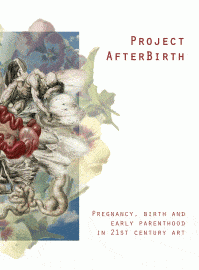
PAB Exhibition Catalogue
After publishing Passage, my partner and I curated Project AfterBirth (PAB); the first ever international multi-artform exhibition on the subject of early parenthood, supported by Arts Council England and in partnership with the Museum of Motherhood, the Photographer’s Gallery, Birth Rites Collection and White Moose. PAB introduced us to dozens of wonderful artists from all over the world who had created outstanding work about or inspired by their individual experiences of conception, pregnancy, birth and new parenthood.
We had always understood and advocated for the power of art as a tool for social change, but PAB took that notion to a whole new level for us. Apart from artists, students, parents and parents-to-be, exhibition visitors included professionals with a responsibility for parents’ wellbeing such as doctors, midwives, psychologists and academics researching and teaching related subjects. Many of them were so deeply affected by PAB that we received emails on a daily basis when the exhibition was on, with feedback about how the work had moved them and changed their perspective about the maternity experience.
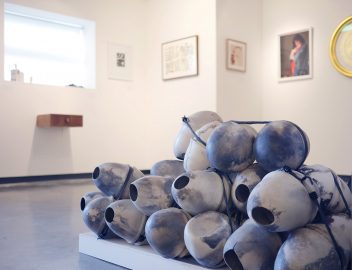
Photo Credit: Kris Jager
Digital Institute for Early Parenthood (DIEP)
Inspired by PAB’s success and our awareness that galleries are not accessible to everyone, we decided to focus our attention on setting up the Digital Institute for Early Parenthood (DIEP). This online initiative publicly showcases and promotes outstanding international autobiographical works of art about a multitude of 21st century maternity experiences (by mothers and fathers), through an Associate Artist scheme and a rolling exhibition and events programme. In addition, DIEP runs an education programme which uses these works to teach medical students and midwives about their power in influencing the maternity experience, and how this power far exceeds their medical knowledge and skills. We are also at the first stages of an ambitious project to help tackle the UK’s growing perinatal mental health crisis by developing a ‘sex and parenthood’ education programme with DIEP for secondary schools. We believe this will prove a crucial and effective way to give young people a healthy and realistic knowledge of and attitude towards the experience of sex, conception, pregnancy, birth and new parenthood from the start of adolescence.
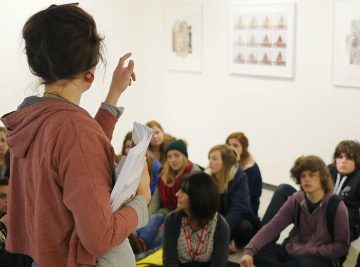
Photo Credit: Kris Jager
Personal Reflection and Self Care
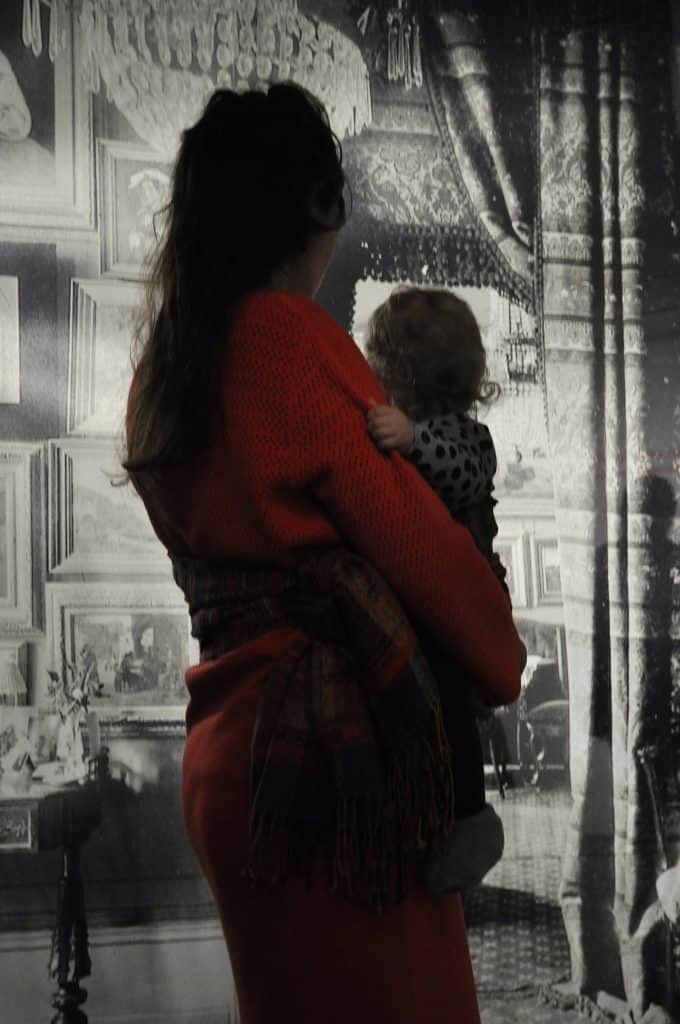
Still, although I love all aspects of my work, I can no longer deny that the driving force behind much that I’ve done over the past eight years has to a significant extent been my own birth trauma. The alarm bells started ringing at the beginning of this year when I reached a near burn-out state. Since then it has slowly become clear to me that my hugely ambitious self-inflicted and barely funded workload over the past eight years at once fed a trauma led obsession with the subject of birth while at the same time conveniently distracting me from the white elephant in my own room.
Mila Osin and Daughter
Over the past eight years I have met or been in touch with countless women with birth-related PTSD. So I was quite baffled at first that I could have missed I had it too. The thing is, that’s exactly it with trauma. It comes in many shapes and sizes and is not something you can control; it controls you.
Trauma is like grief, in that sense. It changes everything and yet nothing really changes. You carry it with you while you carry on with life. Not you, but it decides when and how it affects you and it usually rears its head when you least expect it. The big difference between grief and trauma is that grief fades as years go by. Trauma, which is essentially caused by the brain not being able to process an event and store it like a normal memory, does not fade.
There is one thing that most cases of birth-related trauma have in common though; they are hardly ever caused by the event of birth itself. As is stated on the UK’s Birth Trauma Association website, PTSD is mostly the result of
“…factors such as loss of control, loss of dignity, the hostile or difficult attitudes of the people around, feelings of not being heard or the absence of informed consent to medical procedures.”
My trauma is rooted in my experience of obstetric violence. I use this term because it accurately describes my experience, not because it reflects the intentions of those involved in any way. Having said that, part of the reason why I did not seek help for so long was because I am so aware of the great work midwives and obstetricians do and kept telling myself that, considering the pressures they are under, it is understandable they make mistakes.
I have had to learn the hard way that the fact that something is understandable, does not make it acceptable, nor does it negate that I was let down by someone who had a duty to look after me and that this has had major long-term consequences for me.
A close friend of ours who moved here from The Middle East almost a decade ago now, once asked me why I do the work I do, as compared to those in many other countries most women in the UK are so lucky in terms of how they are cared for. I told her that I do what I do precisely because pregnant women still have a choice here, just like their midwives and physicians, and that this choice needs to be preserved at all costs. Because no matter how overstretched and under pressure they are, midwives and doctors have a choice every time they meet a new mother-to-be. They have a choice as to whether they are going to leave their own worries behind and listen to women and treat them with kindness and compassion. And as I have said to countless medical students since, it is how they meet this choice that will have the most impact on a woman’s (and a man’s) maternity experience, possibly even more so than the kind of birth they have.
An important part of the recovery process from PTSD is to avoid trigger points. For this reason I am currently taking a break from most of my work for DIEP. Having said that, my own diagnosis has made me even more determined to continue as soon as possible. Whereas the NHS is currently trying to tackle the UK’s perinatal mental health crisis by trying to detect issues as early as possible, DIEP’s initiatives are all rooted in the notion that many such issues could possibly be prevented altogether. This is why educating future parents and those with a professional responsibility for their wellbeing about the choice they have and the role they play in the outcome of maternity experiences and, hence, in maintaining good perinatal mental health across the board, is at the heart of DIEP’s work.
So is art. Great art remains unrivalled in its ability to translate the unspeakable into a language that everyone understands. My own work Trouble from Passage continues to be used by various health professionals to explain the notion and impact of obstetric violence.
Visual work such as When They Told Me by British artist Ruth Gray instantly gets across how, even in the case of a full-term stillbirth, it is not necessarily the devastating news itself but the way in which it is communicated to a mother that can result in long-term trauma.
The ritual performance Birth ReBirth by Hungarian choreographer Csilla Nagy illustrates perfectly how birth is far from just a physical event for women, but a rite of passage into the deepest kind of knowledge about our planet and everything within.
These are just three of the many international works of art in DIEP’s online collection that we use to teach medical students about their potential impact on the maternity experience. At one and a half years old DIEP is still at its infancy, but the feedback we have received from those we have already taught is encouraging, to say the least, as this account from one of our recent Year 4 medical students shows:
“Out of all the projects at medical school, this has probably had the greatest impact on my belief system. I have always put patients at the centre of my professional experiences, however, DIEP’s programme has highlighted the importance of never losing that and, throughout my career, ensuring I do my utmost to empower each and every patient and to provide the support and care that they need.”
© Mila Oshin, 2018

