








Optimising Wellbeing in Pregnancy and Early Parenthood: Understanding Physiology
Becky Westbury – Midwifery lecturer, Swansea University, Community Midwife Team Leader, Bronglais Hospital and Hywel Dda University Health Board
Twitter @midwifebec
Published in The Practising Midwife Volume 25 Issue 06 June 2022, Page 17
Introduction
During pregnancy the circulating blood volume increases by 30–50%, which usually equates to about 1.5 litres of extra blood.1 This results in an increased cardiac output and often a marginally increased heart rate.2 Haemodilution of pregnancy needs to be understood as part of a wider understanding of the use of nutritional supplements for pregnant parents.
It is important for midwives to discuss with women and parents the importance of a balanced and varied diet in early pregnancy
Iron levels
Haemoglobin levels in pregnancy often decrease slightly because of haemodilution and red blood cell concentration. Furthermore, haemoglobin requirements during pregnancy are increased.3 These changes can result in anaemia; blood tests at 12 and 28 weeks check this, with an additional check at 12–24 weeks for those with a multiple pregnancy.4 Iron supplementation should be offered if haemoglobin levels drop below 110 g/l in the first trimester, below 105 g/l in the second and third trimesters, and below 100 g/l postnatally.4
Anaemia can result in unwelcome symptoms during pregnancy including tiredness, palpitations, headaches and heartburn.5 Additionally, anaemia may adversely affect milk supply and reduce the length of breastfeeding or chestfeeding in the postnatal period.6
It is important for midwives to discuss with women and parents the importance of a balanced and varied diet in early pregnancy, including conversations surrounding foods rich in iron. Pregnancy results in increased absorption of iron from foods eaten,1 therefore actively increasing iron-rich food consumption may help to prevent anaemia. Anaemia can also be caused by inadequate nutrition levels.

Vitamin C facilitates iron absorption,5 therefore low levels of vitamin C will affect the amount of iron the body can absorb from other food sources. Low levels of other vitamins such as vitamin E, B12 and A can also cause anaemia,5 therefore some childbearing women and people may choose to take a pregnancy multivitamin to optimise their health.
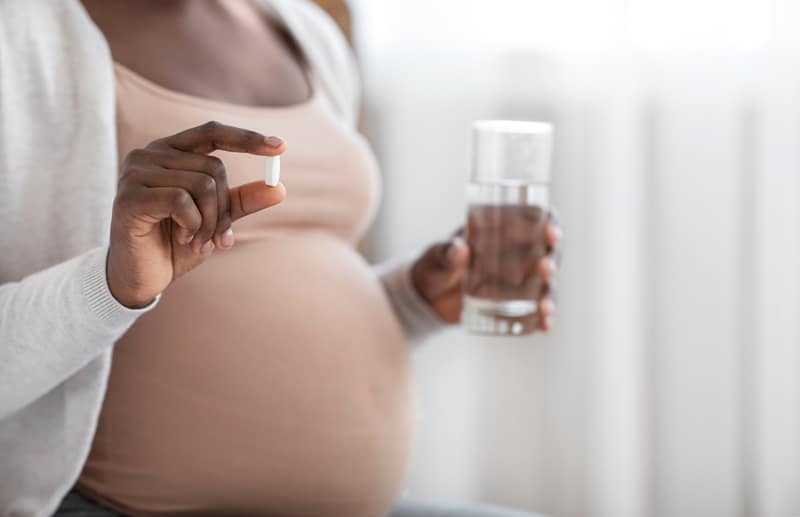
Iron supplementation can reduce symptoms of anaemia and may be recommended. However 8 out of 10 of those who take oral iron report side effects such as constipation5 and 50% of women stop taking iron tablets as a result of the side effects.7 If this occurs, midwives should be aware of other types of supplementation.
Traditional iron supplements can result in levels of absorption as low as 10%, however iron supplements that have more recently become available ensure that iron is delivered straight to the absorption site, and can lead to over double the iron absorption of traditional supplements.8 Furthermore, some newer supplements wrap the iron content in substances such as whey protein, preventing the irritation, discomfort and dyspepsia that more traditional supplements can cause.8
Women should be advised of the need to maintain a good haemoglobin level
Folic Acid
Folic acid supplementation is recommended in the first trimester to reduce the chance of neural tube defects,1 however low folate levels can result also result in anaemia. It is important to note that as 40% of people are unable to break down synthetic forms of folic acid, supplementation in the ‘folate’ form is preferable.9 Additionally, drugs such as beta blockers and aspirin may hinder folic acid absorption.9 Folic acid can also be obtained through the diet; foods such as fortified cereals, spinach, asparagus, sprouts and white rice are all rich in folic acid.9
Women should be advised of the need to maintain a good haemoglobin level, and the importance of a healthy lifestyle, balanced nutritional intake, and supplementation to lower their chance of developing anaemia. Midwives should be aware of different forms of iron supplementation to ensure they can best support expectant parents. TPM
References
- Coad J, Dunstall M. Anatomy and Physiology for Midwives. 3rd ed. Elsevier; 2011.
- Sanghavi M, Rutherford JD. Cardiovascular physiology of pregnancy. Circulation. 2014;130(12):1003-1008. doi:10.1161/CIRCULATIONAHA.114.009029.
- Bharj K, Daniels L. Confirming pregnancy and care of the pregnant woman. In: Macdonald S, Johnson G, eds. Mayes Midwifery. 15th ed. Elsevier; 2017:503-536.
- Royal College of Obstetricians and Gynaecologists. Blood Transfusions in Obstetrics. Royal College of Obstetricians and Gynaecologists (RCOG). https://www.rcog.org.uk/globalassets/documents/guidelines/gtg-47.pdf. Updated May 29, 2015. Accessed March 13, 2022.
- Jewell K. Nutrition in pregnancy. In: Macdonald S, Johnson G, eds. Mayes Midwifery. 15th ed. Elsevier; 2017:262-273.
- Entwhistle F. Infant feeding and relationship building. In: Macdonald S, Johnson G, eds. Mayes Midwifery. 15th ed. Elsevier; 2017:757-788.
- Tolkien Z, Stecher L, Mander AP, Pereira DI, Powell JJ. Ferrous sulfate supplementation causes significant gastrointestinal side-effects in adults: a systematic review and meta-analysis. PLoS One. 2015;10(2):e0117383. Published 2015 Feb 20. doi:10.1371/journal.pone.0117383.
- Flynn A. Changes in the management of iron in pregnancy. Br J Midwifery. 2020;28(9):636-638.
- Dellwo A. Health Benefits of Folic Acid. Very Well Health. https://www.verywellhealth.com/folic-acid-for-fibromyalgia-chronic-fatigue-syndrome-715983. Published July 13, 2021. Accessed March 23, 2022.

