








Racism Matters: 4. It’s Time to Tell the Truth: Action needed to support Black people in maternity
Mars Lord – Coach, Doula Educator, Birth Activist, Reproductive Justice Warrior
Published in The Practising Midwife Volume 23 Issue 11 December 2020 https://doi.org/10.55975/QUFJ5674
Summary
This article, the fourth in our Racism Matters series, looks at how racism, implicit bias and lack of action contributes to the higher maternal mortality rate of Black and Brown women. We will look at the rising numbers in the disparity in maternal mortality rates and what happens to the people who draw attention and look for action. We see how more research is perhaps not always the answer, nor has the appropriate lens and take a brief look into the world outside of maternity services to remind us of just how much work needs to be done as well as calls on self, community and global re-education, decolonisation and change. As a doula and a birth activist, I have had a front row seat to the implicit and explicit bias within and without the system. I speak unapologetically about the need for deep-seated change.
Black maternal mortality

By now, most of us are aware of the disparities in the maternal mortality rates for Black and white women – Black women are currently five times more likely than white women to die within the perinatal period.1 Quite rightly, there has been a lot of focus on raising awareness of this fact. I should know, I’m one of the leading voices in that conversation. We continue to hear about how shocked people are at the statistic and how dreadful it all is. This is swiftly followed by the questions ‘why?’ and ‘what is wrong with Black bodies?’. The outrage moves then to a small nod towards actions: ‘We need to do more research.’ And yet these worsening statistics haven’t been hidden, they’ve just been steadily ignored while the disparity grows.
Smoking and sudden infant death syndrome (SIDS)
Let us look at smoking in pregnancy and also at SIDs. When we discovered that smoking caused smaller birth weight babies (and let’s remember that doctors used to prescribe smoking to pregnant mothers for that same reason), we began to campaign and educate midwives, doctors, parents and communities about this.2 We saw concerted efforts by people to reduce smoking in pregnancy. When we discovered that laying babies on their backs reduced the risk of SIDs (or cot death as it was known at the time), a national campaign was undertaken. I remember it so well, as my first child was born just 17 months after TV presenter Anne Diamond’s son, Sebastian, died in July 1991. It was found that both smoking and laying babies on their fronts caused increased risk of SIDS.2
What happens to the whistle-blower
Meanwhile, with all this playing out, Black midwives were talking about their treatment within the NHS; Elsie Gayle became known as ‘the whistle-blower midwife’. Returning to work in the UK in 2002, Elsie was appalled at the way mothers and babies were being treated, particularly women of African descent. The response to her complaint was sustained bullying that took her to the point of suicide and bailiffs at her door, courtesy of Sandwell and West Birmingham hospitals.3 At this time, women of African descent were found to have an 80-83% higher risk of unexplained severe maternal morbidity when compared with white European counterparts; were 50% more likely to suffer a stillbirth when compared with white mothers; and at higher risk of preterm birth than their white contemporaries. As you can see, things have got worse.
When racism meets defensiveness
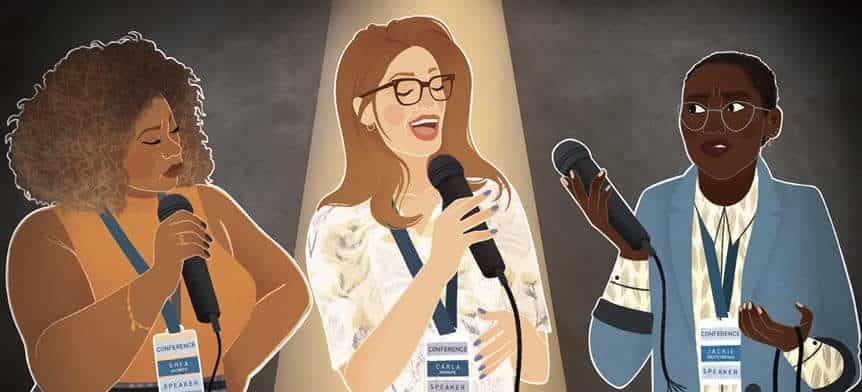
The systemic and structural racism of the NHS has been called into question. Defensive responses have sprung from doctors and midwives decrying the accusation of racism. Instead of turning their faces and eyes to the rot within the NHS, they have called instead on white fragility and discomfort and all but screamed ‘be kind’ as they take the accusations of racism personally. It would appear that being called racist, even though what is being pointed out is that the system and structure are racist, is worse than actually being racist. The fact that Black and Brown women and birthing people are dying at higher rates is not, somehow, as offensive. At a recent conference,4 organised by Elsie Gayle and a team of incredible women, where the topic of the day was Black maternal mortality, a senior NHS midwife interrupted two sessions to interject her opinion. This included taking the microphone during question time, when she hadn’t been called on to speak, to state: ‘What about white women?’ The de-centring and erasure of Black women is not lost here. At a time when the conversation was all about them, defensiveness and white centring raised its head. The wonderful Jennie Joseph, NHS trained and the founder of the first-ever Black certified Midwifery school in America, continues to exhort us with the words: ‘It’s time to tell the truth.’5
The research lens
And so we come back to the call for research. Elsie Gayle put in her complaints back in the early 2000s. The MMBRACE study shows year in and year out that the rates for the disparity continues to rise.1 The statistics and the figures are there. The calls drawing attention to racism, implicit and explicit bias have been there for decades. Nothing changes. Just yet more calls for research. I have an inbox full of requests, and sometimes demands, that I break down the MMBRACE study, give reasons for, and assist in information garnering about the disparities, from white midwives who wish to ‘know about’ and ‘write about’ this awful tragedy, so that their PhDs can be published and put up on shelves. More research, as Black women continue to die. The lens remains a white lens. Where are our Black researchers? Where is their funding?6 The funding goes to white researchers and so again, in a crucial area, Black voices are erased. There are countless articles where my words have been used, but the article written by white women. Articles that are sent to me to proofread or make comment on. There is nothing new under the sun. Within the Black community, we know it isn’t racism until the nice, white lady says it is.
Where are our Black researchers? Where is their funding?
A global shift?
After the video recorded murder of George Floyd on 25 May 2020, there came a groundswell of noise and Black lives were once again news. This is not to say that their murders and the implicit and explicit racism has ever been hidden, just that white eyes were beginning to turn towards it. Eight minutes and forty-six seconds caused a global shift in attention to the brutal racism experienced by Black people, particularly in America. For some, it was the first time they had been truly confronted with it. The video recording made national and international news. White people demanded examples of racism and here in the UK, many assumed that the problem was ‘an American problem’ but how many of you know about Cynthia Jarrett, Cherry Groce, Joy Gardner and Mark Duggan?7 Perhaps you have fleeting memories of the brutal, unprovoked murder of Stephen Lawrence.8 The demanding of examples of racism points clearly to the lack of belief when Black people speak and we verge into Black trauma porn when we continue to search through and watch and relay stories we’ve heard of racist brutality. ‘If all we ever do is react to racial violence, then all we literally ever do is react to racial violence.’ Ravideep Kaur, Instagram September 2020.
It’s time to move from reaction to ACTION.
Tears, self-flagellation and inaction
This is where tears begin to flow and fear of making mistakes rears its head. This fear of making a mistake leads to inaction and silence. The words that rise are ‘I’m not one for public conversation about this’; ‘Just because I’m not speaking about it, doesn’t mean I’m unconcerned’; and ‘Why do people expect me to speak up just because I have a large platform?’ It’s funny how so many of the ‘silent’ warriors can rant and rage about feminism (white centred), plastic, climate change and COVID-19, but cannot speak up for Black women dying in front of their eyes. This is a time for action. Yes, mistakes will be made. Of course mistakes will be made. That’s where most of our learning comes from. Our mistakes. The only true mistake is to hide behind defensiveness when we discover we’ve spoken or acted out of turn. Much simpler, but for many not easier, is to hold our hands up and say: ‘I did that wrong. I made a mistake.’ No need for long-winded explanations as to why that wasn’t your intention and that truly your heart is good and that you have a Black friend, lover, partner, child. This is a time to pause before action. Pause, not stop. This is a time to look at ourselves and where implicit bias shows up in our lives, in our homes, in our workplaces, in our education, within our families.
We need to stop turning to oppressed people to ask them how we can stop oppressing them.
Education and change
It’s time to call out bad practice. We need to root it out of the systems and structures. We need to decolonise (an oh-so-trendy word at the moment that detracts for the actual need to decolonise) our medical curriculum, our systems of training and supervision. We need to ask why Black midwives are far more likely than their white counterparts to be referred to the Nursing and Midwifery Council (NMC).9 We need to ask why they are silenced and forced into narrow paths of operation where they dare not speak up against injustice for fear of loss of career. We need to re-educate ourselves. Strip back the eurocentric learning and embrace the cultural differences of the people around us, and their different cultural needs. No more complaining that ‘they’ won’t come in to us.10 We need to find ways to go out to those communities, and not just to impose our ‘superior’ education and ways, but to listen and to learn.10 To change one small thing within our own practice. To demand one action of change within our hospitals and our beloved NHS.
Conclusion
It’s time to update our own personal education, so that we can make changes within ourselves, our communities and our workplaces. Midwives like Illiyan Morrison, of Mixing Up Motherhood, are creating and running workshops around advocacy. Within The Practising Midwife we are beginning to see more articles and information written by Black and Brown contributors. The Student Midwife has a Black editor, which ensures the Black voice isn’t muted and made palatable to white readers. We’re beginning to see the colouring in of the landscape of birth. Each of us needs to take personal responsibility for our work and our learning. This is not the time to follow trending accounts and refuse to look beyond the pretty imagery. Black women are dying. We are rapidly approaching the time when the latest figures are released by MMBRACE. It’s time to stop procrastinating and hiding behind discomfort. It’s time to elevate and join Black and Brown voices as they cry out for reproductive justice. In the words of one of my favourite beings, Angela Davies: ‘It’s time to change the unacceptable.’ TPM
References
- MBRRACE-UK. Saving lives; improving mothers’ care 2019: lay summary. https://www.npeu.ox.ac.uk/assets/downloads/mbrrace-uk/reports/MBRRACE-UK Maternal Report 2019 – Lay Summary v1.0.pdf. Oxford: Nuffield Department of Population Health; 2019.
- Perkins A. Back to sleep: the doctor who helped stem a cot death epidemic. The Guardian. August 26, 2016. https://www.theguardian.com/society/2016/aug/26/back-to-sleep-sudden-infant-death-syndrome-cot-death-peter-fleming. Published August 26, 2016.
- Boylin T. Patients First deplores repeated bailiff threat against midwife whistleblower. Patients First. March 7, 2014. https://patientsfirst.org.uk/cat=18.html. Published, March 7, 2014
- Action to reduce mortality in Black women and babies. The Iolanthe Midwifery Trust. https://www.iolanthe.org/latest/action-reduce-mortality-black-women-and-babies. Published June 3, 2020.
- Jennie Joseph home page. Jennie Jones. https://jenniejoseph.com/?gclid=CjwKCAjwqML6BRAHEiwAdquMnUxTS6GJVAC4i8-HdN9JXfixNcWnCeX8dIhZhkmIawxSYHNdIHmlfxoCDhMQAvD_BwE.Published 2020.
- Is the Ceiling Made of Concrete – Barriers and Bias Faced by BAME Academics in the UK. RESEARCHConnect. https://www.researchconnect.eu/funding-views/is-the-ceiling-made-of-concrete/?fbclid=IwAR0uJpQ18GXcYpnSUibTLI6mCT1wY5xl7nQUp1_ZB9Cc2-yD5Jcrc8-Jpys . Published 2020.
- Tottenham’s complex history highlighted in Black Lives Matter protests. ITV.com. June 9, 2020. https://www.itv.com/news/2020-06-09/tottenham-black-lives-matter-broadwater-farm-mark-duggan.Published June 9, 2020.
- Stephen Lawrence murder: A timeline of how the story unfolded. BBC.co.uk. April 13, 2018. https://www.bbc.co.uk/news/uk-26465916. Published April 13, 2018.
- West E, Nayar S, Taskila T, Al-Haboubi M. The Progress and Outcomes of Black and Minority Ethnic (BME) Nurses and Midwives through the Nursing and Midwifery Council’s Fitness to Practise Process. https://www.nmc.org.uk/globalassets/sitedocuments/other-publications/bme-nurses–midwives-ftp-research-report.pdf. Published January 2017.
- Service user involvement in maternity and perinatal mental health research. NIHR ARC South London. https://www.arc-sl.nihr.ac.uk/news-insights/blog-and-commentary/service-user-involvement-maternity-and-perinatal-mental-health. Published September 29, 2020.

