









“Re-birthing birth in the UK”
Florence Darling – Midwife/Researcher – City University, London
Twitter: @florencedarlin1
Prof Jenny Gamble – Centre for Care Excellence, School of Nursing, Midwifery and Allied Health, Coventry University, and University Hospitals of Coventry and Warwickshire Professor Emeritus, Griffith University Director, Transforming Maternity Care Collaborative
Summary
The RCM’s re-birth project has three aims, and the discussion in this blog explores the importance of the third aim. To do this, the use of word normal in midwifery is explored, and care that is midwife-led is contrasted with care that is obstetric-led. The importance of midwifery care in reducing maternal and infant mortality and morbidity is emphasised. The failure to consider women’s preferences in the provision of care, and the reasons why this is important is explored. We conclude that a re-birth is indeed needed, but not in the way envisaged by those calling for a so called “normal birth ideology” to be stamped out.
Introduction
The RCM has recently launched the re-birth project, collaborating with midwives, obstetricians, other birth workers and families to address what it describes as the highly polarised and toxic debate about normal birth in UK. This project has three aims:
-
- develop our shared understanding, and seek a consensus on what terms are both welcome and helpful for us all to use when we describe different types of birth
- agree on clear, consistent terminology so that professionals and service users can be confident what different terms mean, why they are used and how others might feel about them
- develop a clear narrative about what birth professionals hope for women and their families coming through our maternity services in the UK. This will need to include a clear description of the unique role of the midwife in supporting physiological processes, identifying and acting upon deviations from the norm and reducing morbidity and mortality.

Discussion
Given the highly emotive nature of the debate and vested interests, it is difficult to contemplate how the first two aims of this project can be completely met. Given the controversy, it is unlikely that consensus will be reached, however, if indeed birth terms were agreed, the extent it which it will be used in day-to-day practice is questionable. Birth language has a long history, is deeply embedded in medical and health literature, and society at large and may not be easily refashioned. Instead, emphasising sensitive care and responsiveness to each individual woman’s views and feelings about birth when communicating with her is needed.
This said, the third aim of this project is necessary and important to rebuilding confidence that has plummeted since the reports of very serious failings in two maternity services in the UK, the Kirkup Report in 2015 and the Ockenden Review in 2020. One of the causes for these failings outlined in these reports is a view that there is at the level of individuals, professional groups (midwives and obstetricians) and organisations, a culture of “normal birth at any cost,” a phrase used to describe care where deviations from the norm were disregarded ; and professionals sought to achieve a normal birth regardless of signs and/ or symptoms of complications resulting in serious harm. As a result many are calling for an end to the term ‘normal birth’ and what is described as a normal birth ideology.
The concept of normal and normality is important in healthcare: one can only know deviations from the norm if we know what constitutes normal. This understanding is fundamental to addressing approaches to care based on “normal birth at any cost.”
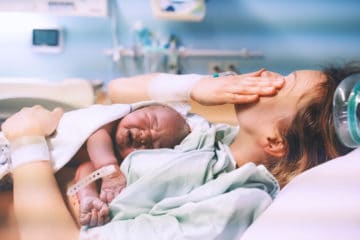 In the training of midwives and obstetricians the word normal relates to the understanding of the normal anatomical and physiologic functioning of the woman’s reproductive systems, and the birth process. With regards to practice, care that is midwife-led draws on knowledge and skills to support normal labour and birth’s physiologic functioning, use of physiological interventions in the event of non-emergencies, the provision of first line management of emergencies, and calling upon the knowledge and skills of obstetricians to manage deviations from norm. The phrase midwife or “being with woman” is a rather poetic reference to highly demanding midwifery work that draws on an in-depth understanding of the physiologic functioning of labour that is mediated by hormones. Care must be highly cognisant of the myriad influences on physiologic functioning 1,2 and proficient in ways to manage it. In being with the woman care is focused on guiding the woman through this complex process and responding to the individual woman’s physical and emotional needs. This approach to care is described in consensus statements, national clinical guidelines, international guidance, research and expert writings. Importantly, the midwife also needs to understand and respond to deviations from the norm, accessing obstetric-led clinical interventions in a timely manner.
The International Confederation of Midwives describes a normal physiological birth as a birth that occurs spontaneously, progresses of its own accord without augmentation, and ends in a vaginal birth unaided by forceps, ventouse, episiotomy or a caesarean; and obstetric-led clinical interventions are only used when deviations from norm occurs. Normal birth, meeting this definition, is becoming an increasingly rare experience for women. In England in 2017, only 36.9% of women experienced normal birth.

A more common experience for women is care involving the use of obstetric-led clinical interventions as a norm. In many hospital settings obstetric-led care predominates with regular and routine involvement of obstetricians regardless of whether labour and birth has deviated from normal. Care that is obstetric-led tends to draw on a perception of birth as an inherently risky; and medical and surgical interventions including various forms of continuous foetal monitoring are frequently used as a matter of routine and standardised to care of all women. Labour may be routinely induced or augmented, using a rate of progress of 1-1.5 cm per hour based on the Friedman’s curve rather than informed by current evidence that labour progress varies from woman to woman and throughout labour. Ventouse, forceps and caesareans occur more commonly because of the increased risks of foetal distress associated with the use of induction and augmentation. Labour may also be ended prematurely using instruments because of arbitrary external factors such as a lack of time for physiological labour in busy obstetric units.
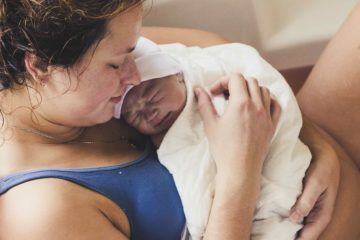
However, as evidence mounts about increased mortality and morbidities associated with the routine use of obstetric-led medical and surgical interventions, some obstetricians have embraced a reorientation of maternity services to provide greater access for women to midwifery-led care. However, the “normal birth at any cost” ideology described as a contributory cause of the failings at two maternity services has given others, for example the media, some campaigners, politicians and obstetricians, an opportunity to undermine a progressive midwifery profession crucial to safe maternal and newborn care in the UK.
Further care in labour and birth cannot just be about care that the midwifery and obstetric professions, media, campaigners and politicians want to progress. Current debates have raised the importance of the central pillar of care: women’s preferences. Women’s preferences for birth maybe influenced by, for example, information received from midwives, obstetricians, family and friends. Increasely, other sources, for example the media and internet are easier to access than experts who have little time for care. Influences may also derive from women’s perceptions of birth, self-perception in their ability to birth, past experiences, experiences of family and friends and socio-cultural factors.
The failure to personalise care has led to a poor understanding of these preferences and their influences on women’s decisions. Instead women abandoned by such a system of care are either choosing to birth outside the system or seek medical and surgical clinical interventions as a way of avoiding traumatic experiences.
Conclusion
Birth in the UK certainly needs a re-birth but not in the way envisioned by groups calling for an end to what is described as a normal birth ideology. A clear evidence-based narrative must inform the care women and their families receive. The narrative is: care that is midwife-led in midwifery-led units and at home is safe, reduces maternal and infant mortality and morbidity and secures the immediate and long term health and well-being of women and their babies. Where problems arise, care that involves obstetricians in a timely manner reduces maternal and infant mortality and morbidity. However, care that is predominantly obstetric-led increases the routine use of interventions and this increases maternal and infant mortality and morbidity. There is an immediate and urgent need to reconsider current ways of working in obstetric units so that instead of routinely using medical or surgical interventions and continuous foetal monitoring techniques, decision-making actively draws on midwifery knowledge and skills, to implement a physiological approach and considers where appropriate the use of physiological interventions. Care in all birth settings must personalised to the woman’s needs and preferences
Where women choose obstetric-led units they must do so with a full understanding of the implications of this care on their health and that of their baby. Such information-giving must be mandatory unless the woman decides she does not want to receive such information. In such an event this choice must be documented in the woman’s notes. A woman must be able to change her mind about the care she wishes to receive at any point during the course of her pregnancy, labour and post birth. Opportunities to reconsider her care-plan must be made available, and the woman’s decisions supported. Given such opportunities and guarantees of appropriate midwifery and obstetric support when needed, women will feel supported in making decisions for themselves and their babies. TPM
References
- Downe S, McCourt C. From being to becoming: reconstructing childbirth knowledge. In Downe S, Byrom S (ed), Squaring the Circle: Normal birth research, theory and practice in a technological age. Ist edn, UK: Pinter and Martin. 2019: pp.69-99.
- Cheyne, H and Duff, H (2019) Anatomy and Physiology of labour and associated behavioural cues. In Downe, S and Byrom, S (ed), Squaring the Circle: Normal birth research, theory, and practice in a technological age. Ist edn, UK: Pinter and Martin.


