








Recognising Student Integrity, Kindness and Compassion
Fran Leavy (She/her) – Lecturer in Midwifery and Professional Midwifery Advocate
Social @FranELeavy
Helen Jacques (She/her) – Lecturer in Midwifery and Professional Midwifery Advocate

Fran Leavy

Helen Jacques
Summary
The University of Hull established the Jackie Kirman Award for Integrity, Kindness, and Compassion to honour the former student midwife, who demonstrated these values before her death in 2022. Now an annual event, second-year student midwives nominate peers who embody these qualities. The award highlights the importance of professionalism, civility, and positive workplace relationships, especially in light of recent concerns in midwifery culture. It recognizes compassion and integrity, which are essential yet often overlooked aspects of midwifery. In April 2025, nominations will open again, celebrating Jackie’s legacy and promoting a compassionate future in midwifery.
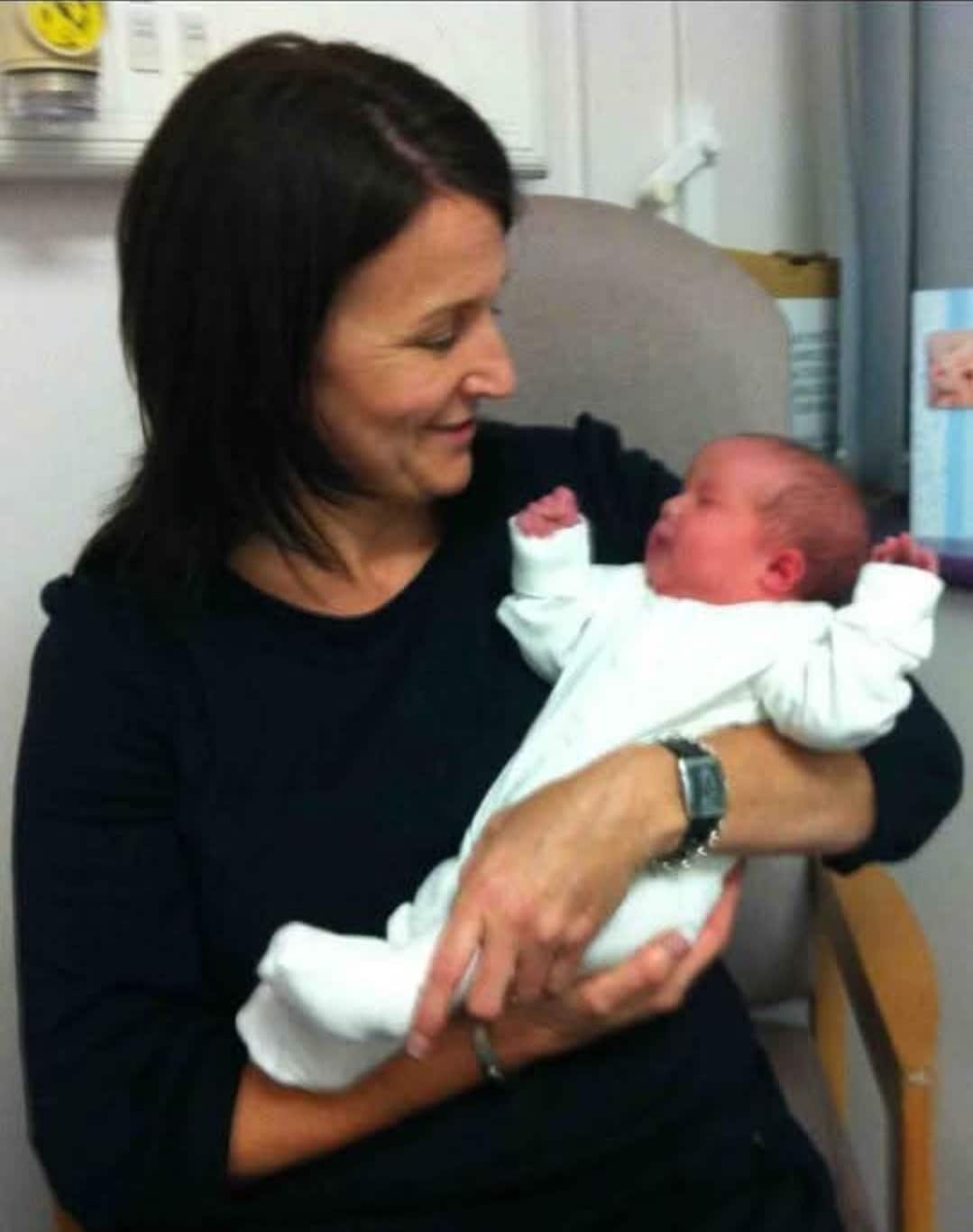
Jackie Kirman – Holding friends baby
Introduction
In 2025 the University of Hull will present the 4th Jackie Kirman Award for Integrity, Kindness and Compassion to one of our current student midwives. Jackie was a student midwife at the University of Hull when she sadly died. As a student she demonstrated integrity, compassion and kindness, and frequently spoke of the importance of these values to midwifery. In recognition of these qualities, she was presented with the inaugural Jackie Kirman Award prior to her death in 2022. To commemorate her life, the award has become an annual event, and for the last two years, second year student midwives have nominated peers from their cohort who embody these values. This article aims to consider the qualities this award recognises and their significance to the midwifery profession today.
Celebrating students
When remembering Jackie, the midwifery team at the University of Hull were prompted to reflect and refocus on the importance of integrity, compassion and kindness, and the need for these qualities to be celebrated within the student midwife community. We place great importance on students understanding the importance of professionalism and civility and aim to create a future workforce who will also value these attributes and behaviours. As a university, and as a team of midwives ourselves, we are committed to providing a holistic approach to student wellbeing and celebrating behaviours that will ultimately lead to safe and effective care. The award is presented to second year students, as this is a stage that is often reported to be one of the most challenging times to be a student midwife. The award is peer nominated by members of the cohort who have, by that time, got to know each other well, with nominees and the winner of the previous year choosing the new winner. This approach ensures all students become part of the process and take ownership of recognising and acknowledging these qualities. Previous student nominations have celebrated the subtle kindness and support that has been given to one another as a cohort:
“She is a kind and compassionate woman who is accepting of anyone and not scared to express her feelings … as a cohort we then all followed and expressed our fears too. She is someone who provides support when needed”
“She always seems to know the perfect things to say to keep you motivated and positive and is an absolute pleasure to be friends with.”
“If they notice that someone is having a tough time or seems not their usual self they send a message to check in with them to see if she can help or to offer reassurance”
We feel it is essential that students consider the importance of the values described, and what they mean to them personally. It is hoped they will continue to acknowledge, and role model these values and behaviours as they progress into their midwifery career.
Kindness and Compassion
Student midwives’ academic and practise achievements are routinely recognised through grading of assessments and placements. While negative behaviours are dealt with through formal fitness to practice processes, positive personal characteristics of profound importance to the profession are not routinely celebrated or assessed. The midwifery profession is currently under intense scrutiny due to media coverage of reports such as those by Ockenden and Kirkup,1,2 that have highlighted ongoing and widespread problems of incivility and toxic workplace cultures. Therefore, it has never been more pertinent that workplace relationships are treated with the same importance as clinical and academic attainment.

Compassion is defined as ‘How care is given through relationships based on empathy, respect and dignity’3 while kindness is considered the behaviours of being generous, helpful and caring. It is assumed that people entering a healthcare profession such as midwifery are inherently compassionate and kind. Interview panels attempt to identify these during the application process through the use of value-based questioning. However, compassion is an intangible quality that is unique and based on personality, morals and culture and is therefore subjective. Midwifery education attempts to teach the concept of compassion, and the values and behaviours associated with it in accordance with NMC requirements. It is assessed only in practise, where students are graded using holistic descriptors based on the values of the 6 c’s.3 This appears to be assessing the student’s compassion in relation to maternity service users and their families, rather than with colleagues. We believe that, in the university environment that focuses on more objectively measurable clinical skills and theoretical insight, compassion towards colleagues is a quality that deserves to be rewarded in its own right.
Integrity
Integrity is defined as ‘the quality of being honest and having strong moral principles’. Behaviours such as duty of candour and adherence to ethical principles are enshrined in the NMC code4, forming the foundations of expectations around midwives’ and student midwives’ professional behaviours. Academic integrity is essential in the university environment. It is checked in every assessment with the help of plagiarism detection tools, with suspicions of academic misconduct being treated through formal discipline procedures. Whilst healthcare workplace behaviours such as dishonesty and unethical practice are likely to be treated seriously and have their own formal processes, midwifery practise relies on openness and trustworthiness. Such qualities are assumed, and as colleagues we rely on the integrity of those we work with to maintain the trust and safety of the public.
Behaviours such as duty of candour and adherence to ethical principles are enshrined in the NMC code
Trust is a fundamental component of effective teamwork and is essential for autonomous practice. If the integrity of other team members is doubted there inevitably will be professional strain and a breakdown in team relations. Kirkup states that ‘poor teamworking may result from a lack of respect for other staff and a lack of mutual trust, with insufficient credence given to the views of others.’2 Integrity is an essential behaviour for all health care professionals, both to maintain safety and to foster positive working relationships.
Remembering with Hope
In April 2025 nominations will open again for our current year 2 student midwives to put forward a member of their cohort who demonstrates these values. We look forward to celebrating them, remembering Jackie, and a future where midwifery is filled with integrity, compassion and kindness.
If you enjoyed this content, read this two-part blog on Professional Midwifery Advocates (PMAs):
Embedding the PMA in Midwifery Education: Part 1
Embedding the PMA and A-EQUIP in Midwifery Education: Part 2
You can also listen to this fabulous podcast Number 35 in our Midwifery: Love, Life and Learning series – the two authors chat to Sheena Byrom OBE about their blog “Embedding the PMA in Midwifery Education”
References
- Ockenden D. Ockenden report – final: findings, conclusions and essential actions from the Independent Review of Maternity Services at The Shrewsbury and Telford Hospital NHSTrust. https://assets.publishing.service.gov.uk/media/624332fe8fa8f527744f0615/Final-Ockenden-Report-web-accessible.pdf. Published 2022. Accessed February 11, 2025.
- Kirkup B. Reading the signals Maternity and neonatal services in East Kent – the Report of the Independent Investigation. https://assets.publishing.service.gov.uk/media/634fb083e90e0731a5423408/reading-the-signals-maternity-and-neonatal-services-in-east-kent_the-report-of-the-independent-investigation_print-ready.pdf. Published 2022. Accessed February 11, 2025.
- NHS Professionals. The Six C’s of Care. NHS Professionals. https://www.nhsprofessionals.nhs.uk/nhs-staffing-pool-hub/working-in-healthcare/the-6-cs-of-care. Updated 2025. Accessed February 11, 2025.
- Nursing and Midwifery Council. The code: professional standards of practice and behaviour for nurses, midwives and nursing associates. https://www.nmc.org.uk/globalassets/sitedocuments/nmc-publications/nmc-code.pdf. 2018. Accessed February 11, 2025.

