








Rural Continuity In Wales: A Midwifery Elective With Powys NHS Trust
Rachel Barnes – Student midwife, University of Central Lancashire

Introduction
The county of Powys stretches nearly the length of Wales, with its NHS Trust serving a predominantly rural population covering an enormous area. With long distances to the nearest tertiary hospitals, many women chose to birth at freestanding midwife-led units. In this article, Rachel Barnes reflects on her elective placement at a Powys Birth Centre. Away from the large tertiary unit in England where she is training, she encountered a service offering a fully implemented continuity of care model and observed midwives practicing autonomously to provide truly woman-centred care.
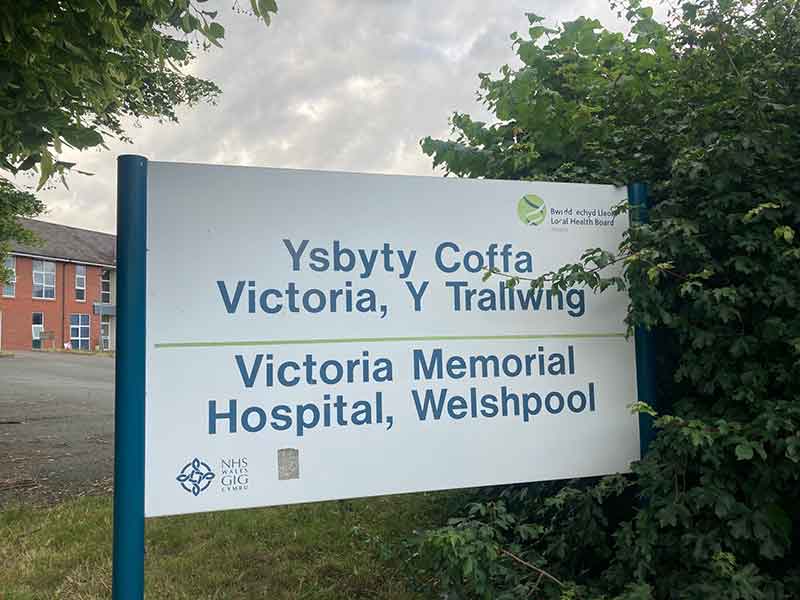
Welshpool is a market town in Powys. Its small hospital is home to an equally small birth centre and one of six small midwifery teams spread across the county. The setting is nearly an hour’s drive from the closest obstetric unit, so much of the care is carried out in the community. On-site midwife sonographers offer the full spectrum of maternity scans, meaning that unless women require obstetric referral, they can access all their antenatal care locally. Given the distance to a major hospital, many women choose to birth either at the midwife-led unit or at home, with homebirths accounting for 40% of those who choose to stay in-county for their intrapartum care. Powys has a homebirth rate of 8%, one of the highest in the UK and significantly higher than the national average of 2.4%.
Community-based midwifery
One of the recommendations from the recent Darzi investigation into the NHS, advocates for the transfer of care out of acute settings and into communities. This shift in the locus of care is already in-evidence in Powys. Something immediately apparent about this setting is that many women are known to the team at booking. A midwife may have supported a woman with a previous pregnancy or cared for other members of her family in the past. Older midwives may even have supported a pregnant woman’s mother at the woman’s own birth! With their comparatively small caseloads, the midwives can discuss the care of the women with their team, so that another midwife can takeover care seamlessly if required. The individual midwives are also a familiar presence in the community. It struck me that on answering the birth centre phone, midwives gave their name rather than just saying ‘midwife speaking’ as happens in my local maternity ward. This small detail communicated volumes about the relationships that form between midwives and families, making them feel more personal and human.
some midwives also become accustomed to facilitating births single-handed, as it is not uncommon for the baby to arrive before the second midwife does.
These rural midwives require a slightly different skillset than those working at a large tertiary hospital. They do not carry out CTG monitoring, facilitate inductions of labour, assist with forceps deliveries, monitor epidurals or support in theatre. They may, however, find themselves driving up a farm track at night to check on a woman who has reported bleeding, assess the onset of labour, facilitate a birth, or provide early postpartum breastfeeding support at home. Rural midwives also need to be confident managing hospital transfers and providing effective first-line care until the ambulance arrives. Due to the distances involved, some midwives also become accustomed to facilitating births single-handed, as it is not uncommon for the baby to arrive before the second midwife does.
Personalised care
No matter where women are intending to birth, midwives go to them to assess whether active labour has commenced. Some offer booking appointments at the woman’s home, as well as the 36-week birth preparation discussion. This not only enables the midwives to do a holistic assessment of the woman’s situation and circumstances but allows a planned daytime visit before an unplanned night time one becomes more likely. For women planning a hospital birth, especially when having a first baby, having a known and qualified caregiver to support them with when to travel to hospital in labour is incredibly reassuring. This helps women avoid long journeys to tertiary units only to be turned away if they are not in active labour. Physiologically, a home visit saves women from leaving their own environment too early and thereby potentially protecting their oxytocin production from disruption. For those women who experience a precipitous labour, there is a professional in attendance to support the birth.
In settings which do not have easy access to obstetric services and where midwives are confident and competent to facilitate it, homebirth is a valid and viable option.
The evidence is unambiguous that for women considered to be at ‘low risk’ of complications, homebirth is a safe option associated with low levels of medical intervention and high levels of maternal satisfaction in the presence of trained birth attendants. In settings which do not have easy access to obstetric services and where midwives are confident and competent to facilitate it, homebirth is a valid and viable option. There are, of course, situations in which women are strongly encouraged to access larger hospitals for their care, and instances where midwives have a lower threshold for referral compared to a unit closer to obstetric facilitates. This personalised and women-centred approach can also result in women opting for care outside of NICE guidelines. Midwives become experienced at facilitating personalised care plans, sometimes with support from the consultant midwife, giving women autonomy around how and where they birth. For example, a woman who experienced a shoulder dystocia with her first birth, but straightforward deliveries with her two subsequent babies, was supported in her desire for a homebirth by the midwives. Similarly, in the case of a woman who previously haemorrhaged after a postdates induction and quick labour, careful discussion led to a bespoke plan of care at the birth centre.
In the absence of a discourse which frames homebirth and ‘out-of-guidance’ choices as radical, space is created for midwives to council women with genuine equipoise. Those meeting the criteria for midwifery-led care were presented with homebirth, birth centre and hospital birth as viable options. For women with more complex medical or obstetric histories, there were still opportunities for shared decision-making and care-planning based on women’s preferences which can sometimes become lost in more medically-focused environments. Ultimately, for many women, receiving intrapartum care from ‘their midwife’ at a familiar location presented itself as an obvious, desirable, and safe option.
Whilst in Powys, I spent a day with midwife James Bourton, one of the birth centre co-ordinators. I found James to be deeply committed and a passionate advocate for, and provider of, women-centred midwifery care. I accompanied him on a postnatal visit to a woman whom he had supported with a homebirth following a caesarean (HBAC), after a previous planned caesarean for breech. On paper the birth had been challenging, involving a hospital transfer for a significant postpartum haemorrhage. The woman, however, described a highly positive birth experience characterised by supportive labour care, excellent communication with both her and her partner, and a calm and smoothly managed hospital transfer, which demonstrated the deep level of trust she had in her midwives. Although she was clear that her family was now complete, the woman the described the feelings of pride, joy and empowerment she felt after the birth, like she ‘could happily do it all over again’. I rarely hear this, even from women who have experienced an obstetrically straightforward birth, and it demonstrated to me the importance of feeling empowered and psychologically safe, as well as physically safe in labour.
Quality of life for midwives

To me, the Powys midwives appeared to have a strong belief in the service they offer and deep job satisfaction. Managing their own diaries afforded them the flexibility to balance work with family life and other commitments. The midwives also valued the relationships they had with women and were proud to practice with autonomy. There were, however, some challenges to working within a continuity model. Frequent on-calls could be difficult for those with caring commitments, and some midwives found the responsibility of practising at a distance from obstetric units unnerving. There were also challenges in collaborating across maternity service and county boundaries to provide care for women who required obstetric input. Furthermore, the midwives frequently had to deal with the disappointment and frustration of women who were not getting the personalised care they had come to expect, following referral into a tertiary unit.
Visiting a different area for an Elective placement is an opportunity to be reminded that everywhere operates slightly differently. Policies, guidelines, and their interpretation are not set in stone, and operational norms and conceptualisations of ‘safe practice’ change markedly across different settings. My time in Powys was both inspiring and eye opening. The midwives have a high degree of autonomy and flexibility compared to those working in large obstetric units. Living and work in a stunning rural setting also has advantages in terms of quality of life. I was able to spend my free weekend hiking up a mountain and dipping in a waterfall! Having the opportunity to experience a rural continuity of care model has broadened my horizons and made me consider how, and where, I would like to practice in the future.
Policies, guidelines, and their interpretation are not set in stone, and operational norms and conceptualisations of ‘safe practice’ change markedly across different settings.

