









Stretched to the Limits; supporting women with hypermobile Ehlers-Danlos Syndrome (hEDS) through pregnancy, labour and postnatally
by Rachel Fitz-Desorgher
Reviewer: Natasha Soliman – Independent Midwife
Publisher: Jessica Kingsley Publishers
Publication Date: 2024
Format: 286 pages, paperback
RRP: £26.99
ISBN: 978-1-83997-249-2
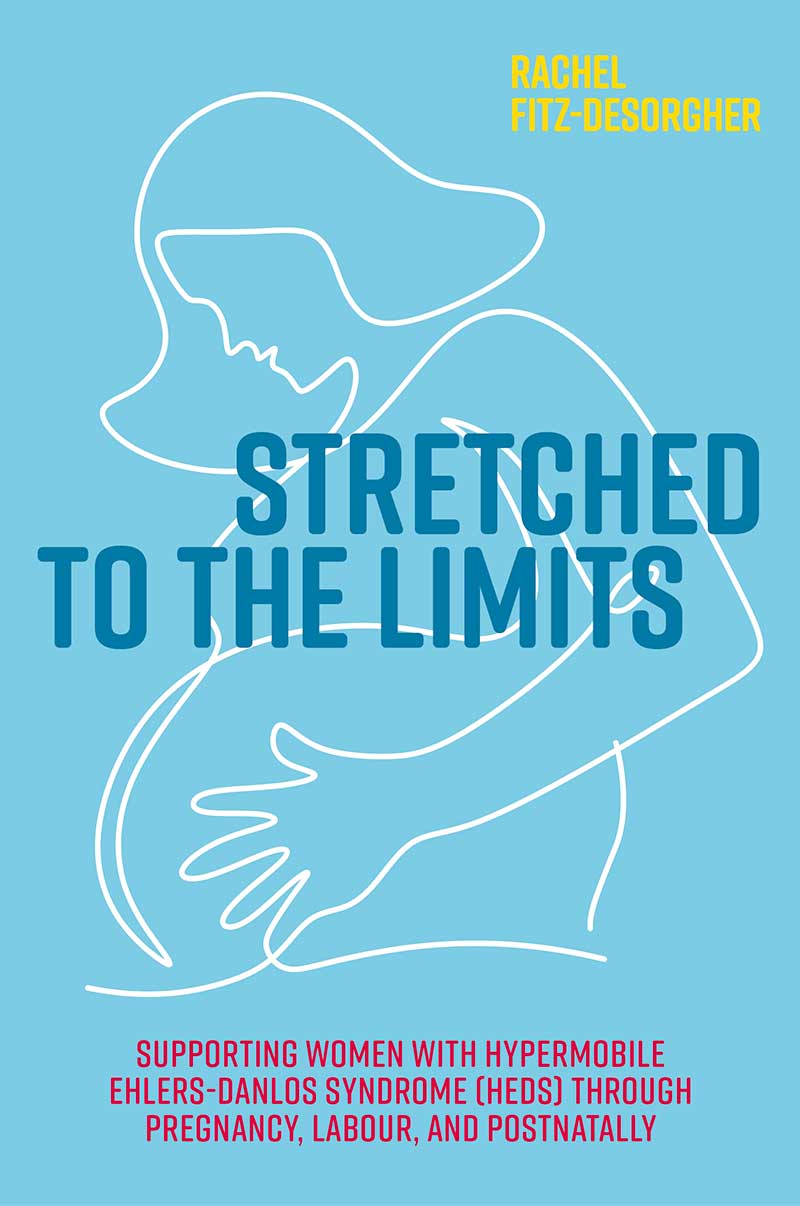
New research is coming out that would suggest more people are living with Ehlers-Danlos Syndrome (EDS) than first thought, with a high prevalence amongst women. This publication could really help bring midwives and other maternity workers up to speed with a condition that is bound to affect a significant proportion of the women using maternity services. Having just supported a client with hEDS to have an uneventful yet wonderful homebirth, I was keen to get my hands on a copy.
The book is well laid out and takes the reader on a journey from pre-conception, pregnancy, labour, birth and then ultimately life with baby. It’s written in a way that is accessible to all, with the author drawing upon her own experiences of having the condition. In part 1 the reader is she taken on a tour of the body affected by hEDS, system by system. It’s a great approach used by the author to successfully help readers delve deeper into the condition of hEDS before considering the change that pregnancy and birth may bring. Before you get to the subsequent chapters on pregnancy the pieces are already coming together to prompt thinking of what care would look like for someone with hEDS.

The author goes on to explore hEDS in pregnancy, offering the reader a practical insight to enable midwives and women to prepare for labour and birth, consistently relating it back to the impact hEDS has on the human body during pregnancy. The author addresses the importance of ‘labelling’ and ‘mis-labelling’ women and smartly lays out the distinct roles of the midwife and obstetrician. Overall, reading this book feels like you’re having a sensible conversation with a colleague, offering a comprehensive look at an often-misdiagnosed condition whilst ensuring woman-centred care.

