

Supporting Midwives Under Pressure: Sustainable Strategies
Sheena Byrom (she/her) – Midwife and Director, All4Maternity
Social @sheena_byrom
Claire Nutt (she/her) – Assistant Professor of Midwifery, University of Birmingham
Published in The Practising Midwife Volume 29 Issue 2 March 2026, Page 13
https://doi.org/10.55975/LYGF1787
Introduction
Report after report tells us that midwives are overworked and exhausted. Stress and burnout are increasingly recognised concerns within the profession. While organisational solutions are essential, midwives can also benefit from accessible personal actions that support recovery and day-to-day wellbeing. Drawing on Billie Hunter’s, et al.,1 research on resilience, firstly we need to be self-aware – mindful of the pressures and expectations and make decisions around acceptable boundaries we can set in our life and workplace.
Setting boundaries
Communicating pressures to senior staff and advocating for support is a professional and personal strength. Protecting rest days, limiting excessive overtime where possible, and recognising personal energy and capacity help prevent chronic exhaustion. Secondly, identifying potential stress, or ‘fight or flight’ triggers can help prepare counter actions that help us to cope, such as connection with support from others or self-grounding techniques.
Our health matters
A key starting point is looking after ourselves. It’s not indulgent or something to fit in, but necessary. As midwives we give so much of ourselves to others that replenishing physical and emotional resources is essential. Adequate sleep is one of the most protective factors against stress yet shift work can disrupt rest. Establishing consistent wind-down routines, limiting screen exposure before bed and prioritising recovery sleep after night shifts can help. Nutrition and hydration are equally important. Skipped meals and dehydration are common in pressured maternity wards – small habits such as carrying a water bottle, preparing nutrient and protein rich snacks can help.

Movement is important – midwives do not necessarily need intense exercise regimes – short walks, stretching and limb shaking, or time outdoors can offer powerful decompression. Walking in nature (listen to birdsong!), even for 20 minutes, promotes endorphins and provides mental space away from the intensity of work. A few, simple, minutes focusing inward can shift stress into presence, making a powerful difference.
Relaxation during downtime can further support recovery. Warm baths are a simple but effective way to ease muscular tension and calm the nervous system after demanding shifts. Adding natural plant-extracts associated with relaxation and healing, such as arnica, may enhance this restorative experience. Arnica is often used in soothing preparations for tired muscles and incorporating it into a bath or body care routine can create a sensory signal of rest and recovery.
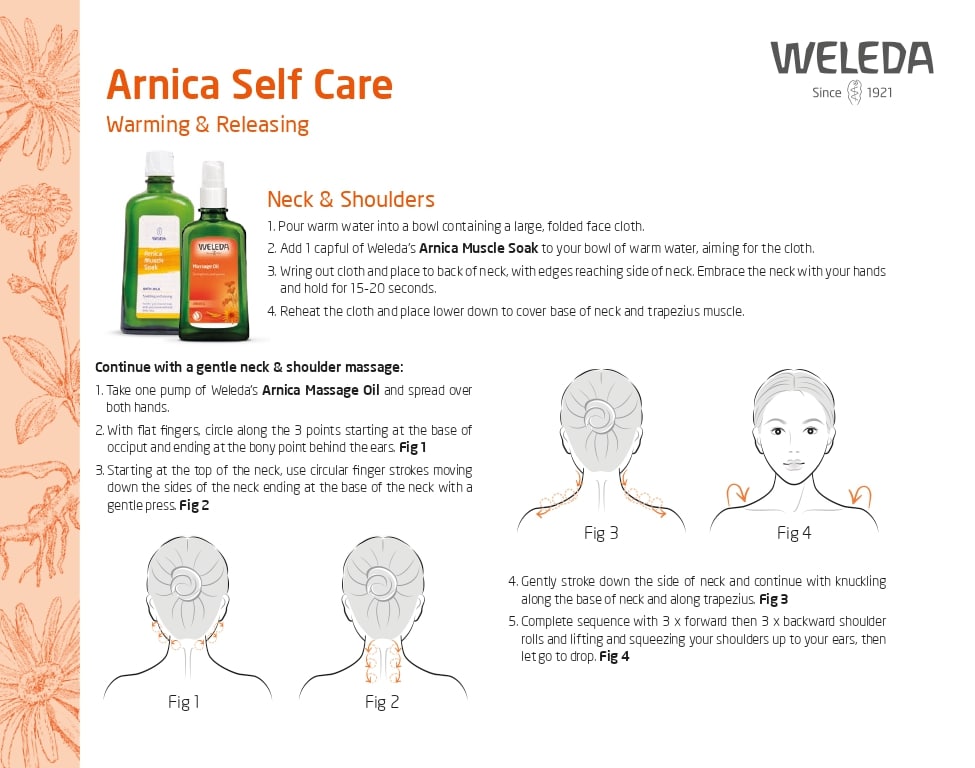
Warm wraps (like a heated towel) with arnica, applied to tired shoulders, may help relieve the physical strain of long hours supporting women in labour or working in static postures. Gentle self-massage with arnica oil, like kneading your neck and shoulders, can both physically release tension and trigger the parasympathetic system to ground a sense of calm. Foot care is another valuable practice for midwives who spend much of their working day on their feet. A warm foot soak or simple foot spa at home can ease aching muscles, improve comfort and mark a transition from work mode into personal time. Such practices can support relaxation and reinforce boundaries around rest.
Connection and support
Beyond individual recovery strategies, longer-term wellbeing depends on connection and communication. Peer support is vital, as midwives benefit from sharing experiences, debriefing after difficult shifts and feeling less isolated. Interestingly, wellbeing can be supported not only by reaching out to colleagues, but also by leaning in, providing support and encouragement to others. Supportive relationships within teams can buffer stress.
To conclude, while organisational action to improve working conditions is essential, midwives can also support personal wellbeing through simple self-care. Prioritising rest, nourishment, movement, soothing body rituals, peer connection and clear boundaries helps sustain recovery and long-term practice. TPM
References
- Hunter B, Warren L. Revisiting resilience. TPM. 2022;25(5):8-13. doi.org/10.55975/QCUX7735.