








Sustaining the Power of Water Assisted Labour and Birth during COVID-19
Barbara Harper RN DEM CCE BHET Founder/Director Waterbirth International
Dianne Garland FRCM SRN RM ADM PGCEA MSc freelance midwife
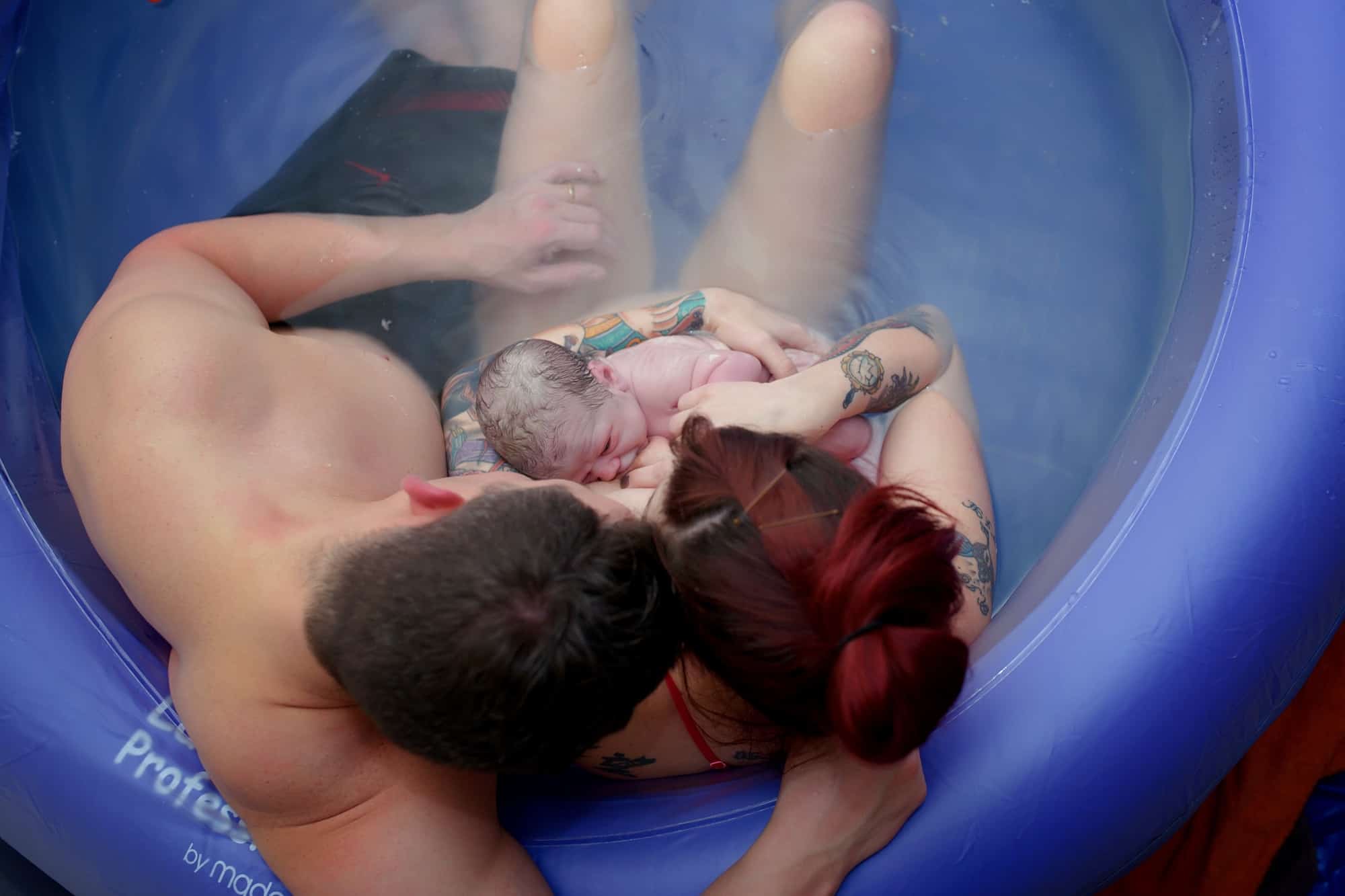
Feature image photo from Lora Denton
Dianne Garland and Barbara Harper have been working together internationally on all aspects of waterbirth for both parents and providers since 1990. In this collaborative blog they take an in-depth look at the implications of COVID-19 on waterbirth during the crisis. Sorting through dozens of articles, research papers, clinical updates from around the world, they provide their practice reflections and evidence considerations. Whilst there remains a paucity in explicit midwifery evidence, through the authors synthesis of other recommendations they conclude that using warm water immersion for labour and birth remains a safe option for women in all birth settings during the global COVID-19 pandemic. They will also address this issue in-depth for the 2020 IME, Maternity Services after COVID-19: Recovery, Resilience, Sustainability & Rights, in a Masterclass on September 9th 2020.
Mainstream midwifery care
Waterbirth became part of mainstream midwifery care in the late 1980’s in the UK, Europe, and US. Challenges to practice over the past 30 years from both obstetric and midwifery communities have varied. The SARS-CoV-2 virus, which causes COVID-19, has been placed firmly in the path of the well-documented benefits of water immersion. Providers the world over have been questioning whether water can increase infections for both mother and baby since the 1960s.1
Safety concerns about waterbirth and COVID-19 were first raised in March 2020, by a joint paper from the RCM and RCOG revealing research that the virus had been found in faeces. This led to a statement suggesting water use should stop due to fear of faecal contamination. This took everyone by surprise and our email was soon full of messages from midwives and doctors who support the use of water in labour and saw no reason to stop. RCOG have now amended their guidelines but remain cautious in suspected and confirmed COVID-19 cases.2 Waterbirth International addressed this concern in a blog3 and then an article in Midwifery Today Magazine (08/5/20).
We both encourage midwives worldwide to continue safe practice and work with local birth settings to create the infection control standards that would allow them to feel comfortable.
The accumulated research from the past four decades overwhelmingly supports the use of warm water immersion for maternity care and shows very few, if any, complications from it.4,5 Infection rates in water, when guidelines and cleaning protocols are followed, are always less than infections on the bed.6
We provide this information in support of services with facilities who offer water immersion in labour to have more clarity about the impact of COVID-19 on its use. There was much frustration expressed in the interviews we conducted. We recognise that maternity professionals want to ensure safety and may be concerned about initial presumptions made about COVID-19, but equally wish to support women’s choice in where to labour and give birth.

Changes to clinical care
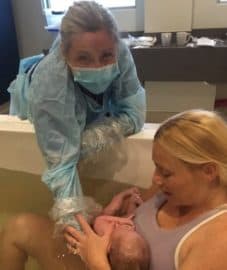 Through the COVID-19 crisis our main role has been to give relevant information regarding care of mothers and babies, while addressing birth professionals’ concerns and conferring confidence in continuing safe practice during warm water immersion. COVID-19 is not a waterborne virus. It has been confirmed to be transmitted through air, via droplets from coughing, sneezing, or breathing. It may also be transmitted from surfaces that may be contaminated by those droplets.7 Immersing in warm water during labour and/or birth is not likely to increase the risk of transmission, instead it may reduce the risk of transmission.8
Due to uncertainties, there has been a mixed response to the acceptability of the use of water for labour and birth. Many midwives had concerns about increasing potential risks and hospitals and providers felt there was lack of direction and so stopped offering water for labour. In other instances, hospitals continued to offer water immersion.
The most common question has been how much PPE (personal protection equipment) was appropriate.
The recommendations vary from country to country, but a base would be fluid resistant surgical mask, eye protection, fluid resistant gown, one size smaller gloves, long gloves or gauntlet covers.
People also asked about adding something to the water to “kill” the virus. We have always known that tap water in most countries is chlorinated, which is likely to mitigate the transmission of COVID-19, and most, if not all bacterial and viral infections. See WHO ‘Water, sanitation, hygiene, and waste management for the COVID-19 virus’.
The RCOG cited the release of faeces as a concern. This is often an eventuality of the normal labour process, however to date, there have been no known or recorded cases of the virus being transmitted via faeces and no recorded cases of oral-faecal transmission.9 The Centers for Disease Control and Prevention(CDC) states:
“There is no evidence that COVID-19 can be spread to humans through the use of pools and hot tubs. Proper operation, maintenance, and disinfection of pools and hot tubs should remove or inactivate the virus that causes COVID-19″10
COVID-19 positive mothers
Testing has been a significant stumbling block to confirming a safe environment. At first, tests were only given to people with symptoms. Policies have now been initiated to test everyone on admission to labour wards. Initially, there was no testing for staff. This created unnecessary anxiety for everyone.
There is universal consensus that if a mother tests positive and has symptoms including cough, fever, or body aches, it is not advised to offer the use of water. Fever in any woman is an absolute contraindication to labour or birth in water in every country. An elevated temperature is usually an indication of an existing infection and allowing her to go into water puts her at further risk.
COVID-19 can cause a rapid deterioration in a patient’s condition, requiring extra monitoring. However, as wider testing is now occurring the challenge with all maternity care is how to sustain the use of water for mothers who are asymptomatic and test positive. We recognise the desire to prioritise the safety of health care workers. However, we encourage hospitals to act in accordance with clinical evidence, even if that evidence is limited.
Birth pools make rooms more humid. Recent research data from China and Australia suggest that more humidity decreases the transmission of the SARS-CoV-2 virus by attaching to the water droplets and falling rather than being suspended in air for longer periods of time.11
Availability and choice
 Six months into the pandemic, our knowledge of transmission, length of illness, how mothers and babies respond has expanded. Guidelines should be informed by high-quality evidence, but rapid responses have not been possible for every situation.
Women need accurate and updated information to make shared decisions with their providers. That said, the paucity of explicit maternity related data is still lacking. It is a challenge to balance these issues.
Recently, Birthrights, a UK based advocates/activists group, said that during this time a “proportionate response” was required.12 If standard waterbirth or home birth protocols have been altered, women need to be informed of why these changes have occurred.
Some maternity services reinstated home birth and waterbirths. Sadly, there still seems to be many who have not begun again, often without rationale or plans to explain these actions.
The RCM has issued two more briefing papers about COVID-19 and waterbirths, which changed several previous recommendations.13 (Refer to our recommendations below.)
Oxford Brookes published a statement based on the current evidence, in late April, about the use of water during the COVID-19 situation.10 They addressed some of the questions raised by concerned midwives.14
New briefings and blogs are issued regularly. Our goal is to keep track of the research, practices, and fears, so that water labour and birth in all settings can be sustained, improved, and communicated.
Summary of shared experiences, global approaches, and our recommendations
1. Water is safe for birth mothers
- Water can be safely offered to all women for labour and birth who are asymptomatic and who test negative. Women who test positive and remain asymptomatic may also use the water for labour and birth, with the provider dressed in full PPE.15
- Birth pools may be the safest places for birth due to physical distancing.16
2. Water is safe for babies
- Even before the global pandemic, a meta-analysis showing the safety of water for newborns being as good as or even better than land births. In research comparisons, infection rates in neonates are less after water than on the bed.17,18
- Fetal heart rate auscultation can safely be undertaken. Change gloves after each time you put your hands in the water. If there are still concerns about submerging the doppler probe, hand it to the mother or her companion to hold in place.
- Water in most countries is chlorinated which is suggested to mitigate transfer of viruses.19
3. Water is safe for birth providers
- Choose the PPE which conforms with national and local guidelines and make it accessible to all providers attending women in water.
- Physiological third stage may be conducted safely in the water.20
- Clinical care should ensure appropriate maternal, midwife and birth companion hydration.
- Record and document maternal, water and room temperature hourly.21
4. Equipment is safe to use for water immersion
- Follow manufacturers’ guidelines when cleaning all pools. Liners must be single-use only. Good hygiene with proper cleaning will increase safety.22
- All equipment, which comes in contact with water, needs to be cleanable or disposable.
- Ventilation to enhance a cool environment may require a change to the use of electric fans (PHE Public Health England) do not suggest these are used).Open a window or door with screen protection to ensure dignity, calmness and confidentiality.23
We feel water is safe to use with necessary PPE. Babies benefit from being born in water. There is no separation of mothers and babies and optimal cord clamping – all shown to increase the safety of birth and the well-being of mother and baby.24,25
References
- Siegel, P. (1960) Does bath water enter the vagina? Obstet Gynecol. 15:660-661.
- RCOG (21 March 2020):Coronavirus (COVID-19) Infection in Pregnancy accessed March 25, 2020
- Harper, B. (25 March 2020) Waterbirth International Blog post
- Cluett ER; Burns E; Cuthbert A, (May 2018). Immersion in water during labour and birth (Cochrane Review). The Cochrane Database of Systematic Reviews, Issue 5.
- Bailey, Joanne M., et al. “A Retrospective Comparison of Waterbirth Outcomes in Two United States Hospital Settings.” Birth, vol. 47, no. 1, 2020, pp. 98–104
- Eriksson M., Ladfors L., Mattson L. A., & Fall O. (1996). Warm tub bath during labor: A study of 1385 women with prelabor rupture of the membranes after 34 weeks of gestation. Acta Obstetricia et Gynecologica Scandinavica, 75(7), 642–644
- World Health Organization (2020) https://www.who.int/emergencies/diseases/novel-coronavirus-2019/question-and-answers-hub/q-a-detail/q-a-coronaviruses accessed August 24, 2020
- RCM Clinical Briefing Sheet.(29 July 2020) Waterbirth During the Covid-19 Pandemic
- Centers for Disease Control and Prevention “Is the virus that causes COVID-19 found in feces (stool)?” ( 24 Mar 2020) https://www.cdc.gov/coronavirus/2019-ncov/faq.html accessed 24 August 2020
- Centers for Disease Control and Prevention (updated15 July 2020) “Can the Virus spread through pools and spas?” https://www.cdc.gov/coronavirus/2019-ncov/faq.html#Water accessed 24 August 2020
- Ward, Michael P., et al. “The Role of Climate during the COVID-19 Epidemic in New South Wales, Australia.” Transboundary and Emerging Diseases, vol. n/a, no. n/a, doi:10.1111/tbed.13631. Accessed 28 July 2020.
- Maternity & Midwifery Hour Episode 9: “Does what is says on the tin” – Human rights in maternity care during COVID-19 https://www.maternityandmidwifery.co.uk/maternity-midwifery-hour-episode-9-does-what-is-says-on-the-tin-human-rights-in-maternity-care-during-covid-19/3459/
- RCM Clinical Briefing Sheet.(29 July 2020) Waterbirth During the Covid-19 Pandemic
- Burns E et al (29 April 2020), Coronavirus COVID-19: Supporting healthy pregnant women to safely give birth
- RCM Clinical Briefing Sheet.(29 July 2020) Waterbirth During the Covid-19 Pandemic
- RCM Clinical Briefing Sheet.(29 July 2020) Waterbirth During the Covid-19 Pandemic
- Vanderlaan, Jennifer, et al. “Neonatal Outcomes with Water Birth: A Systematic Review and Meta-Analysis.” Midwifery, vol. 59, 2018, pp. 27–38
- Davies, Rowena, et al. “The Effect of Waterbirth on Neonatal Mortality and Morbidity: A Systematic Review and Meta-Analysis.” JBI Database of Systematic Reviews and Implementation Reports, vol. 13, no. 10, Oct. 2015, pp. 180–231
- Centers for Disease Control and Prevention “Municipal Water and COVID-19.”, 10 Mar 2020, www.cdc.gov/coronavirus/2019-ncov/php/water.
- RCM Clinical Briefing Sheet.(29 July 2020) Waterbirth During the Covid-19 Pandemic
- Garland, D., 2017 Revisiting Waterbirth: An Attitude to Care. MacMillian Education, London
- Active Birth Pools “Cleaning and Care Policy.” https://activebirthpools.com/cleaning-care/
- Health and Safety Executive “Air conditioning and ventilation during the coronavirus outbreak” https://edubirdie.com/blog/ventilation-and-air-conditioning
- Mercer, J. Current best evidence: a review of the literature on umbilical cord clamping. Journal of Midwifery and Women’s Health. 2001; 46: 402–414
- Walker, K.F., et al. (3 June 2020) Maternal Transmission of SARS-Cov-2 to the Neonate, and Possible Routes for Such Transmission: A Systematic Review and Critical Analysis. BJOG

