









Global Conflicts and Crises Series
Global conflicts and crises challenge maternity care worldwide. This series shares experiences from midwives and birth workers, addressing the profound impact on women, families and healthcare providers. We invite midwives, birth workers, researchers, educators and families to share research, personal stories and strategies for improving care during crises. By contributing, you can help elevate global conversations, support marginalised communities and advance midwifery practice in times of turmoil. Together, let’s support continued learning, sharing and caring across our community.
The Intersection of Midwifery and Climate Change
Kiconco Penenah – Midwife, Uganda Peoples Defence Forces
Social LinkedIn
Summary

Kiconco Penenah
Amidst the intensifying global environmental challenges, it is essential to explore the impact of climate change on maternal health and the midwifery profession.
Over the years, climate change has been widely recognised as the defining health burden of the 21st century, with profound implications for maternal and neonatal health. For midwives, the intersection of climate change and reproductive health presents both barriers and opportunities to drive transformative change in healthcare systems worldwide, especially caring for mothers and babies amidst crisis.1
Focusing on working at the frontline of climate-related crises, the resilience towards empowering communities and inspiring others in taking action to address the climate crisis by midwives has been under recognised and under supported hence a call for more emphasis on midwifery action towards climate change.2
The climate crisis and maternal health
Climate change exacerbates vulnerabilities in maternal and neonatal health by intensifying extreme weather events, increasing temperatures and disrupting food systems. These phenomena disproportionately affect low-income countries, where healthcare systems are already strained. Pregnant women are particularly vulnerable to climate-induced health risks such as heat stress, malnutrition, vector-borne diseases and complications during childbirth caused by inaccessible healthcare facilities during floods landslides or storms.2
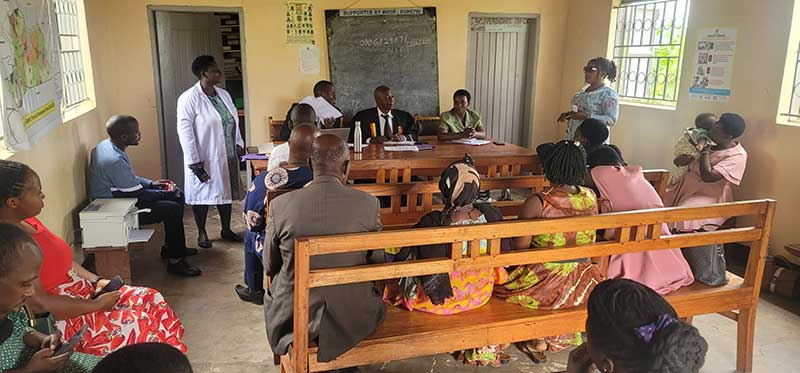
The recent landslides in Bulambuli District, located in the eastern region of Uganda that occurred on November 27, 2024, have severely impacted over four health facilities, resulting in a significant decline in health service delivery. I keep asking myself: must we always wait for disaster to strike before taking action? Unfortunately, the services provided during such emergencies by various organisations often overlook maternal health. As midwives, it is crucial for us to prioritise community outreaches to support families in need of maternal health services during crises like these.
The interconnection of rising temperatures and worsening air quality has led to increased number of preterm births, low birth weight and stillbirths.3 These challenges highlight the urgent need to integrate climate resilience into maternal and child health systems thus stressing our roles as midwives in safeguarding the health of mothers and newborns.3
The International Confederation of Midwives (ICM) Statement of Position 2024 recognises midwives as a vital climate solution.4 As providers and defenders of women’s sexual and reproductive health and rights, midwives are key players in designing resilient health systems capable of withstanding the worst impacts of a warming world. They contribute to delivering environmentally sustainable health services and empowering women and gender-diverse people to make informed decisions that benefit themselves, their families and the planet.4,5
How can midwives maximise and adopt their potential to climate resilience?
Midwives have always played a pivotal role in safeguarding maternal and newborn health. Positioned at the frontline of care, we are uniquely equipped to address the health impacts of climate change, though this critical role remains under-supported. Our responsibilities as midwives go beyond delivery and prenatal care; they also include advocacy, education and community-based interventions that build resilience.6 At COP28 in Dubai, a report revealed that only 10 out of 19 National Adaptation Plans (NAPs) had incorporated sexual and reproductive health and rights (SRHR) issues. This highlights the urgent need for greater inclusion of midwives in climate change policies and actions, advocating for and implementing strategies that prioritise SRHR in the face of climate challenges.7

Steps to instigate change
- Advocacy and Policy Influence: Midwives can advocate for policies that prioritise maternal health in climate adaptation strategies. This includes pushing for investment in climate-resilient healthcare facilities, renewable energy in health facilities and sustainable supply chains for medical equipment and essential medicines to be readily available.
- Community Education: Educating communities about the links between climate change and health is key. Empowering individuals to make informed decisions through raising awareness about the importance of climate-adaptive practices and mitigation strategies.
- Green Midwifery Practices: Sustainability within midwifery practice is essential. Incorporating environmentally friendly practices, such as reducing medical waste and using renewable energy sources, contributes to the broader fight against climate change. Midwives can also encourage sustainable behaviors among families, such as tree planting and water conservation. During the last IDM 2024 in Uganda at least each midwife was urged to plant a tree at the health facility or hospital were working at which called for a combined team work in action against climate change.
Midwifery in climate-adapted healthcare systems
As the climate crisis evolves, healthcare systems must adapt to ensure they meet the needs of the most vulnerable. Our efforts as midwives can lead to:
- Strengthening emergency preparedness through equipping midwives with training in disaster response to ensure the continuity of care during climate-related emergencies.
- Promoting tele-health services by utilising technology to provide remote prenatal and postnatal consultations in areas affected by climate-induced disruptions.
- Conducting research through contributing to evidence-based research on the impact of climate change on maternal and neonatal health to inform global strategies.
A call to action
Midwives are champions of maternal and newborn health, and our role is more critical than ever in the face of climate change. To fully harness their potential, governments, non-governmental organisations and international bodies must prioritise investment in midwifery education, infrastructure and resources. This includes integrating climate change into midwifery curricula and equipping midwives to deliver care in an ever-changing climate. It is essential to include midwives in policymaking at national, regional and global levels to ensure community midwives are supported in delivering maternal health care amidst climate crises.
Conclusion
Empowering midwives with knowledge on climate change enables them to educate communities on climate adaptation both within health facilities and at the grassroots level. By bridging the gap between midwifery and climate change, midwives can become powerful agents of change, driving progress toward a healthier, more equitable and climate-resilient future worldwide.
References
- Ganapathy D, Tzeli M, Vivilaki V. Midwives: Essential guardians in the climate crisis journey. Eur J Midwifery. 2024;8:10.18332/ejm/188196. org/10.18332/ejm/188196.
- Carrington D. The Guardian. https://www.theguardian.com/environment/2024/oct/28/miscarriages-due-to-climate-crisis-a-blind-spot-in-action-plans-report. Published October 28, 2024. Accessed March 09, 2025.
- Bekkar B, Pacheco S, Basu R, DeNicola N. Association of Air Pollution and Heat Exposure With Preterm Birth, Low Birth Weight, and Stillbirth in the US: A Systematic Review. JAMA New Open. 2020;3(6)208243. org/10.1001/jamanetworkopen.2020.8243.
- The Impact of Climate Change. ICM. https://internationalmidwives.org/resources/the-impact-of-climate-change/. Updated July 25, 2025. Accessed March 09, 2025.
- Sexual and reproductive health and rights in National Adaptation Plan (NAP) Processes. NAP Global Network & Women Deliver. Int Institute Sustainable Devel. https://napglobalnetwork.org/resource/srhr-in-nap-processes. Published February, 2021.
- The Impact of Climate Change. ICM. https://internationalmidwives.org/resources/the-impact-of-climate-change/. Updated July 25, 2024. Accessed March 09, 2025.
- Chersich MF, Pham MD, Areal A, et al. Associations between high temperatures in pregnancy and risk of preterm birth, low birth weight, and stillbirths: Systematic review and meta-analysis. BMJ. 2020;371:m3811. org/10.1136/bmj.m3811.

