









The TikTok Labour and Delivery Nurse – A Case Study

Anna Marsh
Anna Marsh – NIHR Pre-Doctoral Clinical Academic Fellow, Lead Midwife for the Antenatal Clinic Bournemouth University / University College London Hospitals NHS Foundation Trust
Twitter and Instagram: @AnnaMarshMW

Dawn Lowry
Dawn Lowry – Labour and Delivery Nurse and Owner/Educator at Dawn Lowry LLC
TikTok: @dawnlowry
Instagram: @dawn.lowry15
Summary
Dawn Lowry, a labour and delivery nurse from California never planned on becoming TikTok famous. It was when chatting with her business advisor about rekindling her Antenatal Education service that she received the advice to get herself on TikTok. Just over a year later, @DawnLowry has over 141,000 followers, 2,000,000 likes along with a selection of viral videos each with over a million views, and daily messages from women thanking her for her advice and guidance during their pregnancies. With digitalisation an ongoing priority across the NHS, could engaging with social media be one solution to improving communication between women and birthing people and maternity services? Dawn tells us how she got onto TikTok, the challenges she has faced and how midwives can get started on social media.
The day-to-day of a TikTok Midwife
Dawn’s working day starts by sifting through the sometimes hundreds of comments and messages she receives from women around the world in response to her posts on TikTok. She chooses a few commonly asked or particularly relevant questions to make content about and posts on average 6 videos per day, amassing to a total of 6-18 minutes. A labour and delivery nurse by background, Dawn is passionate about ensuring choice and empowering women, which she states can prove challenging in the background of the USA health systems in which she worked.
‘My experience in the hospitals is seeing women stripped of their rights over and over again’, she says, ‘TikTok provides a platform to inspire, advocate for and educate women to become central in their own care, the decisions around it and ultimately, what their birth looks like’.
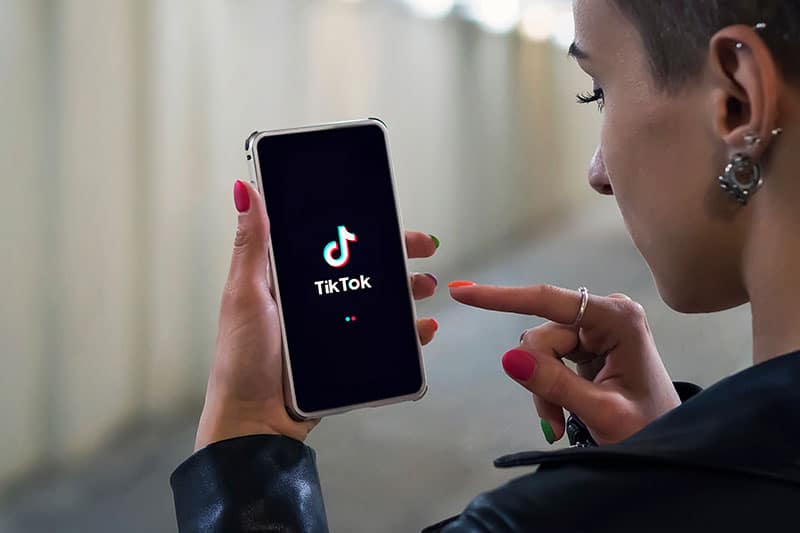
As a video only social media platform, TikTok provides a unique opportunity to reach and share video messages with its international, diverse audience. It has also become one of the largest search engines, with users able to filter videos by keywords or themes.
‘People are clearly hungry for information’.

Social media to empower women
Much of the content Dawn posts on TikTok is around empowering women to ask questions, aspire for the birth that they want and often challenge advice if they don’t feel comfortable. She says ‘Most videos are to spur people on to become part of the conversation. We have been silenced for so long.’, emphasised with her tagline: ‘Let’s Talk About It’.
The popularity of these topics is reflected in Dawn’s engagement statistics, with her most liked, viewed or commented posts largely those focussing on advocating for yourself or communicating with your care team. One of her most recent viral videos was titled ‘Rude Nurse, Now What?’ and responded directly to a question she had received from a woman asking if she had the right to decline care from a rude nurse in the birthing room. In less than a week, it received 455,000 views, 46,000 likes, over 1,000 comments and 13,000 people ‘bookmarked’ it for use at a later point. It’s clear that the reach that Dawn has is huge!

Keeping it real
By her own admission, Dawn worked out how to use TikTok through trial and error. Having never received formal education on the content to post, or how and when to post it, using her own initiative and experiences she has formed her own rulebook. Initially mindful of lighting or careful editing, she quickly realized that ‘keeping it real’ was a far more popular style than more professional-looking videos, with her first viral video on epidurals filmed in her pyjamas on her living room floor while having coffee. In line with all of the work ongoing about humanising midwifery,1,2 Dawn has found that the more natural and less staged her videos, the far higher engagement and impact.
The challenges of being a midwife on social media
Becoming a TikTok labour and delivery nurse social media trailblazer has not come without its challenges. Encountering some confrontational comments or behaviour, Dawn says, ‘I try hard to make sure platform is used in a way that there is room for everybody to share their opinion and their experience. There is no room for bullying other people or shaming other people’.
Addressing controversial topics has prompted some negative or abusive comments, to which Dawn had to navigate her own social media policies such as blocking individuals or responding to them directly. Similarly, Dawn has also faced some controversy from other healthcare professionals, feeling challenged by her advice or guidance to women. Ultimately, Dawn applies the approach of ‘Intention behind what you are doing is everything.’, saying ‘I am not here to be liked or make friends. I’m here to share information about birth and help people to be able to advocate for themselves and to help strengthen these women’. A common concern around using social media professionally is often women contacting midwives for specific advice of guidance, to which Dawn responds with a blanket approach of giving general information but advising all women that the service is not for medical advice and to speak to their own provider.
Should midwives use TikTok?
Dawn will tell any midwife to get on social media. Considering the ongoing NHS drives to digitalise maternity services and improve how we communicate with women,3 could engaging with social media be an answer? Paid now directly by TikTok, Dawn’s content is free to all women, so could this be a way to reduce inequalities and provide antenatal education to the modern woman?
Dawn’s top tips for getting on social media:
- ‘Get yourself out there – the more of us that can get out there sharing and advocating the better.’.
- ‘Think of it as if you were sharing information with a woman in a clinic – don’t overthink it!’
- ‘Show up as you!’
- ‘This is a new way of learning that is growing at record speed. We must reach them where they are searching for the information.’
References
- Way S, Scammell J. Humanising Midwifery Care. The Practising Midwife 2016; 19 (3):27-29.
- Curtin M, Savage E, Murphy M, Leahy-Warren P. A meta-synthesis of the perspectives and experiences of healthcare professionals on the humanisation of childbirth using a meta-ethnographic approach. Women and Birth 2022; 35 (4):e369-e378.
- NHS England. Three year delivery plan for maternity and neonatal service. https://www.england.nhs.uk/wp-content/uploads/2023/03/B1915-three-year-delivery-plan-for-maternity-and-neonatal-services-march-2023.pdf Accessed July 12, 2023.

