









The Virtual International Day of the Midwife – Crossing Borders: Reaching Midwives Around the World
Ally Anderson
VIDM Committee Member and Midwife at The James Cook University Hospital, Middlesbrough, UK
@AllyA1910
Annette Dalsgaard
VIDM Committee Member, Midwife and Senior Consultant at Amager and Hvidovre Hospital,
Capital Region of Denmark
@adalsgaard
Jane Houston
VIDM Committee Member, Midwife at Comprehensive Care and Associate Professor,
Director of DNP Program, Frontier Nursing University, Kentucky, USA
@janehouston
Summary
 The Virtual International Day of the Midwife (VIDM) is an annual free online 24-hour conference celebrating International Day of the Midwife on 5th May.
The conference uses online conferencing software and social media to bring together people who have an interest in childbirth matters and includes speakers from all around the world with presentations mainly in English. One of the aims of the VIDM is to provide a global forum for networking and sharing of evidence-based research in maternity to enable midwives to continue their professional development wherever they are, at no cost. Why not make this ‘Year of the Nurse and Midwife’ your year to get involved in the VIDM?
Introduction
The VIDM is an annual free online 24-hour conference celebrating International Day of the Midwife on 5th May. The conference is a synchronous forum for midwives across the globe to engage in evidence-based research and network with each other. In addition, as the VIDM is completely online, it does not affect your carbon footprint whilst furthering your professional development.
Midwifery is an essential element in maternal and newborn health care.1 It is widely recognised that women who have access to skilled birth attendants have improved outcomes in relation to their pregnancy, labour and postnatal period.2 Global midwifery is not a new phenomenon, yet there is a clear disparity between developed and developing countries when you consider the number of skilled midwives per pregnant woman or the maternal mortality rates per country.3
Technology for education
Technology and resources are available to enable the dissolution of the global health divide. Improvements can only be seen in all countries if resources, experiences and knowledge are shared with colleagues across the world. Our collaborative partnership working, involving the sharing of innovations with proven successes of saving lives and improving standards, could lead to an increase in the knowledge base of midwives, with a subsequent improvement in maternal and newborn health outcomes.
In order for midwives to prepare and equip themselves to care for ever-increasing diverse populations within their own countries and internationally, there is a growing need for midwives to receive education in the field of global health.4 In order for global collaboration to be successful in improving health for all, midwives need a level of cultural competence so effective professional development can occur and evidence-based education can be shared. 5 Midwives should have an awareness of culturally sensitive family planning advice, how to support a woman consistent with their religious, spiritual and/or cultural beliefs and preferences and have an awareness of different roles and relationships in families within this diverse world.6,7
Studying or working abroad can provide the opportunity for midwives to develop their understanding of different cultures and practices in other countries, however, Daly et al.8 argue family commitments and financial constraints may become barriers to midwives being able to take up these opportunities. In addition, the importance of reducing our carbon footprint is a factor in deciding whether to travel abroad for international experiences or conferences. International conferences can come at a high environmental price, including travel emissions, paperwork and other arguably unnecessary promotional items.9 The VIDM offers an innovative opportunity for collaboration between students, midwives, researchers and educators to share best practice within an international context without having to travel from their own home,10,11 therefore with minimal impact on your carbon footprint.
International Day of the Midwife
The International Day of the Midwife is a day where people across the world celebrate and recognise the work of midwives. By means of our free 24-hour online conference on this day of celebration in May, participants from six different continents join together to network and share evidence-based research at the VIDM. Rather than providing a passive education comprised of videos and online eLearning,12 the VIDM is an interactive conference using web conferencing software which allows delegates to text chat with each other throughout sessions, participate in online polls, as well as ask questions directly to the speaker or other delegates in a synchronous way.
The VIDM has 4 aims:
- To provide an opportunity for midwives across the globe to engage with the latest evidence-based research
- To give researchers a forum to disseminate their work
- To develop midwives’ digital literacy
- To provide an opportunity for midwives to network and learn from each other.13
Virtual International Day of the Midwife
The VIDM Committee
The first conference of its kind within midwifery, the initial VIDM conference was organised in 2009 by Sarah Stewart, where there was an average attendance of six delegates at each session.14 In 2013, we saw our highest attendance figures, with a mean attendance of 122 delegates, and a maximum attendance at a session of 164. Although we can never be sure of exact numbers as one login could be displayed to a larger group via a screen, we have an idea of the minimum attendance at each session. In 2018, the VIDM had a maximum attendance at a session of 41 logins, with a mean login per session across the conference of 33. However, in 2019 the maximum login at a session was 72 and the mean login across the conference increased to 41.
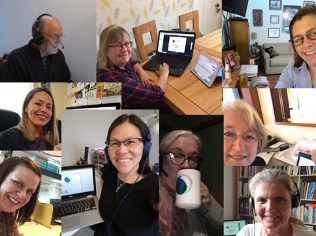
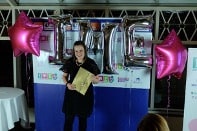
In 2019, thirty presentations in four different languages were broadcast, with speakers from fourteen different countries throughout the conference, as well as numerous poster submissions from around the world. Speakers engaged delegates in discussions around water birth, caring for refugees, twinning projects, breastfeeding, Post Traumatic Stress Disorder in midwives, the humanisation of childbirth and much more. Delegates came from countries including Tanzania, Canada, Denmark, Iran, Australia, Lesotho, USA, Argentina, Italy, UK, Uruguay, China and Ethiopia. Delegates are able to access 24 hours of free online learning either via computer, laptop, or smartphone with internet access. A committee of senior educationalists, technologists, midwives and student midwives from six different countries volunteer their time to organise the VIDM through virtual meetings, email, online document sharing, and social media. The VIDM was commended for their work in the ‘International Education’ category at the recent International Maternity Expo Awards in November 2019.
Conclusion
he VIDM is committed to global midwifery education and continues to provide a free and accessible online conference on International Day of the Midwife, in addition to sharing resources online throughout the year via the VIDM YouTube channel. We are passionate about providing a forum for sharing knowledge and practice globally to reduce disparities seen worldwide in educational opportunities for midwives. Make 2020 the year you get involved. Access the VIDM’s website to find out how you can submit an abstract or poster for submission to this year’s conference, as well as for instructions on how to access the conference (www.vidm.org).

IME Awards, Commended in the International Education Category
Reference List
- Renfrew, M. J., McFadden, A., Bastos, M. H., Campbell, J., Channon, A. A., Cheung, N. F., Silva, D. R. A. D., Downe, S., Kennedy, H. P., Malata, A., McCormick, F., Wick, L., and Declercq, E. (2014) ‘Midwifery and quality care: findings from a new evidence-informed framework for maternal and newborn care’, Lancet, 384 (9948), 1129–1145.
- Alkema, L., et al. (2016) ‘Global, regional, and national levels and trends in maternal mortality between 1990 and 2015, with scenario-based projections to 2030: a systematic analysis by the UN Maternal Mortality Estimation Inter-Agency Group’, Lancet, 387, pp. 462-474.
- Homer, C. S. E., Friberg, I. K., Dias, M. A. B., Hoope-Bender, P. ten., Sandall, J., Speciale, A. M., and Bartlett, L. A. (2014) ‘The projected effect of scaling up midwifery’, Lancet, 384 (9948), 1146-1157.
- DeKleine, M., Habashy, M. R. and Collins, M. R. (2016) ‘A Model for Enhancing Midwifery Education with a Global Health Certificate’, Journal of Midwifery and Women’s Health, 61 (5), 621-627. Available at: http://onlinelibrary.wiley.com/doi/10.1111/jmwh.12459/epdf (Accessed: 22nd October, 2019).
- Gower, S., van den Akker, J., Jones, M., Dantas, J. A. R., and Duggan, R. (2016) ‘Australian nursing and midwifery educators delivering evidence-based education in Tanzania: A qualitative study’, Nursing Education in Practice, 18, 16-22.
- International Confederation of Midwives. (2014) International Code of Ethics for Midwives. Available at: https://www.internationalmidwives.org/assets/files/general-files/2019/10/eng-international-code-of-ethics-for-midwives.pdf (Accessed: 17th November, 2019).
- Nursing and Midwifery Council (NMC) (2018) The Code: Professional standards of practice and behaviour for nurses and midwives. London: Nursing and Midwifery Council (NMC).
- Daly, D., Rasmussen, A. V., and Dalsgaard, A. (2019) ‘Learning about midwifery in another country from a distance: Evaluation of a virtual classroom learning session’, Nurse Education Today, 75, 47-52.
- Kier-Byfield, S. (2019) ‘As an academic, should I worry about my conference carbon footprint?’, The Guardian, Tuesday, 11th June, 2019. Available at: https://www.theguardian.com/education/2019/jun/11/as-academics-should-we-worry-about-our-conference-carbon-footprint (Accessed 11th November, 2019).
- Sidebotham, M., Daslgaard, A., Davis, D. and Stewart, S. (2015) ‘The Virtual International Day of the Midwife: A Synchronous Open Online Conference for Continuing Professional Development and Learning for Midwives’, International Journal of Childbirth, 5 (2), 91-99.
- Vilain, A. D., and Stewart, S. (2012) ‘The end of an era? Midwifery conferences’, The Practising Midwife, 15 (11), 20-23.
- Chilton, J., He, Z., Fountain, R and Alfred, D. (2019) ‘A process for Teaching Research Methods in a Virtual Environment’, Journal of Professional Nursing, 35, 101-104.
- Stewart, S., Sidebotham, M., and Davis, D. (2012) ‘The virtual international day of the midwife: Social networking for continuing professional development’, Nurse Education in Practice, 12, 248-252.
- Stewart, S. (2014) ‘Virtual day of the midwife: a global ‘pyjama party’’, The Practising Midwife, 17 (6), 28-30.

