








Uganda 2024: Midwifery Symposium; Insights for Midwives and Student Midwives
Humphrey Beja, Deputy General Secretary – National Midwives Association of Uganda, Research Fellow-Mbarara – University of Science and Technology
Social @humphreybeja
Peace AKatushabe, Midwife – Gulu Regional Referral Hospital, Member – National Midwives Association of Uganda
Social https://ug.linkedin.com/in/katushabe-peace-31a822304
Annette Evelyn Kanyunyuzi, Midwife-China Uganda Friendship Hospital, President-National Midwives Association of Uganda
Social @AKanyunyuzi
Summary

Left: B. Muga, Northern Coordinator NMAU, Middle: A. Evelyn, Kanyunyuzi, President NMAU, Right: H. Beja, Deputy General Secretary NMAU,
Uganda’s 2024 Midwifery Symposium, held in May, explored midwifery’s role in addressing climate change. Themed “Midwives: A Vital Climate Solution,” the symposium brought together 456 participants to discuss midwifery’s integration into climate change policies, the promotion of respectful maternity care, the importance of midwifery-led care, and the advancement of midwifery research. Key resolutions included the development of a policy document on midwifery and climate change, raising educational entry requirements for midwifery in Uganda, and amplifying midwifery research. These discussions underscored midwives’ centrality to achieving universal health coverage, and we look forward to advancing conversations this year, 2025, during the National Midwifery Conference of Uganda.
Introduction
The International Day of the Midwife (IDM) is celebrated annually on May 5th, honouring achievements in midwifery worldwide. In Uganda the activities included a pre-celebration symposium on May 3rd and 4th where midwives gathered to share research, practices, and leadership insights. The 2024 symposium, themed “Midwives: A Vital Climate Solution,”1 was held in Gulu City, Northern Uganda. It convened midwives, healthcare professionals, policymakers, researchers, and advocates to address climate change’s intersection with maternal, newborn, sexual and reproductive health. The event was organized by the Ministry of Health of Uganda in collaboration with the National Midwives Association of Uganda (NMAU) and supported by the United Nations Fund for Population Activities through the Agency for Cooperation in Research and Development Uganda, among other partners and sponsors.
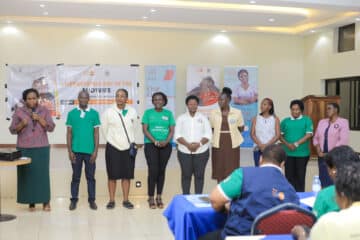
As the Deputy Secretary of NMAU, I represented the association at the National Organizing Committee for the IDM Events in Uganda. I was nominated as the National Chairperson for the IDM Symposium which took place at Acholi-Inn Hotel in Gulu City. I worked alongside other NMAU members and the Ministry of Health of Uganda. I was supported by Peace Katushabe, midwife and Regional Chairperson for the IDM symposium, and members of her team. At that time, she was working as a midwife at Gulu Regional Referral Hospital which hosted the IDM of 2024 in Uganda. The following are key highlights from the symposium.

Programme Overview
Hosted at Acholi Inn Hotel, the symposium attracted 456 participants and featured activities such as panel discussions, abstract presentations, skills sessions, and expert speeches. These events explored midwifery’s historical evolution, its role in mitigating climate change, and its contemporary contributions to maternal and newborn health outcomes. As the chairperson of the symposium, I worked with my team to run the symposium program from the beginning to the end. There was an amazing team that helped us have a successful symposium.
Key Areas of Discussion
Climate Change and Midwifery
Dr. Eva Wanyenze emphasized how climate change exacerbates maternal and newborn health risks, including extreme weather events. She urged midwives to promote sustainability in healthcare. Dr. Andrew Twinematsiko, a representative of Seed Global Health, highlighted the need for a comprehensive policy framework integrating midwifery into climate change adaptation and mitigation strategies.
Midwifery Education
The Ministry of Health Uganda Commissioner of Nursing and Midwifery, Chandia Agnes Baku, Uganda stressed enhancing midwives’ educational qualifications. Other speakers advocated for advanced education programs to equip midwives with skills for diverse healthcare needs, promoting their empowerment through lifelong learning.
Midwifery-Led Model of Care
Discussions spotlighted the benefits of midwifery-led care, which improves maternal and newborn outcomes and promotes holistic, woman-centered services.2 Speakers emphasized the importance of midwifery leadership in initiatives like the Maternal Perinatal Death Surveillance Response (MPDSR) and Local Maternal and Newborn Systems (LMNS).
Respectful Maternity Care
Lillian Nuwabaine, the program controller of the symposium, and NMAU president Annette Evelyn Kanyunyuzi, called for dignity, compassion in maternity care. They highlighted respectful maternity care as key to empowering women and fostering quality service delivery while allowing mothers and their families to enjoy thier fundamental human right to health.3
Midwifery Research
Prominent speakers, including Uganda Nurses and Midwives Council (UNMC) representatives, advocated for midwifery-led research to advance evidence-based care. They called for investments in research addressing healthcare disparities and improving maternal and newborn outcomes. It was interesting that many midwives were available at the conference and presented their research findings during the scientific symposium. The conference participants appreciated the quality of research and evidence presented by the midwives during the symposium.

Key Conference Resolutions
- Midwifery-Climate Policy: Develop a framework integrating midwifery practices into climate change strategies.
- Educational Requirements: Raise entry-level qualifications for midwifery to advanced-level education.
- Respectful Maternity Care: Implement respectful and culturally sensitive maternity practices in healthcare.
- Midwifery Research: Encourage research on best practices, innovative interventions, and evidence-based approaches.
- Midwifery-Led Initiatives: Enhance midwives’ roles in MPDSR and LMNS, promoting leadership in maternal health systems.
Conclusion
The 2024 Midwifery Symposium in Uganda underscored the critical role of midwives in addressing global health challenges, including climate change and maternal health disparities. Collaborative efforts in education, research, and midwifery led model of care are essential for advancing midwifery’s impact. Midwives and policymakers can leverage these insights to foster progress in the profession.
Midwifery Conference 2025
In 2025, the National Midwifery Conference of Uganda will take place in Hoima City, also known as the Oil City. A day before the conference, there will be an Annual General Meeting for NMAU on May 2, 2025, followed by a two-day scientific conference from May 3–4, 2025. Lastly, the midwifery celebration will take place on May 5, 2025.
The Annual General Meeting and the scientific conference will be held at Hoima Resort Hotel in Hoima, while the celebration will take place at Hoima Boma Grounds. The celebration will involve midwives, the community, and other healthcare professionals marching through the streets of Hoima with a live band. Participants will then gather at the venue to listen to speeches from key figures, including the Guest of Honour, the Hon. Prime Minister of the Republic of Uganda, Robina Nabbanja, the President of NMAU and other key dignitaries.
To learn more about the conference and how to attend, you can send an email to id*******@**au.org
References
- Ganapathy D, Tzeli M, Vivilaki V. Midwives: Essential guardians in the climate crisis journey. Eur J Midwifery. 2024;8(May):1-3. doi:10.18332/ejm/188196
- Fikre R, Gubbels J, Teklesilasie W, Gerards S. Effectiveness of midwifery-led care on pregnancy outcomes in low- and middle-income countries: a systematic review and meta-analysis. BMC Pregnancy and Childbirth. 2023;23(1):386. doi:10.1186/s12884-023-05664-9
- Puthussery S, Bayih WA, Brown H, Aborigo RA. Promoting a global culture of respectful maternity care. BMC Pregnancy and Childbirth. 2023;23(1):798. doi:10.1186/s12884-023-06118-y

