








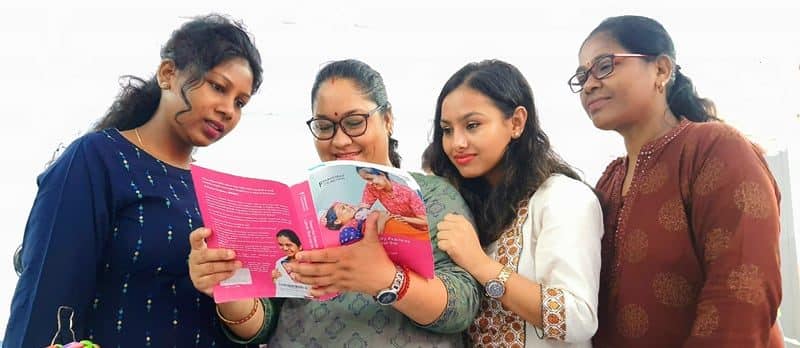
Why I wrote the book Respectful Maternity Practices for Labour, Birth and the Postnatal Period
Tanya Burchell – Consultant Midwife, Fernandez Foundation
Twitter @resp_mat_pract
Summary
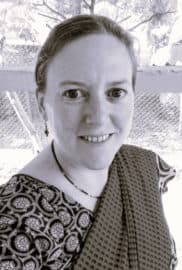 Living in a rural, remote part of India and being asked to write a textbook, when you have never written a book before, is exciting! Being asked to write a book that will hopefully be sold internationally and be adopted by governments and international organisations is humbling and terrifying. This blog is an interview with myself to describe the most exciting book out on the market (yes, I am completely biased!).
How would you feel if you were asked to write a textbook for India?
Excited, overwhelmed, humbled, privileged, nervous, unworthy, enthusiastic, motivated – these are just some of the many emotions that swirled around my brain when I was asked to do this very thing. I was living and working in a small, remote village in central India when an experienced, kind, wise obstetrician visited me and asked me to write a book. I readily agreed. You don’t say ‘no’ when the famous Dr. Evita Fernandez asks you to do something.
Soon after, I visited family in the UK. It just happened to be in March 2020 when the COVID-19 pandemic hit. I now found myself miles away from home, work and friends, with plenty of time on my hands. Plenty of time to write a textbook for India.
I have never written a book before, so this was completely new territory to me and a huge learning curve and meant I was at my desk for hours, days and months. What got me through it? A supportive family, prayers, a passion for what I was writing, a love for the people I was writing this for and gallons of tea! My husband was kind enough to supply me with many cuppas.
So, why write a book for India?
Maternity care is starting to change considerably in India. Change can be exciting, but it can also be daunting. Indian caregivers need as much support as possible. This book does that. It addresses all those questions of how to make changes and why. It does not read in a way that normal textbooks do, it reads more like someone walking beside you, guiding you.
What makes this book ‘for India’?
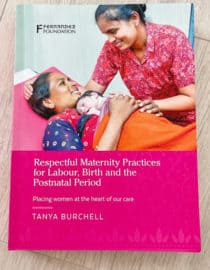 Throughout the book, I have considered the Indian culture, beliefs and ways of working. It is also applicable to other South Asian countries. Of course, there are generalisations throughout the book, just as in any other textbook. India is a large country and, just like other countries, cultures, beliefs and practices can change from state to state, from village to village, from hospital to hospital, and even between families and family members.
It differs to other countries’ textbooks in that I have included some Indian words (chai and dupatta), Indian statistics, postnatal beliefs, different ways to care for mothers and babies who have died (depending on religion), how to care for families who may reject their newborn daughter, and famous Bollywood Stars Shah Rukh Khan and Kajol.
What would you see if you looked inside?
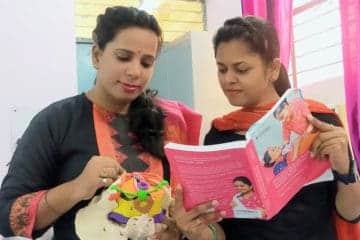
The vibrant colours and many colourful pictures, diagrams, photographs, graphs and tables will catch your eye first. India is full of colour – just look at the dazzling Indian clothes – so I wanted the book to reflect this. The amazing Jessica Rawlinson (Student Studygram) is a wonderful artist who changes boring anatomical pictures into works of art, so I have used many of these masterpieces to illustrate what is written in the text.
The text is not small and in columns, like in normal textbooks, but is larger and across the page like a normal book. To me, this makes it feel friendlier and less imposing. Looking inside, you would also see references to heaps of research so that any new changes and skills are all based on evidence, explained clearly and easily.
What are your favourite parts of the book?
That’s like asking me which of my daughters is my favourite. Each of these chapters was created out of love and with passion. If you insisted, I would say that it always makes me smile when I am reminded that I have written a whole chapter about meconium.
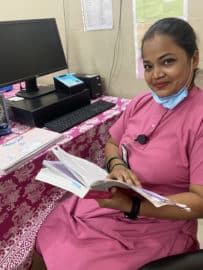 Yes, a whole chapter! Tears came as I wrote – and still every time I reread – the chapter on ‘When Mothers and Babies Die’, not just because of the terrible sadness for the families but also the effect it can have on us caregivers.
I was excited and challenged writing two chapters on how to change the labour room environment – both physically in inexpensive, easy, effective ways and in the way caregivers and staff care for women – our attitudes, actions, prejudices, language, etc. I enjoyed writing about optimal/delayed cord clamping, especially using pictures of bottles with fake blood, skin-to-skin contact (including the introduction of a kangaroo mother-care sling), biomechanics and the microbiome.
Obstetric emergencies are always fun for me to teach so when writing about them I tried to introduce the reality but also fun, easy ways to remember what to do in emergencies. The chapter ‘Hypoglycaemia, Hypothermia and Hypoxia’ was a real learning curve for me. Another reason I loved writing this book – I learnt a lot and am now a better caregiver because of it.
What would you hope the readers come away with after reading your book?
Many things, but mainly increased compassion for the women and babies that they care for, and for each other. Compassion weaves its way through every chapter. Even the documentation is written in a way that reminds us to provide compassion. If we have compassion and we place women and families at the heart of our care, this will lead to wanting the best from ourselves – in our skills, knowledge and attitudes so that we can provide the best care possible.
Conclusion
I feel honoured and humbled to have been asked to write a textbook for India. My hope, prayer and dream for this book is that it will be loved, understood and widely used to provide compassion and put women at the heart of care.
Best review comment so far?
“It blows Myles etc. completely out of the water!!!” Helen Davey, midwifery educator in North India.
If you are in India, you can buy it on Amazon India (www.amzn.to/3yyPi9X). If you live in, support or work in a MLIC you can email di*****@*******ez.foundation
You can view a short video of the book here
All photography by Helen Davey.
Respectful Maternity Practices for Labour, Birth and the Postnatal Period
Tanya Burchell
2022, Fernandez Foundation, pbk, 540pp, ISBN 9788195634118

