
With great power: midwives and decision making in Ethiopia
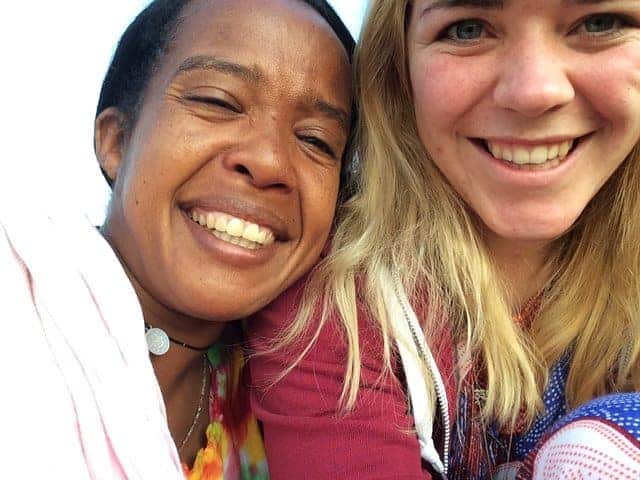
Indie McDowell and Atsede Kidane – Founders and Directors Atsede and Indie’s Clinic, SNNPR, Ethiopia
Once again we write sitting together, reflecting on the days gone by. Not in the sunshine, this time, and not with happy smiles and light hearts. Previously, we wrote of our birth centre, of breech babies, and midwives leading care. We celebrated our autonomy and independence, and delighted in our work.
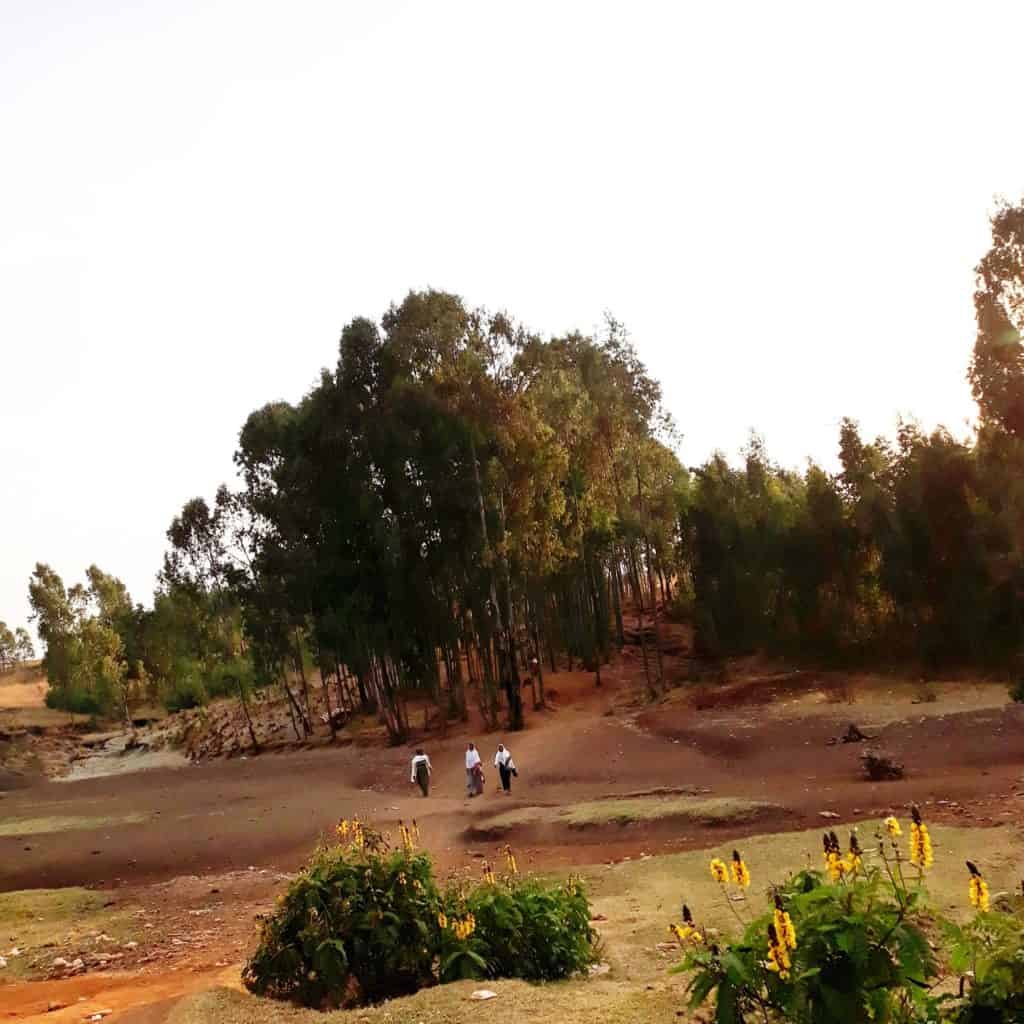
 This time, it’s a little different. We have spent the day in the rural villages as part of our outreach programme, visiting women who had given birth over the previous weeks, checking blood pressure, discussing the ups and downs of breastfeeding, weighing the babies.
We also have a number of long-term patients, those with chronic conditions or disabilities that make it difficult to navigate the dirt roads to get to the Clinic or hospital. With the torrential monsoon rains this afternoon, we were invited to take refuge from the mud and cold and spend the night with one such patient.
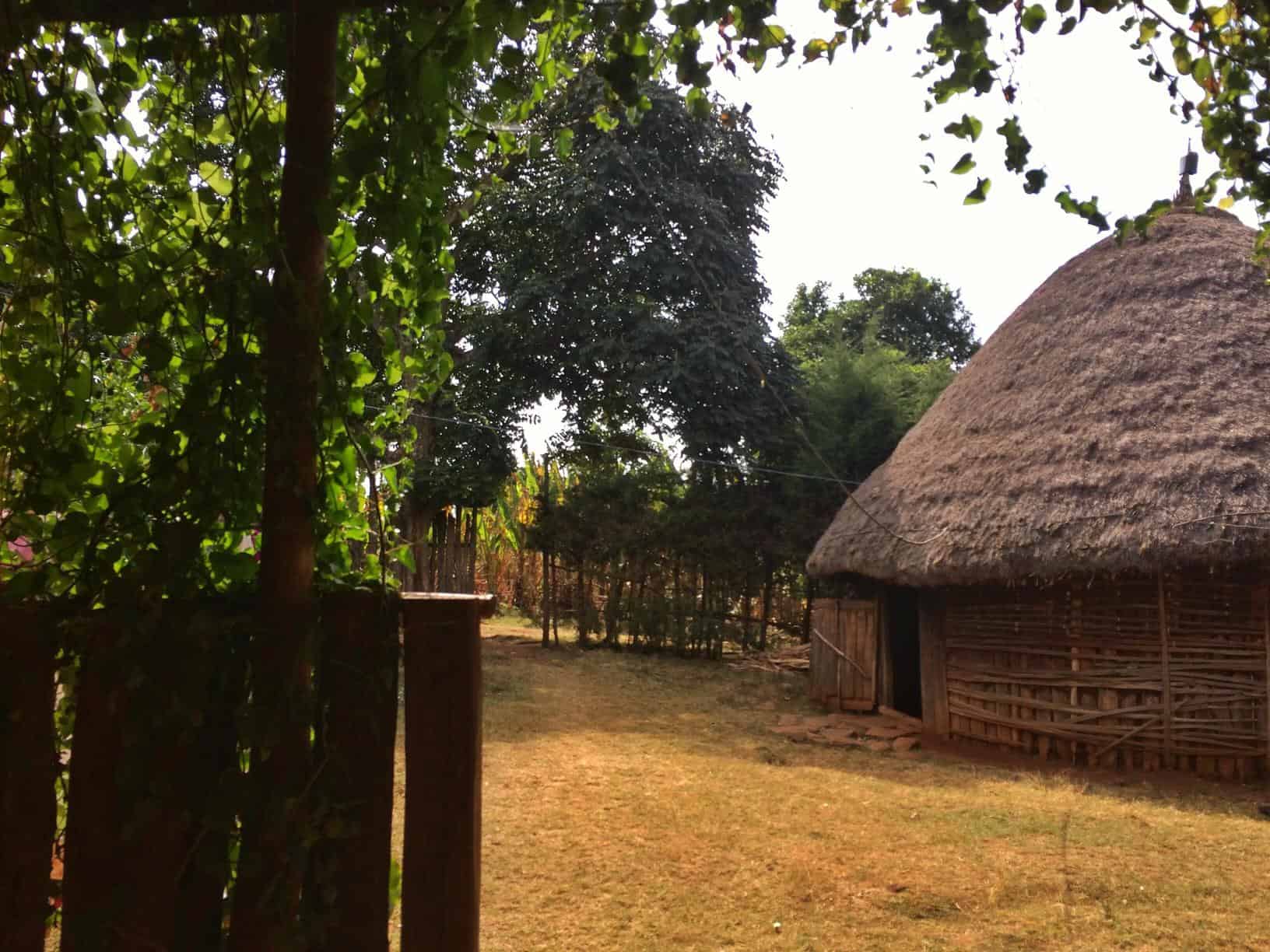
So we sit now, tucked up with our children, who always come with us on the outreach, under coarse woollen blankets in front of the dancing fire. The family live as families here have done for centuries, in a round wattle and daub hut with a high thatched roof, half of which is given over to their treasured cows and chickens who, between them, provide the only reliable source of protein and calcium the family will see throughout the year. It’s a peaceful, gentle night, with the rain on the thatch and the quiet lowing and rustling of the animals settling in. A stark juxtaposition to the shouting turmoil we are both feeling.
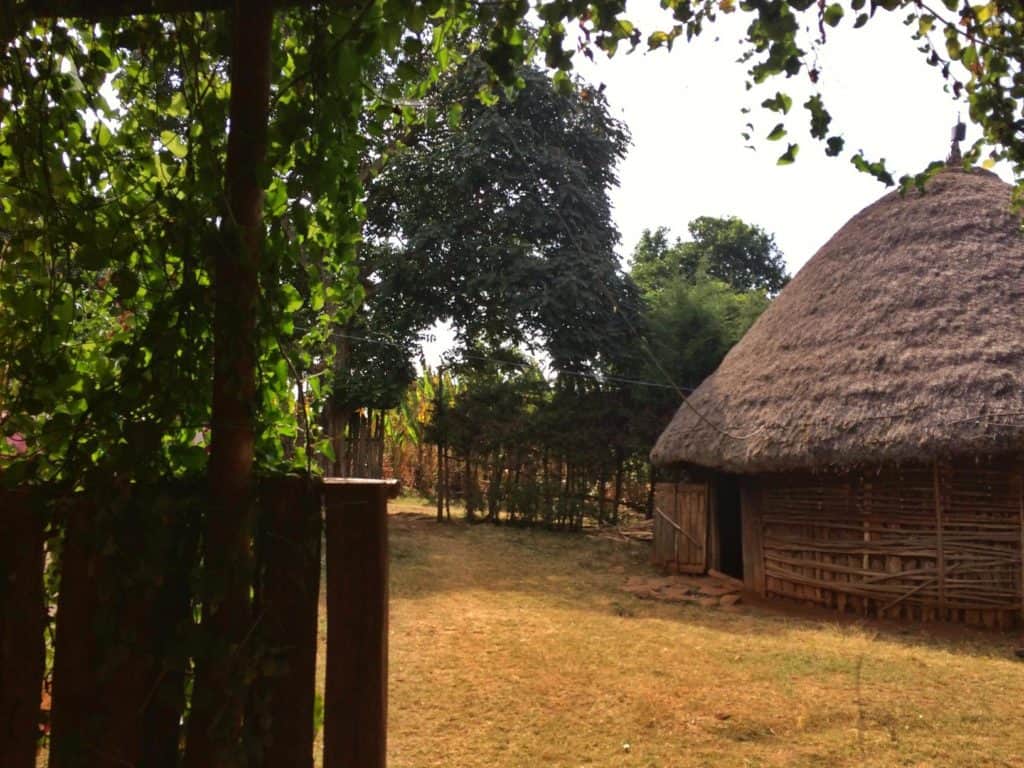
This is the home of little Liyu and her family, who we helped welcome into the world almost two years ago. Her mother, our friend, had a straightforward pregnancy, and we expected nothing less for her labour and birth.
Whilst four is the recommended number of antenatal appointments, and two is the norm given the challenges of attending for most women, Liyu’s mother, Selamawit, had been to see us far more often in the earlier months of her pregnancy, wondering about her baby’s kicks.
As always, for a woman to come reporting reduced movements, and for us to hear that reassuring, whooshing thump through our slightly battered but much-treasured pinard, there is no better way to spend an antenatal appointment.
We told her not to worry, possibly she had an anterior placenta and it was still fairly early, which could be the reason she hadn’t been feeling baby move so much. But we dropped by her home often just to reassure both her and ourselves.
As the weeks progressed, we tracked the baby’s growth and Selamawit’s health, both of which were completely normal. Around 22 weeks, she happily reported baby was wiggling away. Then, after what felt like no time at all, Selamawit was 42 weeks, and we took the decision to ask her to go for an ultrasound.
This may seem a simple request to midwives working in the West, but it’s an expensive undertaking for our women. Not only is the scan itself the cost of food for two weeks, but travelling to and from the hospital also takes precious time and money.
She came back to us with a diagnosis of polyhydramnios and slight placental calcification which, given the gestation, we weren’t that surprised about, and a recommendation for induction.
We are very lucky to have excellent working relationships with the hospital, which meant we were able to come to an agreement: Selamawit was willing to be induced, which we explained at length, was probably the best course of action at this stage, necessitating hospital-based care, but only if we were to be her midwives.
The night staff were delighted to have two more midwives on hand, Selamawit would have us as she wished, and we were able to give the continuity of carer that we so believed in.
With only one dose of misoprostol, her labour started and progressed smoothly. In the early hours, she was informing us that she’d had enough and she couldn’t do it any more, which brought a secret, knowing smiles to our faces, as it is one of the long acknowledged signs of transitioning.
We handed over the postnatal women we’d been helping to look after, and took our positions at her side. Sure enough, less than half an hour later, Selamawit was ready to push.
The following minutes we both, even all these months later, remember with absolute clarity.
Atsede caught Liyu and bought her up to Selamawit’s chest for skin-to-skin, preoccupied by the larger than normal gush of blood that came at that stage, knowing Indie was there to swoon over the new little baby and make sure all was well.
Except, in the space of an infinite heartbeat, everything changed. Unnoticed by either Atsede, concentrating on the bleeding, or Selamawit, who had her eyes closed from elation and relief, Liyu was struggling. Limp, blue and silent, she hadn’t breathed. Indie saw the reason instantly. Whilst there is much evidence in favour of bedside resuscitation, and delayed cord clamping, under the circumstances, indie reacted instinctively, cutting the cord and taking Liyu to the newborn area. Still unmoving, still blue, and still silent. The reason, which had gone undiagnosed antenatally, an incredibly rare genetic condition called congenital arhinia. Put simply, Liyu had no nose; no bones, no nostrils, no nasal structures at all. Stretched between her eyes was skin and muscle only.
It is a condition, we were later to discover, is documented less than 50 times in medical history. Neither of us had any idea what to do. Newborns are obligate nasal breathers, and therein lay just one of the inevitably many problems to come. We exchanged glances as we started resuscitation. Were there other, underlying, unknown abnormalities? Was this the reason for the late start to her fetal movements earlier in her pregnancy? And the polyhydramnios at the end? What did we miss then? And what do we do now?
Whilst we were confident in our resuscitation abilities, having both had training as part of the Helping Babies Breathe low-resource setting programme and also been certified in a modified paediatric advanced life support course, this was way outside our abilities and knowledge. We knew that. The problem was, there was no one else.
The hospital’s Medical Director, a wonderful obstetrician with many, many years of experience, was away at a meeting. The only other doctor was both not on-duty and not on-site. We needed a full team of neonatologists, an intensive care unit, paediatric surgeons. All we had was a bag-valve-mask, an oxygen concentrator with nasal prongs and a maximum of 5L/minute, and a bag of dextrose 40%. The hospital is not set up to handle rare and complex neonatal emergencies. The country is not set up to handle rare and complex neonatal emergencies.
After many nerve-wracking minutes of resuscitation, finally, incredibly, Liyu gasped. Newborn babies progress to respiratory and cardiac arrest along a fairly predictable pathway. But they also recover along that same pathway in reverse. As we stood there, anxious and exhausted, we hoped against hope that would be the case for Liyu. When a period of apnoea followed the gasping, we once again caught each other’s eyes. Liyu was moving in the right direction. Slowly, breath by agonising breath, Liyu started to move, to change colour, to cry. Whilst she was agitated and distressed from the resuscitation, she cried. Whilst she cried, she was getting oxygen. It was after she settled, we realised what would happen. She stopped crying and stopped breathing. What followed were apnoeic periods until once again we made her cry. But how long could this cycle last before we exhausted her completely? And what else could we do?
For now though, she was breathing. So we had a few moments to stop and collect ourselves. And Indie realised then that perhaps there was one other person who might be able to help now. A retired Catholic missionary nun who was also an anaesthetist, a highly skilled doctor of whom we were very fond, even if not a specialist.
So, despite the hour and the impossibility of the situation, indie went to rouse the Sister, leaving Atsede with Selamawit and the baby. They returned, and together took the baby to theatre where the lighting was best.
We sat explaining to Liyu’s father, Selamawit being too shocked to understand fully what we were saying, that indie and the Sister wanted to attempt, just one time, to perforate the nasal area to provide an artificial airway with the only equipment available, a large bore cannula. With his consent, they prepared the operating table, donned sterile gloves, gave glucose drops as a analgesia, and tried. It soon became apparent it was fruitless. There was more than just skin.
Given our lack of experience in such a case, the consensus was that it would be unethical to try anything more. So we did the only thing we could, and referred, believing it was unlikely she would survive the seven or so hours through the night across the country to the capital city where there might be someone who knew better what to do. With nothing more than an oxygen cylinder with the nasal prongs taped into place over her mouth and a plan to take Liyu for an hour each during which time she would be watched for apnoeas and stimulated accordingly, it was into the minibus and onto the road.
What followed were weeks of blood tests, scans, xrays, and phone calls going backwards and forwards. And despite it all, Liyu survived. The resilience of newborns, even compromised and struggling, is amazing.
Her creatinine levels wouldn’t stabilise, she suffered through sepsis, the apnoeic periods continued until she learnt to compensate. No-one really knew what was to come next. And Liyu learnt to breastfeed, taking herself off every minute or so to breathe and then re-latching.
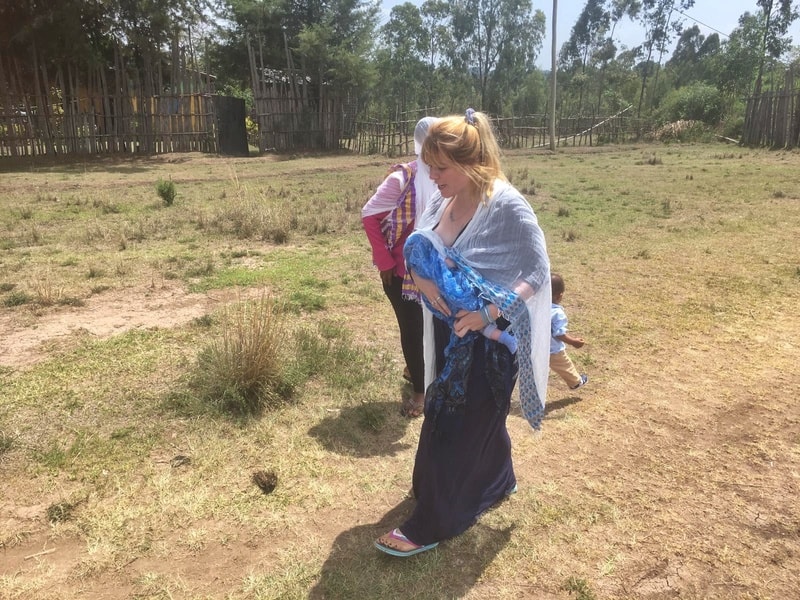
It came to the point where the hospital was doing nothing more, and so Selamawit and Liyu travelled home, back to us. Initially we were elated, this miracle baby, despite all the odds, had made it! But then the months passed. And Liyu wasn’t interacting, wasn’t really moving. She didn’t start to smile or coo or gurgle like we all so wished she would. She didn’t show any signs of recognising people. This affected Selamawit particularly.
 And then today, when we visited her once more, we saw she still isn’t smiling or cooing or interacting. She can’t sit unsupported, she can’t turn over, she doesn’t recognise her mother. But these things, Selamawit said to us, these things they accept. What she can’t see past is that Liyu seems to be, so much of the time, in pain or unhappy. One infection follows another, she isn’t taking in enough to increase her weight appropriately, and every time they think she is improving, Selamawit says, something else knocks her back.
A few days ago, she slipped sideways whilst propped up on cushions on the floor and caught her lip on her hand. It’s since become a bruised wound that isn’t healing and that causes her pain whenever she sucks. Her father told us he can’t understand how she’ll survive that many more months. And then, if she does, what sort of life she will have?
It was this statement that left us watching the flames so bleakly tonight. What sort of life did we condemn her to? A life of multiple hospital admissions, countless courses of medicine? A life of one step forwards, two steps back? Of discomfort, possibly pain?
And Selamawit and her husband. How can they, under the circumstances in which they live, handle a severely disabled child? Did we act ethically in that first hour? Should we have carried on resuscitation as long as we did?
These are questions to which we have no answer. Liyu has no access to any support. If she survives through infancy, there is no physio, no speech and language therapy, no special needs education. It’s unlikely she’ll even be able to have a wheelchair, and if we do find one for her, it won’t be a specifically designed, paediatric, electronic one.
Indie has been in correspondence with the world-leading experts in congenital arhinia, a group of kind and supportive doctors and surgeons, who were generous with both their time and advice. But unlike the only other children alive today with congenital arhinia, who seem to have no other conditions, it is likely Liyu does. And so there is little to be done.
Healthcare professionals are supposed to work in such a way to alleviate suffering, to honour the mantra “do no harm”. Were we too overcome by the immediacy of the situation at her birth, and the fact that Selamawit is our friend?
Did we fail to consider the long term? Did we do no harm? All these questions and more bounce back and forth between us over the flames as we contemplate the enormous responsibility of being midwives.
We hold in our hands the futures of the families we serve, and it is our actions that determine the quality of that future. As we reflected on this, we realised not in lectures nor in practice did anyone ever tell us that.
Yes, we were taught about the impact of the childbirth experience, for good or for bad, has on the woman and her family, and we are encouraged to practice in ways that reflect that. But it was never said that the decisions you make in a split second in the depth of night will stay with you forever.
 More, will change the course of people’s lives forever. Yet here in this far-flung, ancient land, where magic exists and lightning is a sentient being, Bowjah, who can choose to wreak havoc with fire, is a truth acknowledged and accepted by the traditional healers and midwives. The responsibility lays heavy on their shoulders, and there is a sense of solemnity about them when they talk of their work, neither of which is seen or expected amongst midwives in the West.
The power midwives have to change lives should not be taken lightly. Though our example is certainly at the more unusual end of the spectrum, after all, were such a situation to arise in the UK, a full team would quickly take over and decisions would not rest on the sad and uncertain shoulders of two young midwives, but there are, we believe, universal lessons.
Foremost amongst them, importance of understanding that our words and actions have consequences far greater than we might realise at the time. Midwives are uniquely positioned in such a place that we are able to alter the course of the future for someone, to change their world, and disrespectful or negligent care can do great harm.
But conversely, compassion and empathy can do great good. Even the most seemingly innocuous decision can have an impact beyond what we can imagine, and consequences beyond what we can predict. It is imperative that midwives everywhere pay heed to this.