








Maternal Journal – Championing ‘Arts in Health’ Initiatives in Maternity
Laura Godfrey-Isaacs Artist and Midwife
First published in The Practising Midwife June 2019 Volume 22 Issue 6
Maternal Journal is an interdisciplinary arts in health project, produced by myself (artist and midwife Laura Godfrey-Isaacs) in collaboration with Debra Bick, professor of clinical trials in maternal health at Warwick University, and psychiatrist Carmine Pariante, professor of psychological medicine at King’s College London.
Introduction
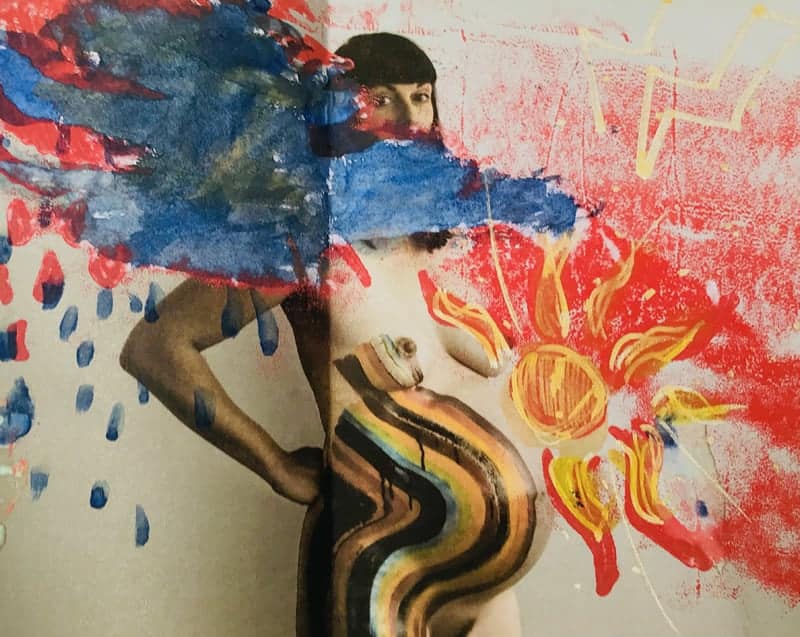
Photo by Lara Downey – Journal by Hannah Lamdi
Maternal Journal explores the therapeutic potential of journaling in pregnancy and early parenthood as a way of promoting wellbeing and positive mental health, particularly for those who have a history of mild-to-moderate mental health issues.
The project was created in response to a growing recognition of the serious nature of maternal mental health problems during childbirth. One in five women* in the UK develop a mental health illness during pregnancy or up to one year after birth (Royal College of General Practitioners [RCPG] 2018); seven in 10 hide or underplay the severity of their illness; and suicide is one of leading causes of death during this time (Maternal Mental Health Alliance [MMHA] 2018; Knight et al 2017). Unfortunately, services for and understanding of perinatal mental health are patchy, with the threshold for conventional treatments being high. This leads to many with mild-to-moderate symptoms having little specialist support, and being expected to ‘cope’ on their own, a situation familiar to me while working as a community midwife in London.
Maternal Journal represents an example of this approach, which can be used to build other projects that can similarly address issues during the childbirth continuum
Creative and social strategies, such as arts in health initiatives, social prescribing and arts on prescription are increasingly attracting interest as a way of positively affecting mental health, long-term physical health problems (such as dementia) and other social issues like isolation and loneliness (Crossick and Kaszynska 2016).
There are many arts organisations and individual artists who have the expertise and interest to collaborate with healthcare providers – and a growing research base to support this work. However, there are disproportionately small numbers of projects in maternity, despite the promise of helping to address the crisis in maternal mental health, as well as potentially other issues such as poor birth outcomes, particularly for women* of colour, migrant women* and those in the criminal justice system (Knight et al 2017).
Maternal Journal represents an example of this approach, which can be used to build other projects that can similarly address issues during the childbirth continuum. The project has attracted interest and support from the midwifery, psychiatric and arts community, having been shortlisted for a Royal College of Midwives (RCM) Excellence in Maternity award and for innovation at the Maternity and Midwifery Forum awards 2019.
The Evidence
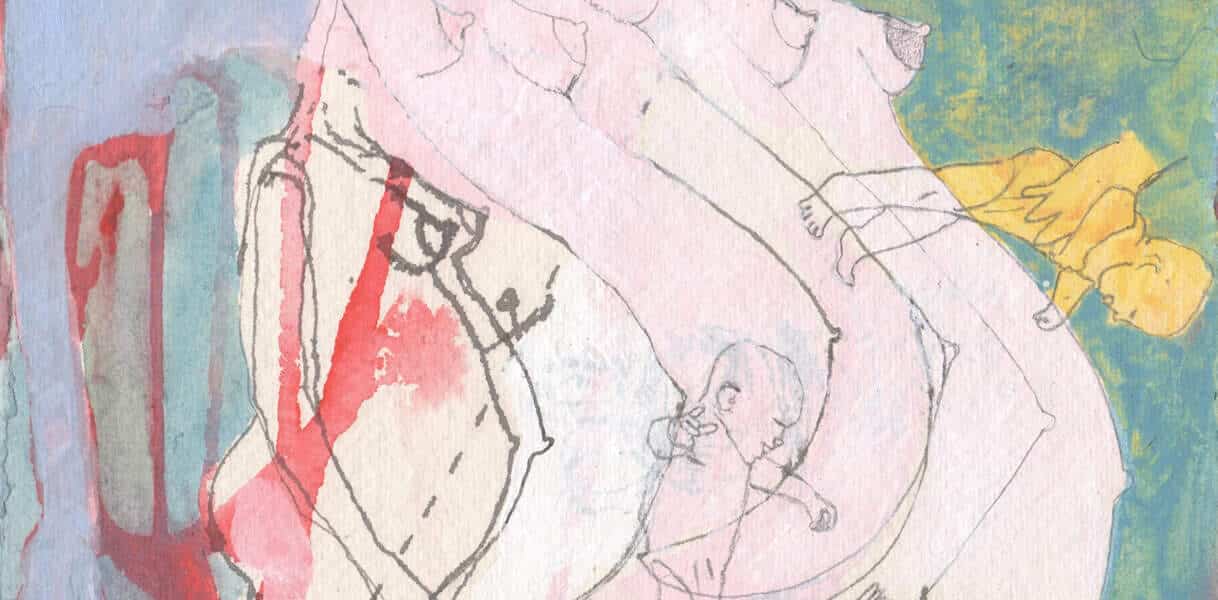
Illustration by Helen Sargeant
In 2017, the All-Party Parliamentary Group (APPG) on arts, health and wellbeing’s inquiry Creative health reported that: “The arts can help meet major challenges facing health and social care: ageing, long-term conditions, loneliness and mental health” (APPG 2017).
In November 2018, the new Health and Social Care Secretary, Matt Hancock, gave a major speech where he outlined the case for social prescribing and his intention to create a new ‘national academy for social prescribing’ (Hancock 2018).
This political support is backed up by a range of research studies. These include Jensen and Bonde (2018) whose narrative review of the benefits of participation in arts activities and clinical arts interventions found improvements in mental health and a reduction in physical symptoms, as well as an increase in psychosocial resources and enhanced self-esteem. This was further confirmed by Clift and Stickley (2017), who outlined how engagement with the arts can aid good mental health and wellbeing, and address social isolation.
In addition, one of the first arts on prescription schemes, piloted by Arts and Minds in 2007, was rolled out across Cambridgeshire in 2010-2012, with 78 per cent of participants reporting an increase in mental wellbeing, or a decrease in depression, anxiety and social exclusion (Potter 2013). A review of social prescribing run by University College London similarly reported 10 key benefits for those involved in these kinds of schemes: these included self-esteem and confidence boosts, physical health improvements, better social connections and the acquisition of new skills (Thomson et al 2015).
Evidence with projects specifically working around childbirth include Breathe Arts’ ‘Melodies for Mums’ (Breathe Arts 2019) – weekly singing and music-making sessions for those at risk of postnatal depression (PND) in London boroughs Lambeth and Southwark. These sessions are based on research into the benefits of a 10-week course, carried out by ‘Music and Motherhood’ at the Research Centre for Performance Science (RCPS) (2016) with the Royal College of Music and Imperial College.
Maternal Journal – how it works
Illustration by Merlin Strangeway
Maternal Journal was piloted as a part of the Arts and Minds initiative that linked artists with academics from the Institute of Psychiatry, brokered and funded by the King’s College London cultural team, in order to address issues to do with mental health, the brain and neuroscience.
A Maternal Journal group was created with participants who were either pregnant or had given birth recently, and had a history of mild or moderate mental health problems. A series of five workshops, facilitated by Laura and Carmine, included creative activities introduced by visual and craft artists, poets, cartoonists and writers: Hollie McNish, Kate Evans (aka Cartoon Kate), Frances Burden, Rebecca Fortnum and Sharon Boothroyd. At each workshop, one of the artists devised creative exercises, using different writing and visual arts techniques that supported participants to create their own journal as an expansive, therapeutic and creative aspect of their care. In addition, the sessions involved participants sharing work they had made in between the meetings, and any experiences or concerns they had, therefore building in psychosocial support and cohesion within the group. This led to a strong practice of sharing and support, with participants feeling safe enough to reveal and explore thoughts, feelings and experiences openly. Discussions ranged from personal accounts of physical, psychological and emotional struggles with pregnancy and mothering to social, political and cultural issues referenced through the media, art and medical frameworks.
Why journaling?
Journaling can be a powerful creative tool and social document employed in everyday life. It is also a common form used by well-known writers and artists. It is suggested that it can act as a therapeutic device by providing a means to check in on feelings, help to understand triggers towards poor health, document good and bad days, and put experiences into perspective, too. Journaling, and the creative expression through it, can be cathartic, joyous and revelatory as well as a means to expose and reveal feelings otherwise hidden or suppressed.
A review of social prescribing reported 10 key benefits for those involved in these kinds of schemes
Maternal Journal builds on the tradition of women’s* journaling which has a strong legacy. This rich history comes about partly due to it having been one of the only possible ways for women* to write, be creative or express social and political views in the past – when professional engagement wasn’t possible – employing a semi- or completely private guise. Therefore, journaling can be seen culturally – even today – as a powerful way to document experiences, and create a social history of our lives. During the project, we connected our participants to this history by looking at some key diaries, journals and sketchbooks (by Ida B Wells, Frida Kahlo, Virginia Woolf, Bobby Baker and Anne Frank, and mass observation diaries).
During the project, we connected our participants to this history by looking at some key diaries, journals and sketchbooks
Journaling in pregnancy has particular poignancy as it relates to the inevitable marking of time, the nature of the experience as ‘a journey’, the sense of being in a liminal space (a threshold between one state and another), and the creativity of making a baby. It is also commonly a time of great imagination with associated vivid dreams and fantasies – all good material for a journal. It is a time of great change, challenge, opportunity and vulnerability, too, particularly if you have a history of mental health problems – so having a creative outlet can be highly productive.
Outcomes and women’s feedback
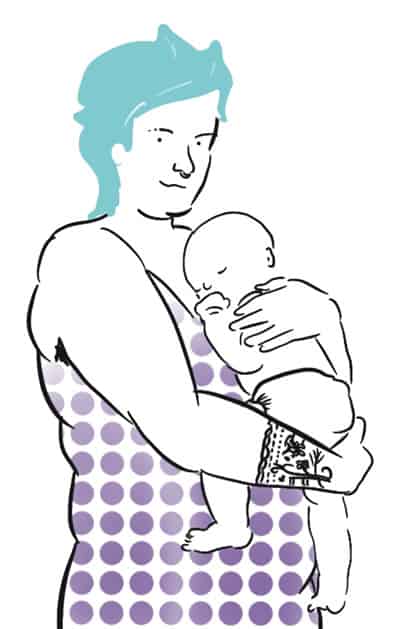
Illustration by Merlin Strangeway
The project received very positive feedback and has grown into the postnatal period, with the group now meeting monthly and a core group of five (the ‘founding mothers’) supporting the project’s ongoing development. Most participants have kept the journal going and have produced some incredible work – from drawings, paintings and collage to prose, poems and more.
Some of the feedback is documented below:
‘I feel energised and given permission and support to continue to find and establish my own space and voice creatively.’
‘The weekly workshops are totally the highlight of my week. It’s inspiring and energy-giving.’
‘The maternal journal, as a concept and a working model, is fantastic. I’ve found the past two sessions joyous, cathartic, hopeful, inspiring and informative.’
‘Keeping a maternal journal has been a very helpful and positive experience. I think it’s contributed to my continued mental stability.’
Next steps
One of the big issues for arts in health projects is how to scale up and mainstream initiatives that have often been supported as pilot projects only. Our approach with Maternal Journal is to both democratise the project through the website, and to conduct research into the method, so we have more rigorous evidence. The website, which has been created with funding from Arts Council England, gives access to free resources, information and guidance, so that people can set up a group or journal on their own. There are nine simple and easy-to-use artist-devised workshop templates, designed by medical illustrator Merlin Strangeway; a toolkit to help set up a Maternal Journal group; and inspiration, with a list of resources including blogs, books and useful organisations.
To make the project accessible, we have films, graphic recordings (animations) and illustrations from journals, which help to bring the project to life and make it relevant to a wider audience – particularly those who might face barriers to accessing support, or feel that they aren’t creative. Our artists are diverse, and include three women of colour: Barby Asante, Bridget Minamore and Tolu Agbelusi, who specifically address issues to do with racialised mothering. Our illustrations and references are from a wide selection of sources so as to create an inclusive, easy-to-use resource, including ‘queer’, ‘trans’ and ‘revolutionary’ mothering/parenting. We also invite anyone who starts a maternal journal to share work with us on social media, using the hashtag #maternaljournal
Maternal Journal links
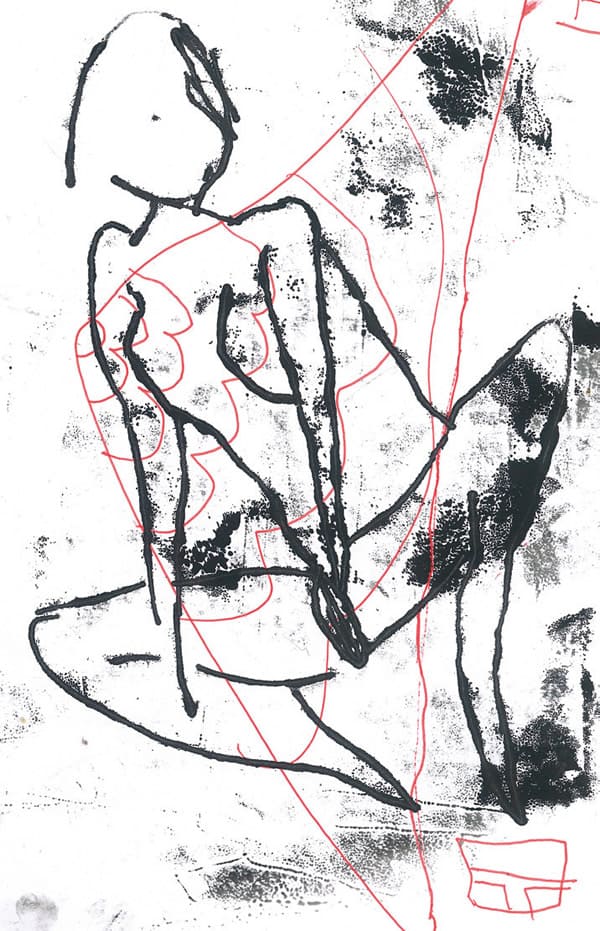
Illustration by Amy Dignam
www.maternaljournal.org
Facebook: @maternaljournal
Twitter: @maternaljrnl
Instagram: @maternaljrnl
In order to determine more about the efficacy, and provide data to back this up, a research project led by Professor Debra Bick, in collaboration with myself, Professor Carmine Pariante and Professor Susan Ayres (Head of the Centre for Maternal and Child Health Research at City University) is being developed to trial the Maternal Journal group concept at two hospital trusts nationally.
We hope that the Maternal Journal website will provide a useful resource for midwives and other birth workers to both use and recommend to women they look after.
Please do get in touch with The Practising Midwife with feedback. TPM
*In this article, the use of the word ‘woman’ is intended as inclusive of any person who ‘births’ or identifies as a ‘woman’, ‘mother’ or ‘gender non-conforming parent’.
Links and useful resources for Arts in Health projects in maternity
• Arts and Minds an arts and mental health charity delivering arts on prescription. artsandminds.org.uk
• Aesop Marketplace a comprehensive list of Arts in Health arts organisations. aesopmarketplace.org
• Breathe Arts a performing arts initiatives in healthcare. Breatheahr.org
• Performing Medicine building a resilient, caring workforce through arts-based training for health professionals. performingmedicine.com
• Birth Rites the world’s first collection of contemporary art on birth. Birthritescollection.org.uk
• Dance Mama supporting mothers who dance. dancemama.org
• Desperate Artwives a collective of visual artists who are mothers. Desperateartwives.co.uk
• Mothers who Make a national initiative to support mothers who are artists. motherswhomake.org
• Prams in the Hall a performance company that promotes parenting. pramsinthehall.com
• Procreate an arts organisation that supports mother artists. procreateproject.com
To make the project accessible, we have films, graphic recordings (animations) and illustrations from journals
APPG (2017). Creative health: the arts for health and wellbeing, London: APPG. http://www.artshealthandwellbeing.org.uk/appg-inquiry/Publications/Creative_Health_Inquiry_Report_2017_-_Second_Edition.pdf
Breathe Arts (2019). Melodies for mums, London: Breathe Arts Health Research. http://breatheahr.org/melodies-for-mums/
Clift S and Stickley T (2017). Arts, health and wellbeing. A theoretical inquiry for practice, Cambridge: Cambridge Scholars Publishing. https://www.cambridgescholars.com/arts-health-and-wellbeing
Crossick G and Kaszynska P (2016). Understanding the value of arts and culture The AHRC cultural value project, Swindon: Arts and Humanities Research Council. http://www.ahrc.ac.uk/documents/publications/cultural-value-project-final-report/
Hancock M (2018). The power of the arts and social activities to improve the nation’s health, London: Crown. https://www.gov.uk/government/speeches/the-power-of-the-arts-and-social-activities-to-improve-the-nations-health
Jensen A and Bonde LO (2018). ‘The use of arts interventions for mental health and wellbeing in health settings’. Perspectives in Public Health, 138(4): 209-214. https://journals.sagepub.com/doi/abs/10.1177/1757913918772602
Knight M, Nair M, Tuffnell D et al (2017). Saving lives, improving mothers’ care. Lessons learned to inform maternity care from the UK and Ireland Confidential Enquiries into Maternal Deaths and Morbidity 2013-15, Oxford: National Perinatal Epidemiology Unit, University of Oxford. https://www.npeu.ox.ac.uk/mbrrace-uk/reports
MMHA (2018). Everyone’s business, London: MMHA. http://everyonesbusiness.org.uk/?page_id=6
Potter (2013). Arts on prescription 2010-12. Research report, Cambridge: Arts and Minds. http://www.artsandminds.org.uk/wp-content/uploads/2015/10/arts-on-prescription-2010_12_research-report_susan-potter.pdf
RCGP (2018). Perinatal mental health toolkit, London: RCGP. http://www.rcgp.org.uk/clinical-and-research/toolkits/perinatal-mental-health-toolkit.aspx
RCPS (2016). Music and motherhood, London: CPS. http://performancescience.ac.uk/musicandmotherhood/
Thomson LJ, Camic PM and Chatterjee HJ (2015). A review of community referral schemes, London: University College London. http://www.artsandminds.org.uk/wp-content/uploads/2015/10/Social_Prescribing_Review_2015.pdf

