









Sensitive Midwifery Care of Genderqueer People
Claire Vigot [they/she] – Labour Ward Midwife, Aberdeen Maternity Hospital
Instagram: @claireedoo
Published in The Student Midwife Volume 5 Issue 02 April 2022, Pages 28-31 https://doi.org/10.55975/TQUD4489
Summary
Around 600,000 transgender people live in the UK.1 Many may want to use their reproductive rights to carry their own children, but are midwives ready to care for them safely and sensitively? Increasingly, genderqueer people (umbrella term for those whose gender does not match the one assigned to them at birth) access perinatal services, but these services are built on cis-heteronormative foundations.2 Claire Vigot explores how do our services need to change.
The statistics
The Equality Act 2010 protects people who are transgender from discrimination.3 Therefore, education is vital to teach students and midwives sensitive care for genderqueer people. This article provides basic knowledge of gender issues and vocabulary. It also looks at the physiological side of testosterone and pregnancy, giving tips for providing the best care.
Unpicking terms
 Firstly, the difference between gender, sex, sexuality and gender expression needs to be understood. Sex is indicated by the sex chromosomes in your DNA. Gender is the range between male and female a person internally identifies as. Sexuality is your attraction to others (eg, lesbian, bisexual etc). Finally, gender expression is how you express your physical self, by wearing a dress or suit, nail polish or a tie. The definitions are from reputable sources, but might not be inclusive of all identities as gender and sex are complex.
Transgender
When speaking about transgender people in midwifery, we are most likely to care for trans men who have transitioned from female to male, and may have a uterus and the ability to carry a child. They might use he/him pronouns, meaning you would say “he is pregnant” rather than “she is pregnant”. Despite what society sees, trans men have always been men, they were never “women who became men”.
Non-binary
They are people who might not identify with either female or male genders. They may or may not be somewhere on the gender spectrum or just want to be ‘themselves’, not a gender. Gender theory is much more elaborate than this, of course, as identities are endless.
Pronouns
If the person you are caring for uses he/him pronouns, introduce yourself with your pronouns. If you use she/her pronouns, people may say “she is a great student, I like her a lot!”. If you use they/them pronouns, people may say “they are a great student, I like them a lot”. If you wish to learn how to use these, you can search “mypronouns.org”.4 If you ever make a mistake and use the wrong pronouns for that person, quickly correct your mistake and move on with the conversation as apologising endlessly will embarrass them more than you.
Dysphoria
This is a profound unease with one’s gender and sex, leading to many mental health issues. To avoid this happening, ask the person you care for what terminology to use, to avoid triggering them. They may prefer referring to vaginal examinations as a lower genital examination. When caring for a trans person, if they are willing to share, ask about their mental health, and how pregnancy may have created or increased dysphoria for them; giving them a chance to open up about their challenges.
Transition
This is the process of changing a person’s physical characteristics to match their gender identity. This may be done with hormone replacement therapy (HRT), hair removal treatment, surgery etc. However, for financial, societal, or personal reasons, many prefer to transition purely on a social level, meaning coming out only to close friends and family without the need for surgery or treatment.

Deadnaming
The term deadnaming is using the name a person had prior to transition. When caring for a genderqueer person, avoid irrelevant questions and never deadname them. For example, if their name was Alice but they changed it to Michael, always use Michael when speaking to and about them. Make sure the name Michael is the top name in their notes, and that the name Alice is hidden in a more discreet area if needed for administrative purposes.
Finally, reflect on your practice, your prejudices, and the services you work for. How many gender stereotypes surround us? How often do we dismiss the genderqueer community? Who does this benefit?
Care for genderqueer people who have been on testosterone
At booking
- Testosterone increases the risk of venous thromboembolism (VTE), cholesterol, breast cancer and liver abnormalities. Discuss health promotion, including smoking cessation, healthy eating, exercise and signs of blood clots and breast cancer (even for those who have had top surgery). Offer to take extra blood samples to check for liver function and lipid profile.
 Ensure they have stopped testosterone from conception as it is teratogenic, with the potential to cause birth defects.
- Per vaginum (PV) bleeding at any point in pregnancy is not normal, regardless of ceasing testosterone.
- Work as a multi-disciplinary team with the gender identity clinic or endocrinologist, asking if any blood tests are required and to make them aware of the pregnancy.
- Although there is a piece of research showing that pregnant people who were previously on testosterone may have an increased risk of hypertension, preterm labour, and gestational diabetes,5 holistic care assessing the clinical picture as a whole is vital; genderqueerness and the use of testosterone alone are not a reason for high-risk care.
- Advise them to limit the use of a chest binder to less than 3 hours a day in early pregnancy, to avoid them completely after the 2nd trimester, and to use sports bras and hoodies to cover their chest in late pregnancy if needed.
Chestbinding
Chestbinding is one of many gender-affirming practices used to reduce gender dysphoria and/or present physically with a flatter chest, potentially more congruent with a masculine identity. There are purpose-made binders available to flatten and support chest tissue, others use bandages or sports bras if these products are unavailable to them. Binding has a powerful impact on mental health; research shows 70% of folk who use binders report a positive mood after binding, compared to 7% before binding.6
Intrapartum care
- When discussing the birth plan, explain the benefits of homebirth, including the possibility of providing more control of their birth environment. The homebirth rate is 17% for transmasculine people.
- Individuals may ask for an elective caesarean section (CS) to avoid dysphoria altogether during labour and birth. Birth was described as the “most empowering event into fatherhood” by a transmasculine influencer, so do not expect all transgender people to be triggered by the idea of giving birth.
Postnatal care
 Restarting testosterone after birth will reduce oestrogen levels. As oestrogen is an essential hormone in perineal healing, discuss the risks and benefits of restarting too soon, always providing a thorough conversation surrounding perineal care and pelvic floor exercises.
- Postnatally, when discussing contraception, note that testosterone is not a contraceptive.
- Keep in mind that the sex of the person’s partner(s) might be different to their gender identity, so instead of asking if they have sex with men, ask if they can get pregnant from the sex they are having. If not, advise them to get regularly checked for sexually transmitted infections (STIs), and to use dental dams and condoms for toys.
- Although condoms are the best contraception to avoid pregnancy and STIs, progestin-only contraceptive can be a good choice as it stops menstruation and does not interfere with testosterone. If they have planned for an elective CS, check if a coil insertion is possible at this time rather than postnatally, which can be dysphoric.
- If they wish to be referred to the gender clinic, reach out to your local centre and ask where the referral forms can be found, as most healthcare practitioners have the power to refer.
Chestfeeding
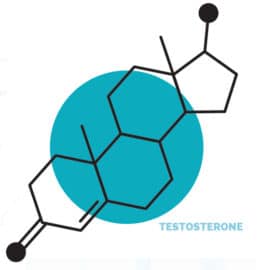 Chestfeeding, bodyfeeding or breastfeeding, whichever term the person prefers, is possible even when the person is on testosterone. Although testosterone is minimally passed through the breastmilk and slightly increases a baby’s testosterone levels, it poses little risk. Testosterone can suppress lactation, so individuals may need extra support with this, finding creative ways to – if needed – supplement, milk share, express, use lactation aids etc. Encourage them to find feeding support groups as there has been good feedback from trans men that this can be helpful.7
- Chestfeeding following top surgery is rarely possible as the ducts are damaged, so discuss chestfeeding for comfort rather than nutrition if they are keen to try.
- Postpartum binding should be discouraged as it reduces milk supply and causes mastitis.

Conclusion
Fight any personal transphobia by listening to transmen’s pregnancy stories to acknowledge and embrace masculine pregnant bodies. Then, fight transphobia in the staff room, on social media, at a dinner party… Ask your students, colleagues and friends for their pronouns. Start small and go big, you will become an excellent advocate the more you learn! The reason women have always come together for labour and birth is because we understood the troubles the patriarchy imposed; these same issues affect trans folks, which is why we must unite and support one another in the birthing community. TSM
Reference
- Stonewall. The truth about trans. Published May 4, 2018. https://www.stonewall.org.uk/truth-about-trans#trans-people-britain Accessed December 10, 2021.
- Greenfield M, Topper Y. Trans men and obstetric violence. Durham University. https://www.durham. ac.uk/research/institutes-and-centres/ethics-law-life-sciences/ about-us/news/obstetric-violence-blog/trans-men-and-obstetric-violence. Accessed December 20, 2021.
- Protected Characteristics. Equality and Human Rights Commission. https://www.equalityhumanrights.com/en/equality-act/protected-characteristics Updated July 6, 2021. Accessed February 2, 2022.
- MyPronouns.org Resources on Personal Pronouns. MyPronouns.org Resources on Personal Pronouns. https://www.mypronouns.org/.
- Obedin-Maliver J, Makadon HJ. Transgender men and pregnancy. Obstetric Medicine; 2015:9(1):4-8. doi:10.1177/1753495×15612658.
- Peitzmeier S, Gardner I, Weinand J, Corbet A, Acevedo K. Health impact of chest binding among transgender adults: a community-engaged, cross-sectional study. Cult Health Sex; 2017:19(1):64-75. doi: 10.1080/13691058.2016.1191675.
- MacDonald T. Where’s the Mother?: Stories from a Taansgender Dad. Canada: Trans Canada Press; 2016.

