









Exploring Caesarean Birth 7: High BMIs and Caesarean Birth
Leonie Rastas (she/her) – Midwife, Educator, Author, Founding Director Caesarcare
Social @Irastas
Published in The Practising Midwife Australia Volume 02 Issue 04 April 2024, Pages 17-24
https://doi.org/10.55975/XFIZ6503
Summary
The Royal Australian New Zealand College of Obstetricians and Gynaecologists (RANZCOG) inform many of our maternity facilities policies and guidelines.1 The Peak Midwifery body the Australian College of Midwives (ACM) provide guidelines regarding consultation or referral for the midwife depending on the level of BMI but only with the person’s consent. A consultation is advised with a medical practitioner if the Body Mass Index (BMI) >35>40kg/m2 and associated with no co-morbidity. In the event of Identified bariatric habitus (BMI >40kg/m2) or BMI >35kg/m2 with co-morbidities, a referral to a medical practitioner is required.2
Introduction
The statistics provided by the Australian Institute of Health and Welfare (AIHW) in 2018 highlight the prevalence of overweight and obesity among women and birthing people giving birth. According to the report, almost half (48.6%) of women who gave birth were either overweight (26.8%) or obese (21.8%).3
In 2010, a national study estimated the prevalence of super obesity in women giving birth in Australia as 2.1 per 1,000. However, the Royal Brisbane and Women’s Hospital (RBWH), being a major tertiary institution in Queensland, serves as a referral centre for individuals with a BMI greater than 40kg/ m2. The prevalence reported by RBWH is higher, with a morbid obesity rate of 21.8 per 1,000 and a super obesity rate of 4.3 per 1,000 births.4
Body mass index
Obesity is defined as a Body Mass Index (BMI) of =>30kg/m2. In pregnancy, it is calculated using the height and weight measured at the first antenatal consultation. BMI is calculated by dividing the woman’s weight in kilograms by the square of her height in metres (kg/m2). The BMI is not a good measure of health, given it does not consider age, ethnicity or body fat percentage and distribution. Measures that are better predictors of health outcomes include BP measurement, waist circumference and blood sugar levels.
Management of obesity in pregnancy
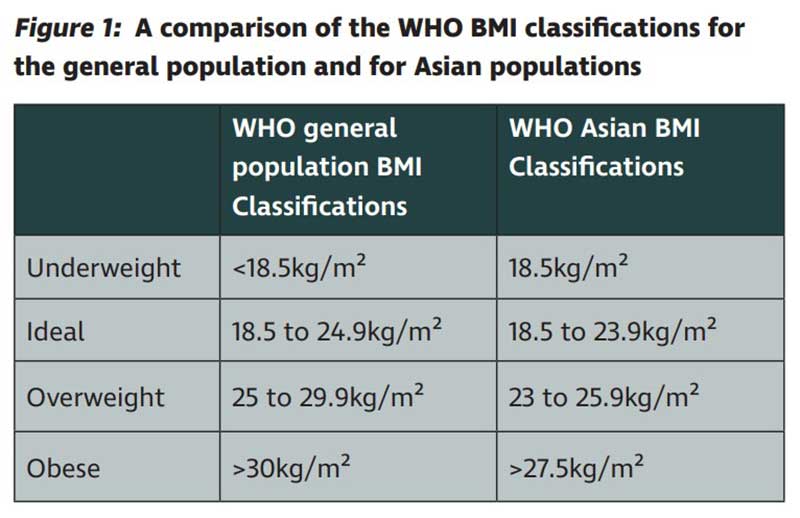
However, BMI is widely considered a good measure of obesity for the general population.1 WHO expert consultation recommended lower BMI cut-off for Asians based on increased health risks at lower BMI5 (see Fig 1).
Practice challenge 1
Reflect on your workplace and the language used when referring to people with high BMIs. Do you think your policies and language used show respect and empathy for these people or are some of the references potentially offensive?
Royal Australian and New Zealand College of Obstetricians and Gynaecologists (RANZCOG) define a healthy BMI is one that is above 18.5 and below 25kg/m2. A person is considered overweight if their BMI is between 25 to 29.9kg/m2 and obese if their BMI is 30kg/m2 or higher. Whilst most women who have a BMI over 25kg/m2 have an uncomplicated healthy pregnancy, there are some extra precautions that should be taken. This RANZCOG statement provides recommendations to caregivers to help reduce risks associated with obesity in pregnancy.1
Addressing the issue of weight in pregnancy requires a delicate and sensitive approach from healthcare providers. It is crucial to recognise and acknowledge the concerns that many doctors and midwives have about discussing weight, as they want to avoid making women feel judged or uncomfortable.
Research indicates that women with a higher BMI may experience negative interactions with maternity care providers due to weight stigma. Despite this, it is equally important to understand that women generally desire to be fully informed about the potential risks associated with a high BMI during pregnancy. Providing information on how to minimise these risks contributes to better pregnancy outcomes.
When engaging in conversations about body weight, healthcare providers should strive for a non-judgemental and sensitive approach. Offering personalised, specific advice tailored to individual circumstances is essential. Avoiding hyperbole and generalisations ensures that the information is conveyed in a constructive and supportive manner.
Furthermore, discussing weight changes during pregnancy is an important aspect of maternal care. Some women may exceed the recommended weight gain, which can pose risks for adverse pregnancy outcomes. Caregivers should engage in conversations about the recommended amount of weight change during pregnancy, taking into consideration the woman’s BMI in early pregnancy. This personalised approach allows for better understanding and management of weight-related concerns, fostering a supportive environment for pregnant individuals.1
Pregnancy challenges associated with a high body mass index RANZCOG
Sixteen consensus or evidence-based care concerns and considerations have been developed for the RANZCOG best practice statement of the management of obesity in pregnancy.1
- Antenatal
- Miscarriage and Recurrent miscarriage
- Fetal congenital abnormalities (e.g. neural tube defects)
- Diabetes – pre-existing and gestational
- Stillbirth
- Pre-eclampsia
- Thromboembolism
- Obstructive sleep apnoea
- Preterm birth
- Maternal death
- Depression
- Fetal growth restriction
- Intrapartum
- Induction of labour, prolonged labour, and failure to progress
- Increased rate of instrumental delivery
- Difficulties with fetal heart rate monitoring
- Shoulder dystocia
- Caesarean section
- Post-partum haemorrhage
- Perinatal death
“Addressing the issue of weight in pregnancy requires a delicate and sensitive approach from healthcare providers. It is crucial to recognise and acknowledge the concerns that many doctors and midwives have about discussing weight, as they want to avoid making women feel judged or uncomfortable.”
- Anaesthetic risks
- Difficulties with labour analgesia and need for general anaesthetic
- Difficulty maintaining an adequate airway, failed intubation
- Increased risk of need for ICU care post operatively
- Post-partum
- Delayed wound healing and infection
- Thromboembolic disease
- Greater likelihood of needing support with breastfeeding establishment and continuation
- Postnatal depression
- Long-term neonatal consequences, neonatal body composition, infant weight gain, obesity1
A study into pregnancy outcomes for morbidly and super obese women was carried out on a cohort of women with singleton pregnancies at the Royal Brisbane Hospital for Women (RBHW) in 2021.
The aim was to see if there was a significant difference between the outcomes for morbid obese and super obese women’s pregnancies. Obstetrics and Gynaecology Principal House Officer Henshaw and Obstetrics and Gynaecology staff Specialist Rudra presented data on the outcomes of maternal morbid and super obesity at the RANZCOG Virtual Annual Scientific meeting in 2021.3
Findings showed that as the BMI increased so too did the elective and emergency surgery deliveries.
‘The cohort was divided into three segments for examination: a control group with a BMI range of (17 to 30kg/m2), a morbidly obese group with a BMI range of (40 to 49.9kg/m2), and a super obese group with a BMI exceeding (50). A total of 45,261 births were recorded Between January 2010 and December 2019. Of the total births analysed, 83.3% belonged to the control (n=33,751), while 2.43% were classified as morbidly obese (n=985), and 0.48% fell into the super obese category (n=196). The incidence of hypertensive and diabetic disorders during pregnancy showed an increase across all three groups’ (See Fig 2).4

Figure 3 shows how the BMI increased, the mode of delivery via caesarean section (CS) showed an increase in both elective and emergency CS.4

The incidence of macrosomia was notably elevated compared to the control group, with rates of 5%, as opposed to 21.3% and 24.5% in the other categories. Conversely, intrauterine growth restriction (IUGR) exhibited similar rates across all groups.
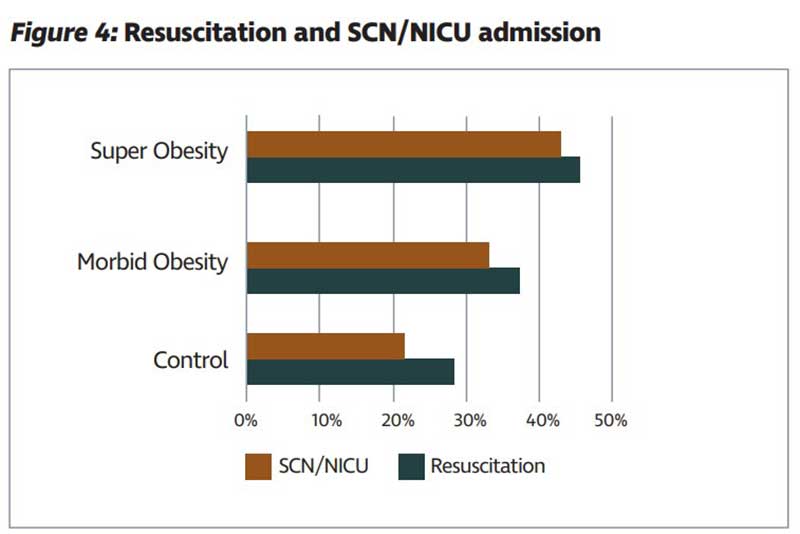
The occurrence of very preterm delivery (<32 weeks) was comparable between the obese groups, with 4.2% in the morbidly obese and 4.1% in the super obese categories. In contrast, the control group exhibited a higher rate at 2.1%, possibly attributed to the elevated incidence of complications in this group (See Fig 4).
Practice challenge 2
Reflect on the caesarean rate and evidence about its recommendation for pregnancies in larger people?
Do you think we live in a diet culture where companies reinforce that plus size is not okay? What are your thoughts? How do you feel about pregnant people not being allowed to access a birth pool in some facilities?
How can you help reduce the shame and stigma pregnant people with high BMI face?
Are the challenges of high BMI real?
UK author Dr Sara Wickham argues that a growing body of research challenges some of our culture’s current beliefs about weight, size and BMI, and suggests what we should be doing about it.
Wickham asserts BMI is another medical construct introduced by middle-class white men and doesn’t represent the differences that occur with age, sex and race. In addition, to the messages associated with the diet culture, Wickham points to the weight stigma also known as weight bias or weight-based discrimination that has emerged where many people with high BMI’s are experiencing stereotyping, discrimination and mistreatment.
Weight shaming and stigmatisation are sometimes used unintentionally as way of humiliating people into adopting the behaviours that supposedly lead weight loss These ideas are imbedded in many medical guideline’s recommendations and practices. The question of whether the effect of dieting before or during pregnancy has long-term effects on women’s health is vital according to Wickham.5
It is interesting to note the different terminology in Australia for weight categories to the UK. Language can be insulting and potentially increase fear amongst pregnant people with a high BMI.
Wickham advocates the use of the word ‘chance’ rather than ‘risk’ as it means the same thing but takes away the fear.
Managing pregnancy and childbirth in women with a high BMI requires a multidisciplinary approach and personalised care in key areas.
RANZCOG published a best practice statement on Management of Obesity in Pregnancy in March 2013 which was reviewed in 2022. Within the statement there are four evidence-based recommendation and twelve consensus- based recommendations all reviewed by the women’s health committee and approved by the RANZCOG Board and council.1
The RANZCOG recommendations include the following categories:
- Preconception management of women with obesity
- Antenatal care
- Intra and postpartum care
Preconception management of women with obesity
The recommendations contain one consensus based (CB) and two evidence-based (EB) recommendations as well as and psychosocial concerns.1 This is a breakdown from the RANZCOG list of recommendations for management of women with a high BMI.
The three recommendations outlined relate specifically to:
- Identification and management of obesity between pregnancies (CB)
- Nutritional supplementation (EB)
- Bariatric surgery (EB)
Antenatal care
Within the antenatal recommendations there are seventeen recommendations of which ten are consensus based and the remaining seven evidence based.
The areas of management include:
- Documentation of BMI (CB)
- Counselling about increased pregnancy complications (CB)
- Antenatal facilities and staffing (CB)
- Nutritional supplementation (CB)
- Gestational weight gain (GWG)
- Exercise during pregnancy
- Antenatal screening tests (CB)
- Glucose tolerance testing for gestational diabetes
- Non-Invasive prenatal testing
- Vaccinations (CB)
- Anaesthetic assessment (CB)
- Pre-eclampsia (EB)
- Ultrasound assessments and fetal growth (CB)
- Previous caesarean section (EB)
- Timing of birth (CB)
- Mode of birth (CB)
- Medication during pregnancy, peripartum and postpartum
Intra partum care
All intra partum care recommendations consensus based and cover:
- Vaginal birth
- Care in theatre
- Thromboembolism prophylaxis
- Use of Rh(D) Immunoglobulin in women with a BMI >30
- Breastfeeding
- Weight management postpartum1
Practice challenge 3
What is your experience in supporting breastfeeding for women with high BMIs?
Can you discuss ways you can better support such birthing people?
What are your thoughts about most recommendations from RANZCOG being consensus based rather than evidence based?
Education
Remember, each pregnancy is unique, and individualised care is essential. Women with high BMI should work closely with their healthcare team to address specific needs and concerns throughout the pregnancy and childbirth process.
Research informs that women who are overweight or obese have poorer breastfeeding outcomes.6,7,8 Women with a raised BMI are less likely to intend to breastfeed6 and also women who are obese plan to breastfeed for a shorter time period than women with a BMI in the normal range.7 Health professionals should be mindful of the language used with women and pregnant people to avoid causing insult and fear.8
“Remember, each pregnancy is unique, and individualised care is essential. Women with high BMI should work closely with their healthcare team to address specific needs and concerns throughout the pregnancy and childbirth process.”
Practice challenge 4
What is your attitude to pregnant people with a high BMI?
Are you aware of stigma, fat shaming and fatphobic attitudes in your workplace?
Are you careful with language used and not to use nonverbal signs of judgement with facial expressions?
Do you ask permission to discuss her weight and management recommendations?
Education about high BMI in pregnancy is essential to empower women with knowledge and support their overall health and well- being. Tailoring education to the individual needs and concerns of each woman is crucial. Additionally, utilising various formats such as written materials, videos and interactive sessions can enhance the effectiveness of educational efforts. Provide information about local resources, support groups and community services that can assist women with high BMI during pregnancy.
According to Wickham’s extensive research, the guidelines that birth workers are provided by their institutions are largely unevidenced. She also points out prejudice that clearly appears written in some research papers. The language used in the title of the RBHW presentation mentioned earlier was a clear example of fatphobic, stereotyping and the insulting terminology used in some presentations. Wickham believes the prejudice is real and that we have a long way to go to undo the negative effects of weight bias and ensure cultural approach to people with a higher BMI. Wickham claims evidence is based on minimal research invested in the topic of the actual impact of larger size women in pregnancy and childbirth. She states that care based on BMI is flawed as it uses an out-dated measurement tool. Wickham asserts that having a high BMI doesn’t automatically mean a high- risk pregnancy. She suggests that focusing on BMI alone can be harmful and unhelpful.
Wickham challenges our current practice in clinical midwifery and reminds us that to be truly woman/person centred in our care we need to be aware of the quality of evidence informing our policy and guidelines and be prepared to challenge it.5
Conclusion
Australia has recorded a significant rise in BMI for childbearing women age groups since 1995. Statistics from 2017 to 2018 show 40% of women aged 18 to 24 were living with overweight and obesity, 49% in the 25 to 34 age range and 60% in the 35 to 44 age group.3 Given this trend, healthcare providers have a duty of care to be educated in evidence-based best practice and challenge guidelines and policy that are not informed by robust and recent research. TPM
References
- Management of obesity in pregnancy. RANZCOG. https://ranzcog.edu.au/wp-content/uploads/2022/05/Management-ofObesity-in-Pregnancy.pdf. Updated March, 2021.
- National Midwifery Guidelines for Consultation and Referral 4th Edition. ACM. https://www.midwives.org.au/common/ Uploaded%20files/_ADMIN-ACM/National-Midwifery-Guidelines-for-Consultation-and-Referral-4th-Edition-(2021).pdf. Published 2021. Accessed January 14, 2024.
- Australia’s mothers and babies. Australian Institute of Health and Welfare. https://www.aihw.gov.au/reports/mothers-babies/ australias-mothers-babies/contents/about. Updated December 13, 2023. Accessed January 17, 2024.
- Henshaw J, Rudra T. Super obesity in pregnancy is a super big problem: outcomes of maternal super obesity. RANZCOGASM. https://ranzcogasm.com.au/wp-content/uploads/2021/10/James_Henshaw_Super-Obeisty-ASM-2021.pdf. Published February, 2021. Accessed January 15, 2024.
- Heslehurst N, Sattar N, Rajasingam D, Wilkinson J, Summerbell CD, Rankin J. Existing maternal obesity guidelines may increase inequalities between ethnic groups: a national epidemiological study of 502,474 births in England. BMC Pregnancy Childbirth. 2012;12(1):156. doi.org/10.1186/1471-2393-12-156.
- Wickham S. Plus Size Pregnancy: What the evidence Really says about Higher BMI and Birth. Birthmoon Creations; 2023.
- Amir LH, Donath S. A systematic review of maternal obesity and breastfeeding intention, initiation, and duration. BMC Pregnancy Childbirth 2007;7:9. doi.org/10.1186/1471-2393-7-9.
- Hauff LE, Leonard SA, Rasmussen KM. Associations of maternal obesity and psychosocial factors with breastfeeding intention, initiation, and duration. Am Journal Clin Nutr. 2014;99(3):524. doi.org/10.3945/ajcn.113.071191.

