








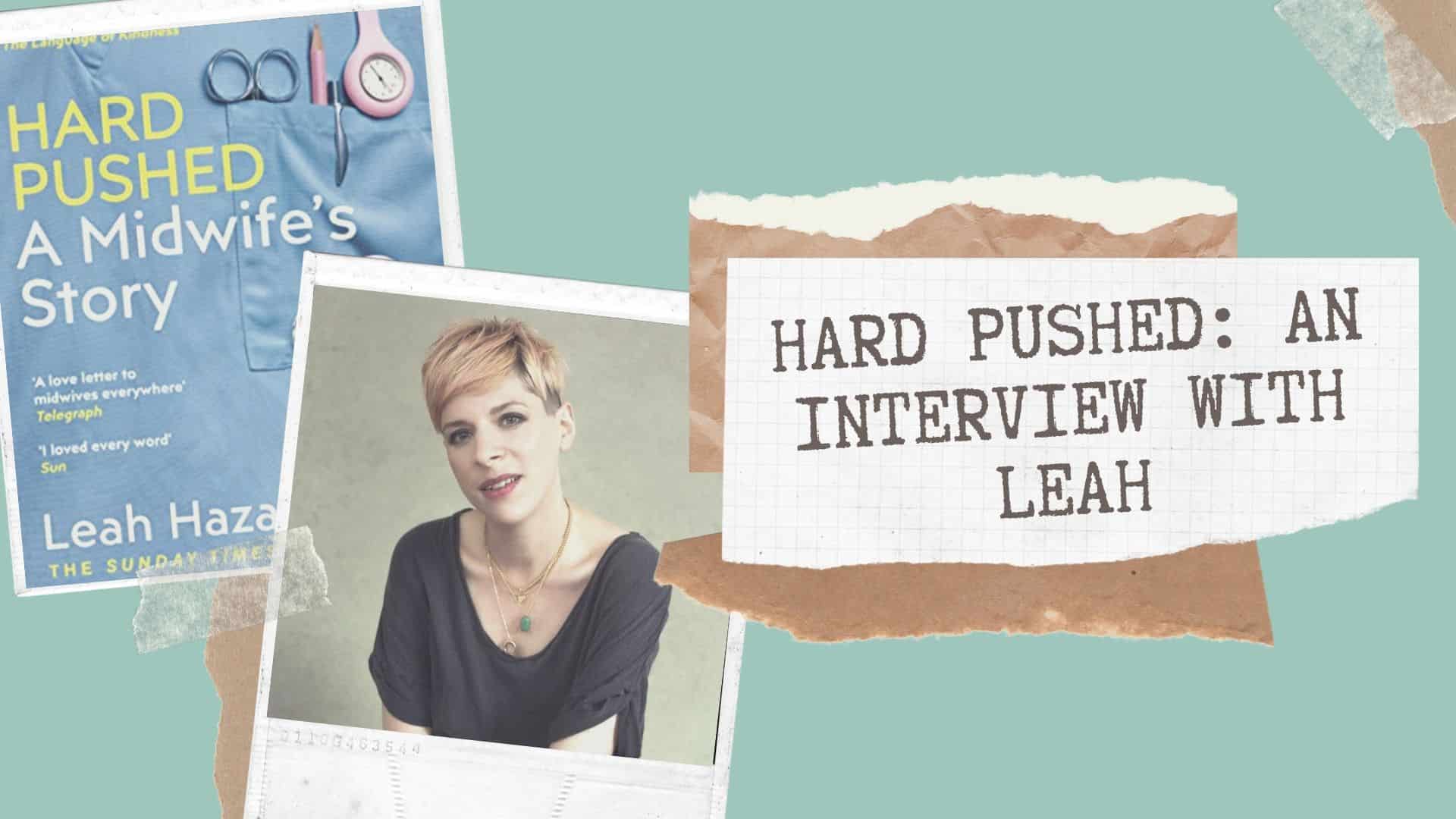
Leah Hazard: in conversation with Sheena Byrom
Leah Hazard is an NHS midwife, practising in a maternity unit in Glasgow, Scotland
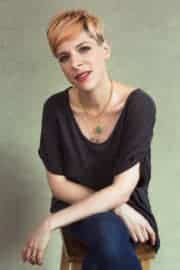
This year midwife Leah Hazard published a book – Hard Pushed: a midwife’s story which has rocketed up the charts as expected. It seems the world can’t get enough of birth stories, and the title of this one in itself is compelling. Firstly, I have to be honest, after the initial excitement reading the ‘letter’ that was at the beginning of the pre-publication copy, my heart sank somewhat as I read through the text. Some of the language Leah used made me uncomfortable & I kept wondering if the publishers had encouraged her to use this style – it reminded me a little of Adam Kay’s book (though not quite). BUT Leah raises important points about our profession and current maternity services – and I cried when I read the last section. Leah was incredibly accepting of my thoughts, and so answered my questions willingly and graciously – what a privilege it was for me.
I have a huge amount of respect for Leah, for her honesty and willingness to engage….
So here goes…
Hi Leah – thank you so much for agreeing to be ‘interviewed’ for All4Maternity blog space – we are honoured & excited too. I just wondered if you’d tell our readers a little bit about yourself?
I grew up in America before moving to Scotland in 1999 to pursue a career in drama and television. That all changed when my first daughter was born in 2003: a difficult experience which prompted me to move into birth work. I was a doula for six years, had another child (this time at home) and wrote my first book, The Father’s Home Birth Handbook. Finally, I retrained as a midwife and have been qualified since 2013. I work in a large hospital in Scotland, and my girls are now (nearly) grown up.
When did you first decide you would like to write a book?
It became apparent to me since the first days of my training that midwifery is full of amazing stories, stranger and more wonderful than fiction. As time went on, I became so proud of the women I’d looked after, and so proud of my profession, that I wanted to share some of these stories with the world. I also felt like there was no accurate representation of modern midwifery in mainstream media, and the time seemed right to try and rectify that. It took me a while to get over my fear of putting pen to paper and how that might be received, but eventually I got there.
You must be delighted with the reception the book has had Leah! What has been the best thing that’s happened since writing ‘Hard Pushed?’ 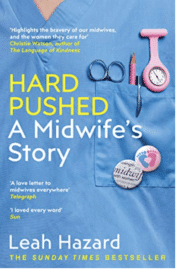
Yes, I’ve been very humbled by the warm reception the book has received. By far the greatest thing has been hearing from midwives and women that Hard Pushed has, in some way, resonated with them. I appreciate that this won’t be the case for everyone, but it has been lovely to receive this positive feedback.
I enjoyed reading ‘Hard Pushed’ especially because you highlight the difficulties some women face in their lives, and how midwives are involved in situations that take us to the edge of life itself. Some of the terminology you used felt uncomfortable for me at times, for example describing vaginal examinations as ‘staring down the barrel of a gun’ – and describing birth as ‘inherently risky, a physiological Russian roulette’.
Is that really how you feel, or did you use descriptives to appeal to readers?
I understand that some readers will be upset or surprised by these phrases, but I hope that they will persevere by reading the whole book. I think it becomes clear as the book goes on that this somewhat riskcentric attitude is a product of a not entirely healthy environment, that my grounding is in normality, that I remain wholeheartedly an advocate for women’s bodies and their power, and that my intentions are good. I did think carefully about using the phrases you’ve mentioned, and about using words like ‘patient’ and ‘delivery’, but I felt it would be dishonest to pretend I always use the best language and think the best thoughts when that is not always the case. I’ve tried to show that I am fighting through the system even though, in some ways, it has inevitably influenced who I am. I hope that my peers will understand that although my experience and/or language may differ from theirs, my sole aim is to elevate and celebrate our profession.
What did your work colleagues feel when they read it, especially ones you described?
I must emphasise that just as the women in the book are composites (not based on any single woman, for obvious legal and professional reasons), so none of the midwives in the book are based on one specific colleague. I have tried to give an honest representation of staff relationships – some deeply loving and respectful, some more problematic and confrontational. It is no secret that toxic workplace cultures and undermining behaviour are issues within midwifery; I feel my book touches relatively lightly on these. On the whole, I’m delighted to say that my colleagues have been very enthusiastic and supportive about Hard Pushed.
I really appreciated how you shone a light on the issues and constraints some maternity services face, and the constant struggle to deliver choice and woman/family centred care. I hear this plight almost daily, and it’s incredibly worrying. How has this been received, generally?
There is a lot of public goodwill towards midwives, and a strong hunger to hear about our struggles. I really hope that I’ve shone a brighter light on the complexity and challenges of our role, and if I have in any way contributed to greater public respect for what we do, then I will be very proud indeed.
When you describe the busyness of maternity services, or indeed some of the (anonymous) women – did you ever consider the impact it could have on childbearing women?
Leah, I believe you are writing another text – how exciting! Will you offer some ideas for a solution for the future?
I wish I could! But again, I am very hesitant to position myself as an expert or spokeswoman. I’m just me, telling my own story, and the solutions are up to the powers that be. Any positive change towards empowering women and supporting our profession would be most welcome…who knows what form that change will take?
Is there anything else you want to say to our followers?
I would like to extend my deepest thanks to every midwife or student who has read the book and taken the time to contact me with their thoughts – it really does mean so much. To those who have read the book and find themselves at odds with aspects of my story, I still offer my heartfelt respect. Our language and experiences may be different, but it’s so important to unite in our mission to be ‘with woman’. My only aim is to raise my voice in the hope that this mission will be more widely understood and appreciated.
Thank you so much Leah! Anna and I wish you all the very best for your future career as both a midwife and a writer, and we’d like to encourage you not to wait for the powers that be for solutions and to use your now high profile position- we all need to chip in!
Twitter hazard_leah
Instagram leahhazard

