









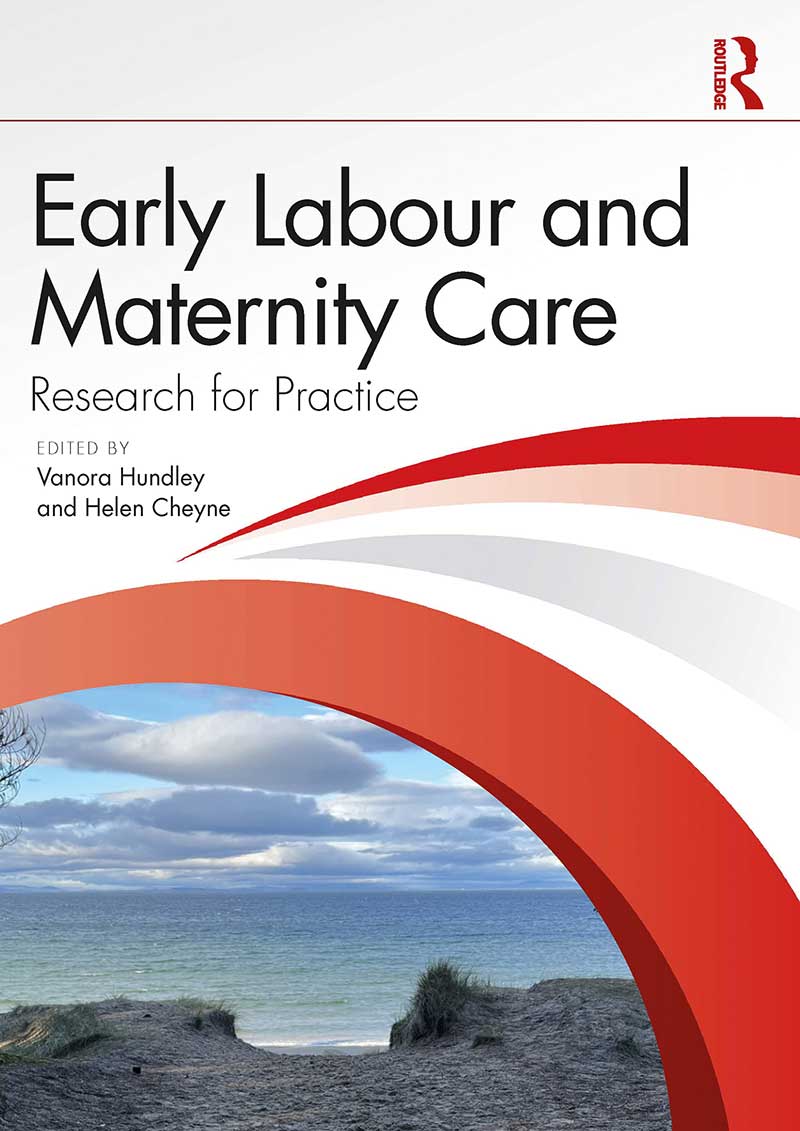
Book Review: Early Labour and Maternity Care – Research for Practice – edited by Vanora Hundley and Helen Cheyne
 Review By: Anna Marsh – Midwife
2026
Routledge
Pbk, 132pp
£43.99
ISBN 9781032829869
As a midwife, I’ve always struggled providing care and advice to women in the early phase of labour. Whilst we learn about it at university and talk about it with women almost every shift, I’ve never understood why I can’t crack what to say or do. In this book, Hundley and Cheyne (supported by a range of global authors) provide a really simple explanation to my problem: early labour care is complex and has a deep-rooted history in culture, practice and society, and more research is desperately needed.
Looking to not only develop our understanding of early labour care, but provide context to the modern-day maternity settings, this book explores early labour through history right up to the modern day. Is it surprising that we find ourselves turning women away when they are not in established labour with well wishes of a hot bath and paracetamol, when for several decades in the last century, healthcare services didn’t really acknowledge early labour as a phase of labour?

Considering this, we have clearly made huge progress to get to the holistic physiological, psycho-social assessment of the woman and family that we know today. However, it is not a surprise that maternity services have not kept up and are far from meeting the needs of the modern-day labouring woman.
Peppered with stories of early labour ‘norms’ around the world, we are brought back to the reality that physiological labour is the same globally – it’s the practice and the cultural norms that are different. Finishing with an exploration of innovative digital interventions that have been explored as ways to improve early labour care, we are given a glimpse into the future of maternity services. This book ends with a practical conversation guide for supporting women in those first tentative steps into labour. TPM

