

Care Beyond Hospitals In Uganda: Negotiating Cultural Beliefs

Nalubega Ashura (she/her) – Student Nurse and Midwife, Faculty of Nursing and Midwifery, Uganda Christian University
Social linkedin.com/in/nalubega-ashura-8303b7260
Summary
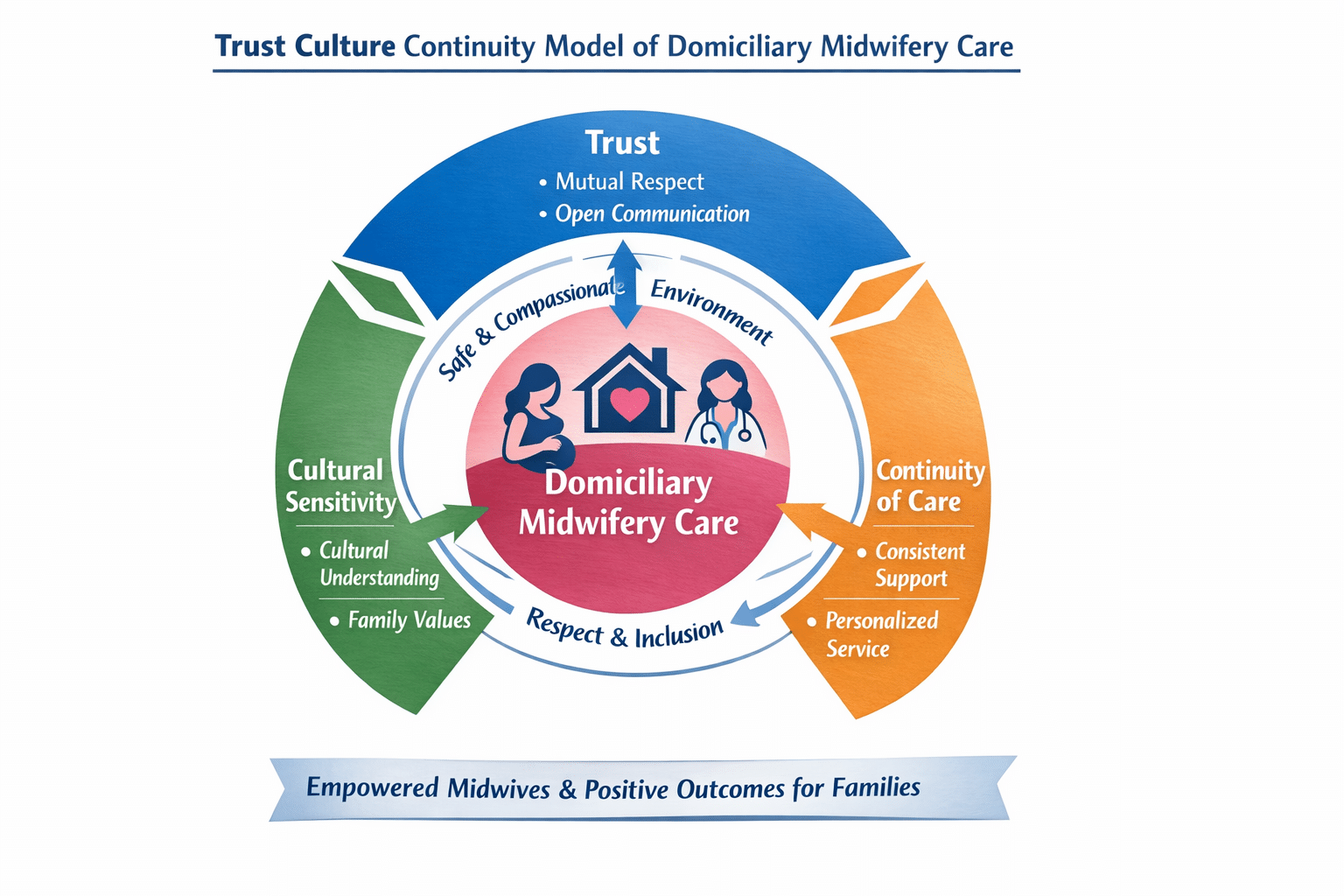
This reflection explores my domiciliary midwifery placement in Mukono, Uganda, focusing on trust, cultural negotiation and continuity of care. My seven days postnatal home visits showed me how communities provide learning spaces for student midwives to understand women’s experiences beyond clinical settings. I observed how family dynamics, cultural beliefs and economic realities influenced maternal and newborn outcomes. Mothers welcomed me into their homes, shared their concerns and continued seeking support beyond visits. Navigating cultural practices while offering evidence-based guidance strengthened my communication and counselling skills. This experience reinforced that midwifery care must extend beyond hospital walls.

Introduction
Using Gibbs’ Reflective Cycle, a structured framework that guides reflection through five stages (description, feelings, evaluation, analysis, conclusion), I explore my domiciliary midwifery placement and how it shaped my understanding of trust, cultural sensitivity and continuity of care. I chose Gibbs’ model because it provides a clear way to examine experiences, consider what was learned, and reflect on how future practice can be improved. Domiciliary midwifery refers to providing care to women and newborns within their homes and communities.
In Uganda, where family and community involvement strongly influence health decisions, domiciliary practice provided me with a unique opportunity to understand maternal recovery and newborn care within women’s everyday realities. Uganda’s Clinical Guidelines (2020) and the Investment Case for Reproductive, Maternal, Newborn, Child and Adolescent Health (RMNCAH) Sharpened Plan for Uganda (2016-2020) – a framework proposed in Uganda to reduce maternal, newborn and adolescent deaths – emphasise the importance of respectful maternity care, continuity of postnatal follow-ups and community engagement. I experienced these during home visits, whereby mothers and families shared their concerns, cultural practices and challenges affecting their care. This experience brought national policies to life in a practical and meaningful way.
Description
During my placement, I carried out postnatal care to two mothers in their homes over a seven days after hospital discharge. I expected visits to focus on physical assessments of the mother and newborn, including monitoring vital signs, lochia, breastfeeding effectiveness, the newborn’s weight, bowel and bladder output and general wellbeing, as well as the need to reinforce the health education given at discharge. However, I quickly realised that domiciliary care is much broader than clinical assessment. It is about entering the mother’s world, her home, her family, her culture and offering care that respects these realities. It involves understanding the family dynamics, cultural beliefs and economic circumstances, and asking questions like, can they afford food and manage the practical challenges of caring for a newborn?
During my visits, I observed the cleanliness and safety of the home environment, identified the mother’s support network, assessed her nutritional intake and explored how cultural practices influenced newborn and maternal care. I spent time listening to the mothers’ concerns, addressing misconceptions and providing individualised education on exclusive breastfeeding, breast care, maternal nutrition, personal hygiene, danger signs in both mother and baby, immunisation schedules, cord care, temperature regulation and family planning. This holistic care could not be provided through observation alone.
On one visit, I met with a mother who was bathing her newborn four times a day to protect it from infections. Despite recognising the mother’s intent to care for her baby, I knew that frequent bathing exposes the newborn to repeated temperature changes, which is dangerous because of its immature temperature regulatory system, increasing the risk of cold stress. I therefore began by reinforcing her instinct for care, and together we agreed to reduce the frequency of bathing by adopting other hygiene practices, including changing diapers regularly and keeping the baby warm after baths. I later observed that she had adopted the recommended approach and reported that the baby’s skin appeared healthier and less dry.
One mother continued calling me even after the scheduled visits to ask whether her baby was feeding adequately, how to manage cracked nipples during breastfeeding, whether her baby’s crying was normal and whether the umbilical cord stump was healing appropriately. These interactions demonstrated that the trust established during the home visits encouraged her to seek guidance before problems became serious.
Practice Challenge Question 1
How can domiciliary care strengthen continuity of maternal support beyond hospital discharge?
Feelings
At first, I felt nervous about stepping into family spaces, and felt both anticipation and uncertainty. Would they trust me and feel comfortable sharing sensitive issues? Would they judge me as an inexperienced student? Unlike the hospital environment where I worked alongside healthcare professionals and had immediate access to guidance, entering a family’s home meant becoming a guest in their personal space while still carrying the responsibility of a healthcare provider.
These concerns gradually diminished as the visits progressed. I remember one mother warmly welcoming me, introducing me to her family, and openly sharing the challenges of painful breastfeeding, her anxiety that the baby was not feeding adequately, and her uncertainty about whether the baby’s frequent crying was normal. Her willingness to discuss these concerns made me realise that trust is built not through professional titles but through respectful communication, empathy and genuine interest in understanding the mother’s experiences. I felt privileged to be present for such an intimate stage of her family’s life.
My sense of responsibility became stronger when a mother continued contacting me after the scheduled domiciliary visits ended. She called to ask how to clean her episiotomy site in fear of developing an infection. I could hear her uncertainty and fear as a first-time mother trying to care for herself while adjusting to life with a newborn. I guided her on maintaining hygiene by cleaning the area with clean, warm water and mild soap, whilst also advising her on signs of infection that would require further medical attention.
One encounter that particularly challenged me involved a grandmother who firmly believed that the baby should not receive immunisations until the umbilical cord had fallen off. She explained, ‘That is how we have always done it from our first generation. If the baby is immunised before the cord falls off, the cord will not heal properly and also will give the baby bad luck for being taken outside.’ I felt conflicted. I respected her experience and understood that her advice came from genuine concern for her grandchild. At the same time, I knew that delaying immunisation could leave the newborn vulnerable to preventable diseases. I was worried that directly contradicting her might make the family lose trust in me.
Instead of dismissing her belief, I validated her good intention and experience whilst explaining the rationale behind immunisation, and how to take the baby out of house responsibly. I also explained how to properly keep the stump clean and dry to help avoid immunisation delay.
There was a brief silence as the grandmother looked at the mother, before she admitted that she had never heard this explanation. The mother smiled with relief and said she had wanted to take the baby for immunisation but had been afraid to go against her elder’s advice, before both agreed to the recommended schedule. I felt relieved and proud for helping change their mind through respectful conversation rather than confrontation. The experience taught me that effective domiciliary care requires cultural humility, patience, and the ability to build trust while advocating for evidence-based practice.
Practice Challenge Question 2
How do student midwives balance professional boundaries with building trust in community settings?
Evaluation
The domiciliary visits demonstrated how home-based postnatal care strengthens continuity of maternal support beyond hospital discharge. It taught me that domiciliary care is not merely a series of scheduled home visits but a bridge to promote continuity of care, which strengthens the mother’s confidence, supports early identification of potential complications, and fosters an ongoing therapeutic relationship between the healthcare provider and the family.
A key positive outcome was the mothers’ willingness to openly share their concerns, which allowed me to provide individualised health education based on their specific needs. I observed that reassurance and active listening were powerful tools in reducing maternal anxiety, particularly among mothers experiencing uncertainty about breastfeeding, newborn crying and routine newborn care. The ongoing communication with one mother after the scheduled visits further highlighted how domiciliary care can encourage mothers to seek timely support when minor concerns arise, before they develop into preventable complications.
However, the experience also revealed challenges with integrating evidence-based practice within existing cultural beliefs. I learned how to share evidence through sensitive, respectful communication and to negotiate health decisions collaboratively with families.
Practice Challenge Question 3
What strategies can midwives use to respectfully negotiate cultural practices that conflict with evidence-based care?
Analysis
Midwives can respectfully negotiate cultural practices that conflict with evidence-based care by first seeking to understand the meaning behind the practice, acknowledging the family’s intentions and beliefs, and then introducing evidence-based recommendations.¹,² In many communities, newborn care is deeply influenced by family traditions passed down through generations. Challenging these practices requires partnership rather than direct correction.
Maternal and newborn care cannot be separated from the cultural environment in which families live. In Uganda, elders often play a significant role in newborn care and traditional practices may differ from recommended healthcare advice. Practicing cultural competency as a skill is consistent with WHO recommendations on respectful maternity care and community engagement.³
This experience reflected the recommendations of the Uganda Clinical Guidelines (2020), which emphasises early postnatal visits within 48 hours and continued follow-ups up to six weeks postpartum.⁴ Achieving these aims requires building relationships where mothers feel respected and supported to make informed decisions. Ultimately, the RMNCAH Sharpened Plan identifies community involvement and domiciliary follow-ups as important strategies for reducing preventable maternal and newborn deaths.⁵
Practice Challenge Question 4
How can midwives integrate cultural competence into evidence-based practice to improve maternal outcomes?
Conclusion
Before this experience, I viewed midwifery mainly as a profession centred on clinical care, focused on monitoring mothers, identifying complications and providing interventions within health facilities. However, my domiciliary placement changed my understanding of the wider role of a midwife. Many mothers leave hospital with unanswered questions because busy maternity units and high patient numbers can limit the time available for thorough conversations. Home visits create opportunities to listen, clarify misconceptions and provide personalised women-centred care.
Domiciliary care strengthened my communication, counselling and independent decision-making skills while showing me the value of community-based learning for student midwives. It bridges the gap between theory and reality, preparing future practitioners to provide holistic care that combines evidence-based practice with relationship building.
Practice Challenge Question 5
How can midwifery education embed community-based learning to prepare students for holistic maternal care?
- Kuipers Y, de Groot R, van Staa A. Woman-centered care 2.0: Bringing the concept into focus. Eur J Midwifery. 2018;2:5. org/10.18332/ejm/91492.
- Riley LE, Pardo C. Maternal health equity and respectful maternity care. Ann Intern Med. 2024;177(1):91-92. org/10.7326/M23-3186.
- WHO recommendations: Uterotonics for the prevention of postpartum hemorrhage. WHO. https://iris.who.int/server/api/core/bitstreams/e0a482f7-12e7-430d-9c66-1ac8fb2a3316/content. Published December 20, 2018.
- Uganda Clinical Guidelines 2020. Uganda Ministry of Health. https://www.slideshare.net/slideshow/ucg-2020interactivepdf/263100833. Published 2020.
- Investment Case for Reproductive, Maternal, Newborn, Child and Adolescent Health Sharpened Plan for Uganda (2016/17–2019/20) Uganda Ministry of Health. https://www.globalfinancingfacility.org/resource/investment-case-reproductive-maternal-newborn-child-and-adolescent-health-sharpened-plan. Published April 01, 2016.
Figure 1: Trust-Culture-Continuity Model of Domiciliary Midwifery Care