








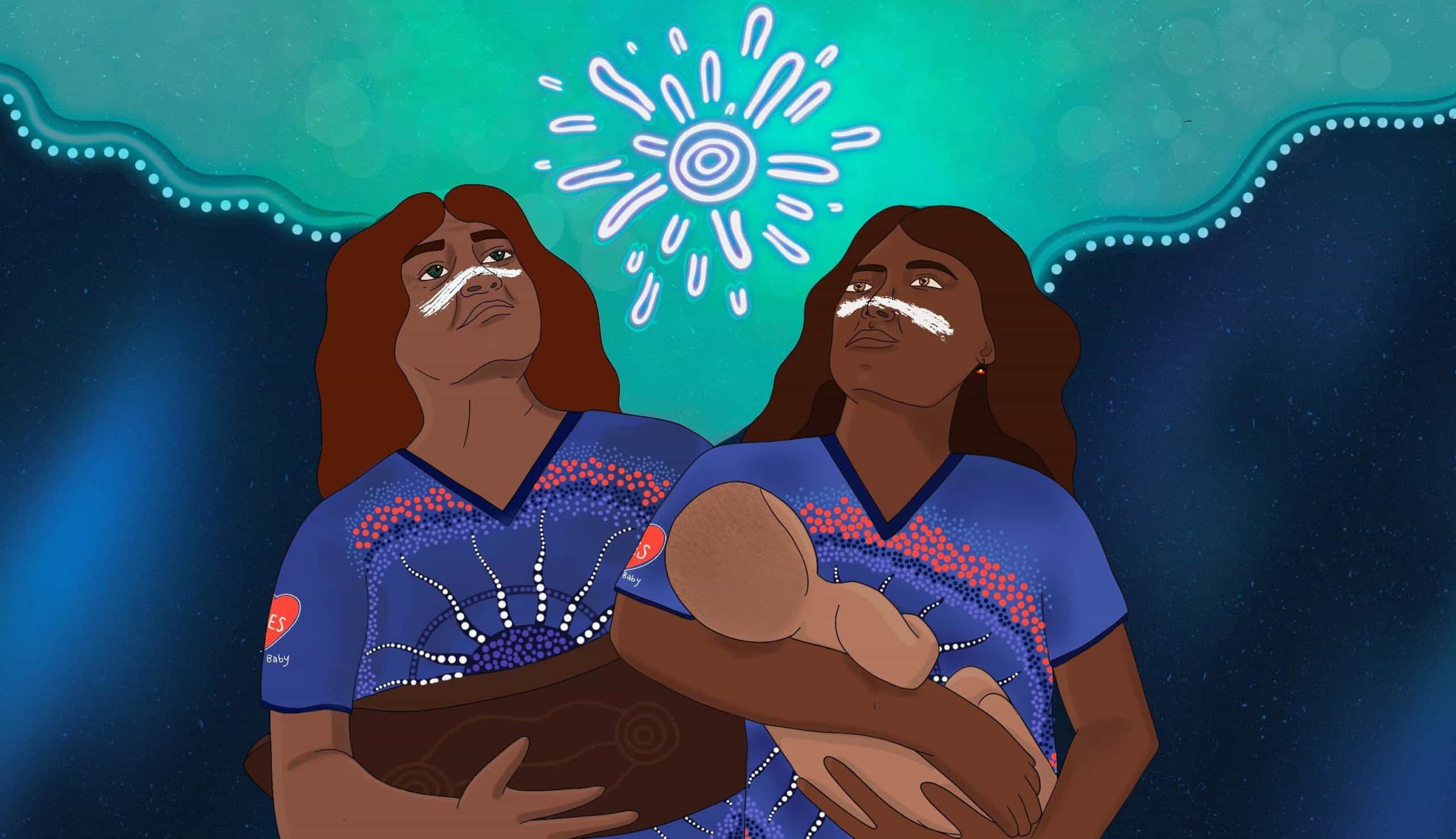
Cultural Immersion: More Than Maternity Care
Brooke Toli – Midwife and Aboriginal Support Worker for the Community, Merana Aboriginal Community Association for the Hawkesbury
Published in The Practising Midwife Australia Volume 01 Issue 01 September 2022, Pages 32-34
https://doi.org/10.55975/GPWJ2462
Summary
Waminda, located on the South Coast in New South Wales, provides a holistic and culturally-safe service for Indigenous women and their families. Maternity care at Waminda is known as Minga Gudjaga, and through this service, Elders and Aunties enact thousands of years of Indigenous knowledge to ensure the cultural safety and health of Minga (mothers) and Gudjaga (babies).1 A clinical placement at Waminda for one Indigenous midwifery student proved pivotal to her growth and vision as a midwife and an Aboriginal woman.
Introduction
In 2020, during my third year as a midwifery student I attended a two-week global maternal placement. This placement had a significant impact, both personally and professionally, altering my midwifery vision and philosophy.
I attended the 2018 CATSINaM Conference and whilst there I was lucky enough to hear a presentation from Melanie Briggs, a descendant of the Dharawal and Gumbaynggirr people and the first endorsed Aboriginal midwife in Australia. I heard about how our people needed us, and how our people are struggling with the care that is provided. This really got me fired up and that is when I knew I had to attend a placement at Waminda.
Waminda is an Aboriginal women-led community-led health organisation. The board of Waminda are elders from the Yuin Country on the South Coast. Waminda is a wraparound service which provides antenatal and postnatal care, child and family health, diet and nutrition support together with general practitioner and outreach services.
Importantly, the family support service NABU, run by a team of Elders, cultural mentors, therapists and case workers advocates for Indigenous women against the system to preserve and keep families together. As Indigenous women are less likely to seek care from traditional western health services due to poor cultural safety, service cost and distance2 an Aboriginal community-led service such as Waminda is essential.
The joy and frustration of witnessing culturally-appropriate care
I arrived in Nowra, excited and the most nervous I had ever been because I knew I was going to learn more than just maternity care. After my first day I knew that this was home, not just for placement but for the future of my career. Sharing this with you makes my heart beat faster and brings me so much joy and frustration. Joy because I know that the team at Waminda make a difference, changing outcomes for Aboriginal women and their babies.
The frustration, however, runs deep at the NSW health system that does little to meet the needs of Indigenous Australians. This system needs to stop assuming what we need, it must be better; a gap cannot be closed if no one consults with Aboriginal people regarding their needs and desires to improve health.
Waminda allowed me to immerse myself in culture and see what was unable to be handed down by my grandfather. I was involved in discussions for antenatal ceremonies, including a discussion with a woman who was planning to birth on country, in the community of her Aboriginal Ancestors.
I attended an EMBA meeting, clinically known as ‘safestart’ and found it empowering to see how women can be helped to achieve what they want, using a strength-based strategy instead of one of intervention and discouragement. I was able attend home visits, which included meeting with a woman on her front lawn where she was comfortable and not judged, with her children running around and being involved antenatally and postnatally.
Transformational cultural connection
Within Western health services, Indigenous women have been subjected to removal from country, systemic coercion, eugenically informed birth control, forced caesarean services and health-care refusal.3 This history highlights the need for culturally-appropriate care for Indigenous women.
As an Aboriginal woman I thought I was culturally safe, how wrong I was! Services can only be culturally appropriate when they are run by the community for the community.
This experience provided so much more than mere clinical skills. It became very clear to me that tokenistic “Aboriginal Services” within the hospital setting are just not good enough. An Indigenous painting on the wall does not equal cultural safety.
First and foremost, Aboriginal women need to be listened to, understood and worked with, not against. How can “the Gap” be closed if Aboriginal people are not being heard? Providing care for a woman on her front lawn because she was not comfortable allowing us in her house is not only appropriate but necessary to meet the needs of the individual.
The importance of informed decisions became apparent during this placement. As midwives, we know that women should be well educated in order to make informed decisions. But in reality, we educate to the needs of the health-care system – not the needs of the woman or birthing person.
Once educated, women need to be supported to make their own decisions and if they decide to not have a glucose test that’s reasonable, as long as they are educated regarding those choices. Something that really shocked me is that Waminda is not recognised by the local hospital as a maternity service and therefore does not have access to E-Maternity.
Even though a woman has been seen by Waminda midwives in a culturally-safe space with their appointments captured, the hospital has no record. As a result, when women attend the hospital, they are judged due to a perceived ‘lack of antenatal care’.
This again illustrates the absence of choice and decision making available to Indigenous women. Through supporting the woman and her individual choices, Waminda has incredible results including a high percentage of vaginal births, full-term pregnancies, improved average birth weights and increased antenatal and postnatal-care attendance. These results are a significant improvement on those seen within government health facilities.
Conclusion
Working within local health districts and hospitals we may not be able to change the system but we can make it better and contribute to a positive experience for our women. To work with Aboriginal women, you must be open minded and willing to question the system.
You must remember the system has injured and scarred our people. Allow yourself to be challenged, and support the women or birthing person to lead their care. We can work with the Waminda principles in mind, working with women, not against them to improve their outcomes.
The only thing negative about this placement is the fact that it ended. I feel privileged to have worked with the women, the dedicated midwives and the entire team. This experience will not be forgotten and will be held close to my heart until my return. TPM
References
- Waminda. https://waminda.org.au/. Accessed June 24, 2022.
- Dudgeon P, Bray A. Indigenous Relationality: Women, Kinship and the Law. Genealogy. 2019;3(2):23.
- Human Rights in Childbirth. Human Rights in Childbirth, Submission to the Australian Human Rights Commission. 2019. https://humanrights.gov.au/sites/default/files/2020-09/sub_149_-_human_rights_in_childbirth.pdf. Published November 29, 2019. Accessed June 24, 2022.

