








Humanising birth: hope for the future even in war
Lesley Page – CBE
Teresa Mc Creery – Sexual Health Reproductive Manager in Hawija hospital, Kirkuk, Iraq
There can perhaps be no greater need for humanised birth than in situations where the extremes of dehumanisation prevail, situations of war and aftermath of war. Yet, it is often in these situations, that disrespectful care, overmedicalisation of birth, or medical care applied inappropriately, add to the impact of war, of violence, and continue these through the generations. Here, Teresa McCreery tells of a great need to humanise birth, in the war in Iraq. Humanised birth is defined as:
“care that recognises the significance of birth for individuals, family and society, and that respects the human rights of the woman to access high quality, evidence-based care. Humanised care puts the woman at the centre of care, recognises that the mother and baby are inseparable. The woman her baby and family are treated with dignity and respect, and the woman has the right to make decisions about her care. This decision-making process will be enhanced by a relationship of reciprocity with her midwife or midwives and supported through the appropriate provision of high-quality information.” (Page, 2016; Umenaiet et al., 2001).
Such a definition presupposes having midwives in the system of care. Yet the necessary skills of a knowledgeable, skilled and compassionate midwife may not be available. Maternity providers globally may benefit from an educational programme on the importance of humanised and compassionate care. This could create a positive virtuous circle of empowering the staff leading to empowered women and families. Childbirth should not be underestimated as the most profound, life-changing experience known to humankind. A positive experience improves maternal attachment and capability, and positive relationships within the family. This can have a positive effect on the future of communities and society.

Copyright of MSF
Let us look at the situation described by Teresa and what it might tell us about the need to humanise birth:
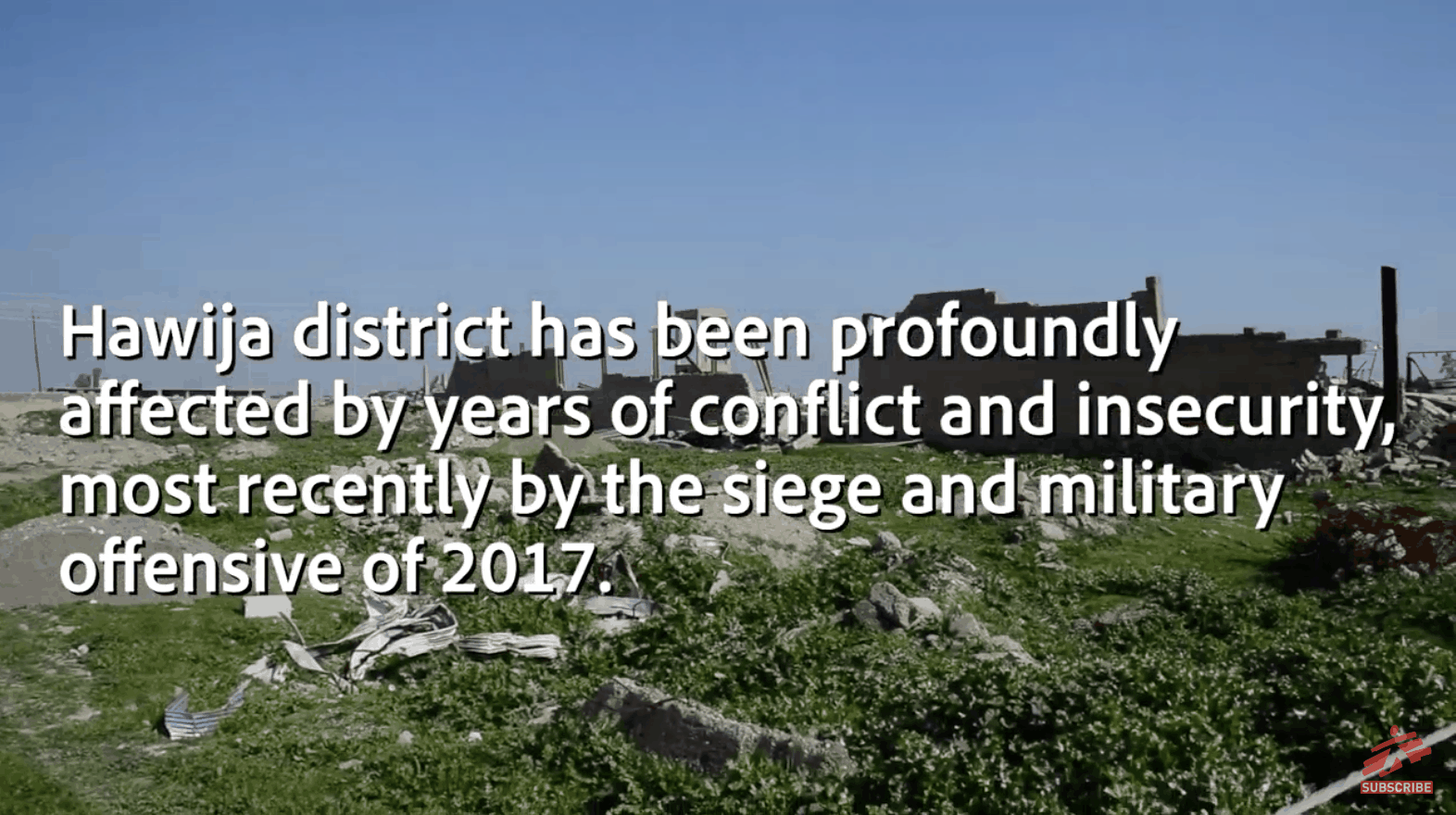
I worked in Kirkuk province in Iraq with Medicins Sans Frontiers (MSF) as the Sexual Reproductive Health Manager. There are long-term effects of the ongoing political instability and the ongoing conflict in Iraq.
In such a situation where the impact of conflict will increase risk of mortality and morbidity, there is no greater need for informed and respectful care, and the skills of midwifery. Yet midwifery is restricted and underutilised. Cultural and historical factors saw midwifery not commonly practiced in the region even before the most recent conflict.
In Kirkuk province, maternity wards are usually staffed by obstetricians, gynaecological specialists and nurses. Midwives are deployed to primary health centres and many of them also practice assisting women to birth in their own homes. But there are significant staff shortages in the region like many other parts of Iraq.
The number of university degree holders in the region has dropped ever since the time of the US invasion (UNFPA 2014). This started the exodus of huge numbers of doctors and professors along with the depletion of universities. This has reduced the availability of college educated staff for employment in the hospitals. Sadly, none of the nurses working in the MSF-supported maternity ward in Hawija, Kirkuk province have formal training in midwifery. The majority of them have learnt their skills from their older colleagues.
There is evidence of a need for technical education which could be combined in a programme on the importance of compassionate care. This could potentially lead to enhanced quality of care and thus reduce potential malpractices.
As I reflect on this, the question occurs to me;
How could staff care when they themselves have been subjected to this violent and terrifying conflict in their own villages and towns?
There is still a curfew at night in this area where it is not safe to travel at night even in medical emergencies. In addition, staff often work 24/48 hour shifts and often do not have the basic equipment or resources they need to carry out safe care.
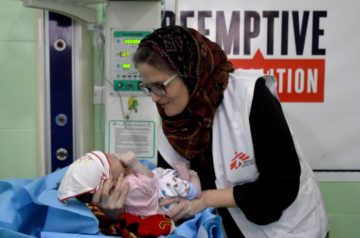
While reflecting on respectful care, an MSF administration staff member requested me, both passionately and eloquently, to assist in the humanisation of birth in Kirkuk governate. This governate has a population of 1,200,000. Her recent birth experiences informed her of the urgent educational needs in the provision of compassionate midwifery care. This gave me hope.
Copyright of MSF
This conversation evolved into a passionate MSF staff debate when both medical and non-medical staff informed me of the urgent need for humanisation within the maternity service. Service users were demanding better care which is the best way to start service improvement. Armed with this request we completed a service user satisfaction survey and couple with this an education programme will be planned in conjunction with the hospital director and his team.
Such a demand being raised, in such challenging circumstances, must surely give us hope. The motivation to seek the best, lifesaving and respectful care around the time of birth a point of new life and new promise, to start to heal the wounds of conflict and collapse of states, and not to give up in despair, is the ultimate in the best of our humanity.
What would it need then to humanise birth in such a situation? Clearly the definition used is not quite enough. Individuals health seeking behaviour shouldn’t be underestimated. Societies confronted with years of conflict and wars may have little respect for their own health and wellbeing. In addition, there is a shortage of educated and skilled midwives, and therefore there is often an inappropriate use of medical care. This is evident in the reported rising caesarean section rates and the absence of instrumental births.
So, the circle of humanisation, that builds on respectful and skilled care, care that is based on the needs of the woman, her baby and family, in a loving environment, may well start with asking staff how they feel and what would make their situation better. It may then take the form of teaching about the right care, and how procedures might be changed. In the long-term building midwifery education will be critical. There are examples of such development in states of war in the state of the world’s midwifery (ICM 2014).
Perhaps the essential definition of the humanisation of birth must rest on the human to human relationship, that gives the chance for compassion, that is respectful, that recognises the significance and importance of this one new life, and this one woman’s new life as mother, and the birth of her new family. It must allow for love and the promise of a life to be fulfilled.
Women, their babies and newborn families, are the unrecognised casualties of war, yet this is the point at which healing and promise for the future may be born. There is no time when humanised birth is more needed.
References
Page, L.A, Luyben, A., Cadée, F, Rheyns, M., Bondo, L., Debonnet, S., Jokinen, M.,
Castiaux, G on behalf of the International Confederation of Midwives (ICM) Central Europe Region (2014) Midwives and the humanisation of birth;discussion paper. ICM.
Umenai, T., Wagner, M., Page, L.A., Faundes, A., Rattner, D., Dias, M.A., Tyrrell, M.A., Hotimsky, S., Haneda, D., Onuki, D. (2001) Conference agreement on the definition of humanization and humanized care. International Journal of Gynecology and Obstetrics, 75, S3-S4

